
Summary
Itinerary & Map

By the 11th century, Copenhagen was already an important trading and fishing centre and today you will find an attractive city which, although the largest in Sc...
Full description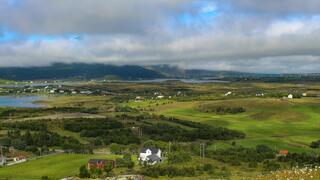
Blessed with some of the most spectacular scenery in Norway (and goodness only know that this is land blessed with rolling hills, soaring peaks, valleys, tranqu...
Full description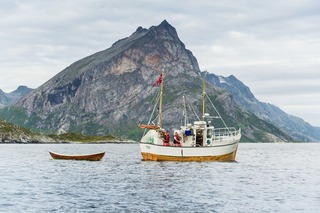
With its centre located on the island of Tromsø, the municipality of Tromsø is more than five times the size of Norway’s capital, Oslo, and is the world’s north...
Full description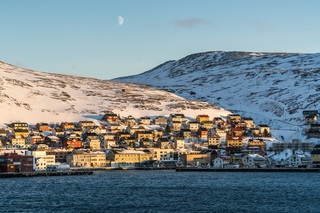
Searching in 1553 for a northeast passage to India, British navigator Richard Chancellor came upon a crag 307 yards above the Barents Sea. He named the jut of r...
Full description
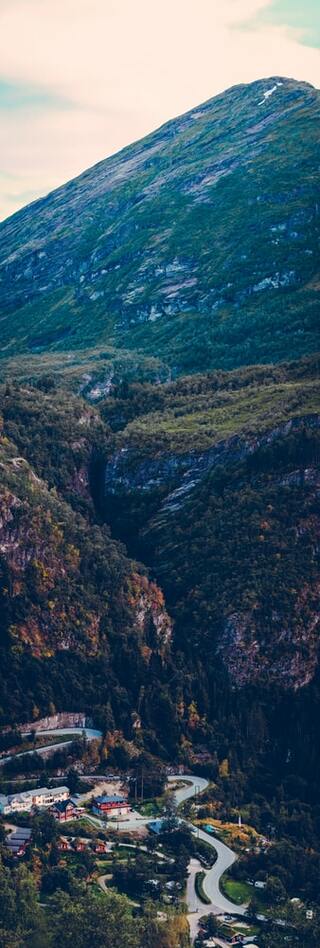
The Geirangerfjord, which made the UNESCO World Heritage List in 2005, is Norway's most spectacular and perhaps best-known fjord. The 16-km-long (10-mile-long),...
Full description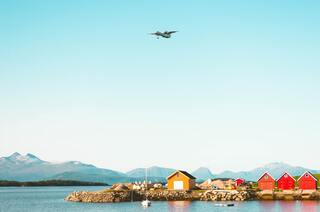
Molde, the 'Town of Roses', is a city and municipality in Romsdal in Møre og Romsdal County, Norway. The municipality is located on the Romsdal Peninsula, surro...
Full description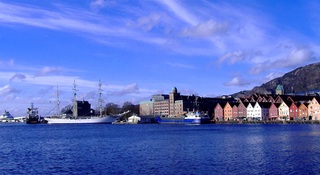
Surrounded by mountains and sparkling fjords, the waterside city of Bergen has a spectacular setting. There has been a settlement here since medieval times and...
Full description
By the 11th century, Copenhagen was already an important trading and fishing centre and today you will find an attractive city which, although the largest in Sc...
Full description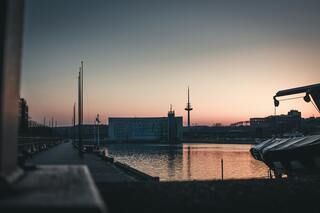
Known for the Kiel Canal and Kiel Week, the city boasts an important maritime history. Kiel is also a great place to sight-see, do some shopping and take part i...
Full description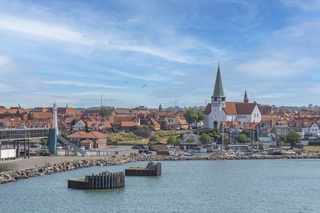

Estonia's history is sprinkled liberally with long stretches of foreign domination, beginning in 1219 with the Danes, followed without interruption by the Germa...
Full description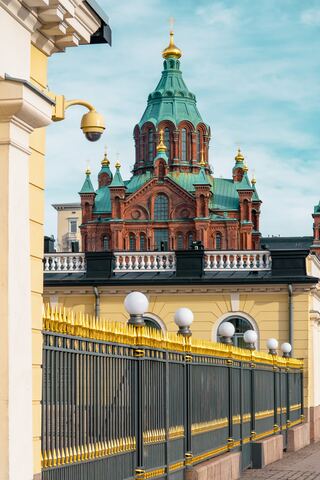
A city of the sea, Helsinki was built along a series of oddly shaped peninsulas and islands jutting into the Baltic coast along the Gulf of Finland. Streets and...
Full description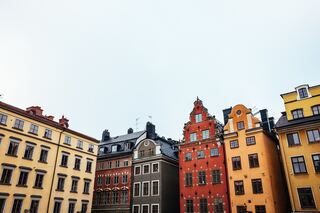
Stockholm is a city in the flush of its second youth. Since the mid-1990s, Sweden's capital has emerged from its cold, Nordic shadow to take the stage as a trul...
Full description
Stockholm is a city in the flush of its second youth. Since the mid-1990s, Sweden's capital has emerged from its cold, Nordic shadow to take the stage as a trul...
Full description
By the 11th century, Copenhagen was already an important trading and fishing centre and today you will find an attractive city which, although the largest in Sc...
Full description
Blessed with some of the most spectacular scenery in Norway (and goodness only know that this is land blessed with rolling hills, soaring peaks, valleys, tranqu...
Full description
With its centre located on the island of Tromsø, the municipality of Tromsø is more than five times the size of Norway’s capital, Oslo, and is the world’s north...
Full description
Searching in 1553 for a northeast passage to India, British navigator Richard Chancellor came upon a crag 307 yards above the Barents Sea. He named the jut of r...
Full description
The Geirangerfjord, which made the UNESCO World Heritage List in 2005, is Norway's most spectacular and perhaps best-known fjord. The 16-km-long (10-mile-long),...
Full description
Molde, the 'Town of Roses', is a city and municipality in Romsdal in Møre og Romsdal County, Norway. The municipality is located on the Romsdal Peninsula, surro...
Full description
Surrounded by mountains and sparkling fjords, the waterside city of Bergen has a spectacular setting. There has been a settlement here since medieval times and...
Full description
By the 11th century, Copenhagen was already an important trading and fishing centre and today you will find an attractive city which, although the largest in Sc...
Full description
Known for the Kiel Canal and Kiel Week, the city boasts an important maritime history. Kiel is also a great place to sight-see, do some shopping and take part i...
Full description
Estonia's history is sprinkled liberally with long stretches of foreign domination, beginning in 1219 with the Danes, followed without interruption by the Germa...
Full description
A city of the sea, Helsinki was built along a series of oddly shaped peninsulas and islands jutting into the Baltic coast along the Gulf of Finland. Streets and...
Full description
Stockholm is a city in the flush of its second youth. Since the mid-1990s, Sweden's capital has emerged from its cold, Nordic shadow to take the stage as a trul...
Full description
Stockholm is a city in the flush of its second youth. Since the mid-1990s, Sweden's capital has emerged from its cold, Nordic shadow to take the stage as a trul...
Full descriptionCopenhagen
By the 11th century, Copenhagen was already an important trading and fishing centre and today you will find an attractive city which, although the largest in Scandinavia, has managed to retain its low-level skyline. Discover some of the famous attractions including Gefion Fountain and Amalienborg Palace, perhaps cruise the city’s waterways, visit Rosenborg Castle or explore the medieval fishing village of Dragoer. Once the home of Hans Christian Andersen, Copenhagen features many reminders of its fairytale heritage and lives up to the reputation immortalised in the famous song ‘Wonderful Copenhagen’.
Leknes
Blessed with some of the most spectacular scenery in Norway (and goodness only know that this is land blessed with rolling hills, soaring peaks, valleys, tranquil fjords and white sandy beaches, so the competition is high!), Leknes is what Norway is meant to be. Pretty red houses lay dotted on the green covered hills, and the midnight sun is rises above the horizon from 26th May to 17th July, (while in winter the sun does not rise from 9th December to 4th January). Part of the stunning Lofoten islands, this pretty port offers much in the way of recreation, although understandably most of this is outdoor based. Take a boat ride around the archipelago, try your hand at some deep sea fishing, or simply stroll thought the city centre, perhaps rent a bicycle and discover the hinterland at your own pace. Bikes can be easily rented and note that hybrid and electric bikes are a great option for those who might be a bit out of practice with their pedal power. Gastronomes with a sweet tooth will be rewarded with one simple pleasure: a fresh-from-the-oven skillingsbolle – or big, fluffy cinnamon rolls, fit for indulging in if all the fresh air has made you hungry! Look out for the quirky coffee shops, settle down for some Norwegian kos, say takk for maten and enjoy!
Tromsø
With its centre located on the island of Tromsø, the municipality of Tromsø is more than five times the size of Norway’s capital, Oslo, and is the world’s northernmost university city. Lying 200 miles inside the Arctic Circle, it is known as the 'Gateway to the Arctic' because it was used as a starting point for hunters looking for Arctic foxes, polar bears and seals. In the 19th century it was a base for explorers on Arctic expeditions – a history that is remembered in the city’s Polar Museum, which you can visit on an excursion. Also commemorated in the area is the history of Norway’s indigenous people, the Sami. Visitors can learn about the traditions, heritage and modern preservation of the Sami culture at the Tromsø Museum. Nowadays, Tromsø is a charming mix of old and new, with wooden buildings sitting alongside contemporary architecture such as the impressive glacier-like Arctic Cathedral, which features one of the largest stained glass windows in Europe. Looking down on the city is Mount Storsteinen, and a cable car runs to the top, giving wonderful views over the surrounding countryside of forested peaks and reindeer pastures.
Honningsvåg
Searching in 1553 for a northeast passage to India, British navigator Richard Chancellor came upon a crag 307 yards above the Barents Sea. He named the jut of rock North Cape, or Nordkapp. Today Europe's northernmost point is a rite-of-passage journey for nearly all Scandinavians and many others. Most cruise passengers visit Nordkapp from Honningsvåg, a fishing village on Magerøya Island. The journey from Honningsvåg to Nordkapp covers about 35 km (22 miles) across a landscape characterized by rocky tundra and grazing reindeer, which are rounded up each spring by Sami herdsmen in boats. The herdsmen herd the reindeer across a mile-wide channel from their winter home on the mainland. Honningvåg's northerly location makes for long, dark winter nights and perpetually sun-filled summer days. The village serves as the gateway to Arctic exploration and the beautiful Nordkapp Plateau, a destination that calls to all visitors of this region. Most of those who journey to Nordkapp (North Cape), the northernmost tip of Europe, are in it for a taste of this unique, otherworldly, rugged yet delicate landscape. You'll see an incredible treeless tundra, with crumbling mountains and sparse dwarf plants. The subarctic environment is very vulnerable, so don't disturb the plants. Walk only on marked trails and don't remove stones, leave car marks, or make campfires. Because the roads are closed in winter, the only access is from the tiny fishing village of Skarsvåg via Sno-Cat, a thump-and-bump ride that's as unforgettable as the desolate view.
Geiranger
The Geirangerfjord, which made the UNESCO World Heritage List in 2005, is Norway's most spectacular and perhaps best-known fjord. The 16-km-long (10-mile-long), 960-foot-deep Geirangerfjord's most stunning attractions are its roaring waterfalls—the Seven Sisters, the Bridal Veil, and the Suitor. Perched on mountain ledges along the fjord, deserted farms at Skageflå and Knivsflå are being restored and maintained by local enthusiasts.The village of Geiranger, at the end of the fjord, is home to fewer than 300 year-round residents, but in spring and summer its population swells to 5,000 due to visitors traveling from Hellesylt to the east. In winter, snow on the mountain roads often makes the village isolated.
Molde
Molde, the 'Town of Roses', is a city and municipality in Romsdal in Møre og Romsdal County, Norway. The municipality is located on the Romsdal Peninsula, surrounding the Fannefjord and Moldefjord. The city is located on the northern shore of the Romsdalsfjord. The city of Molde is the administrative centre of Møre og Romsdal County, administrative center of the municipality of Molde, commercial hub of the Romsdal region and seat of the Diocese of Møre. Molde proper consists of a 6.2-mile (10-kilometre) long and 0.62-1.24 mile (1-2-kilometre) wide strip of urban land running east-west along the north shore of the Moldefjord, an arm of the Romsdalsfjord, on the Romsdal Peninsula. The city is sheltered by Bolsøya and the Molde Archipelago, a chain of low-lying islands and islets, to the south and the wood-clad hills of Moldemarka to the north. The city centre is located just west of the River Moldeelva, which runs into the city from the north, originating in the Lake Moldevatnet and running through the Valley Moldedalen.
Bergen
Surrounded by mountains and sparkling fjords, the waterside city of Bergen has a spectacular setting. There has been a settlement here since medieval times and the colourful waterfront buildings of the Hanseatic wharf, known as Bryggen, are testament to its fascinating history of trade. As Norway’s best known medieval settlement, the Bryggen is listed by UNESCO as a World Heritage Site. Our comprehensive selection of excursions allows you to discover the many sides of Bergen, such as the fish market and narrow cobbled streets, as well as stunning views of the city from the summit of Mt Fløyen. Alternatively, those who have visited the city previously may like to experience one of the tours that travel further afield. Just 300 yards from the main piers, you will find the Fortress Museum (Fesningsmuseum), which has an interesting collection of objects related to World War II.
Kiel
Known for the Kiel Canal and Kiel Week, the city boasts an important maritime history. Kiel is also a great place to sight-see, do some shopping and take part in one of the many festivals taking place there.
Tallinn
Estonia's history is sprinkled liberally with long stretches of foreign domination, beginning in 1219 with the Danes, followed without interruption by the Germans, Swedes, and Russians. Only after World War I, with Russia in revolutionary wreckage, was Estonia able to declare its independence. Shortly before World War II, in 1940, that independence was usurped by the Soviets, who—save for a brief three-year occupation by Hitler's Nazis—proceeded to suppress all forms of national Estonian pride for the next 50 years. Estonia finally regained independence in 1991. In the early 1990s, Estonia's own Riigikogu (Parliament), not some other nation's puppet ruler, handed down from the Upper City reforms that forced Estonia to blaze its post-Soviet trail to the European Union. Estonia has been a member of the EU since 2004, and in 2011, the country and its growing economy joined the Eurozone. Tallinn was also named the European City of Culture in 2011, cementing its growing reputation as a cultural hot spot.
Helsinki
A city of the sea, Helsinki was built along a series of oddly shaped peninsulas and islands jutting into the Baltic coast along the Gulf of Finland. Streets and avenues curve around bays, bridges reach to nearby islands, and ferries ply among offshore islands.Having grown dramatically since World War II, Helsinki now absorbs more than one-tenth of the Finnish population. The metro area covers 764 square km (474 square miles) and 315 islands. Most sights, hotels, and restaurants cluster on one peninsula, forming a compact central hub. The greater Helsinki metropolitan area, which includes Espoo and Vantaa, has a total population of more than a million people.Helsinki is a relatively young city compared with other European capitals. In the 16th century, King Gustav Vasa of Sweden decided to woo trade from the Estonian city of Tallinn and thus challenge the Hanseatic League's monopoly on Baltic trade. Accordingly, he commanded the people of four Finnish towns to pack up their belongings and relocate to the rapids on the River Vantaa. The new town, founded on June 12, 1550, was named Helsinki.For three centuries, Helsinki (Helsingfors in Swedish) had its ups and downs as a trading town. Turku, to the west, remained Finland's capital and intellectual center. However, Helsinki's fortunes improved when Finland fell under Russian rule as an autonomous grand duchy. Czar Alexander I wanted Finland's political center closer to Russia and, in 1812, selected Helsinki as the new capital. Shortly afterward, Turku suffered a disastrous fire, forcing the university to move to Helsinki. The town's future was secure.Just before the czar's proclamation, a fire destroyed many of Helsinki's traditional wooden structures, precipitating the construction of new buildings suitable for a nation's capital. The German-born architect Carl Ludvig Engel was commissioned to rebuild the city, and as a result, Helsinki has some of the purest neoclassical architecture in the world. Add to this foundation the influence of Stockholm and St. Petersburg with the local inspiration of 20th-century Finnish design, and the result is a European capital city that is as architecturally eye-catching as it is distinct from other Scandinavian capitals. You are bound to discover endless engaging details—a grimacing gargoyle; a foursome of males supporting a balcony's weight on their shoulders; a building painted in striking colors with contrasting flowers in the windows. The city's 400 or so parks make it particularly inviting in summer.Today, Helsinki is still a meeting point of eastern and western Europe, which is reflected in its cosmopolitan image, the influx of Russians and Estonians, and generally multilingual population. Outdoor summer bars ("terrassit" as the locals call them) and cafés in the city center are perfect for people watching on a summer afternoon.
Stockholm
Stockholm is a city in the flush of its second youth. Since the mid-1990s, Sweden's capital has emerged from its cold, Nordic shadow to take the stage as a truly international city. What started with entry into the European Union in 1995 gained pace with the extraordinary IT boom of the late 1990s, strengthened with the Skype-led IT second wave of 2003, and solidified with the hedge-fund invasion that is still happening today as Stockholm gains even more global confidence. And despite more recent economic turmoil, Stockholm's 1 million or so inhabitants have, almost as one, realized that their city is one to rival Paris, London, New York, or any other great metropolis.With this realization comes change. Stockholm has become a city of design, fashion, innovation, technology, and world-class food, pairing homegrown talent with an international outlook. The streets are flowing with a young and confident population keen to drink in everything the city has to offer. The glittering feeling of optimism, success, and living in the here and now is rampant in Stockholm.Stockholm also has plenty of history. Positioned where the waters of Lake Mälaren rush into the Baltic, it’s been an important trading site and a wealthy international city for centuries. Built on 14 islands joined by bridges crossing open bays and narrow channels, Stockholm boasts the story of its history in its glorious medieval old town, grand palaces, ancient churches, sturdy edifices, public parks, and 19th-century museums—its history is soaked into the very fabric of its airy boulevards, built as a public display of trading glory.
Date & price
Departs
Sun 11 Jun 2028
from £10,395 pp
Enquire now Call 020 7590 0610Per person, based on two sharing, cruise only. Updated daily and confirmed when you book.