
Summary
Itinerary & Map
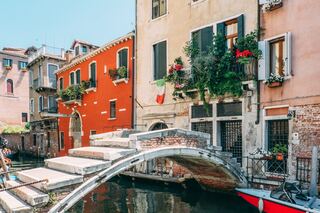
Venice is a city unlike any other. No matter how often you've seen it in photos and films, the real thing is more dreamlike than you could imagine. With canals...
Full description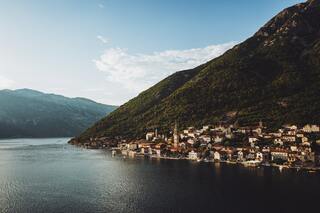
Backed by imposing mountains, tiny Kotor lies hidden from the open sea, tucked into the deepest channel of the Bokor Kotorska (Kotor Bay), which is Europe's mos...
Full description
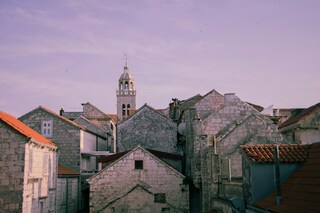
Off the coast of Croatia in the southern Adriatic Sea lie some thousand islands and the largest of them, Korçula, is considered the most beautiful. With an aver...
Full description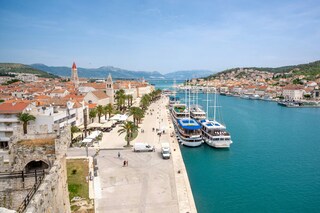
Venice is a city unlike any other. No matter how often you've seen it in photos and films, the real thing is more dreamlike than you could imagine. With canals...
Full description
Venice is a city unlike any other. No matter how often you've seen it in photos and films, the real thing is more dreamlike than you could imagine. With canals...
Full description
Backed by imposing mountains, tiny Kotor lies hidden from the open sea, tucked into the deepest channel of the Bokor Kotorska (Kotor Bay), which is Europe's mos...
Full description
Off the coast of Croatia in the southern Adriatic Sea lie some thousand islands and the largest of them, Korçula, is considered the most beautiful. With an aver...
Full description
Venice is a city unlike any other. No matter how often you've seen it in photos and films, the real thing is more dreamlike than you could imagine. With canals...
Full descriptionVenice
Venice is a city unlike any other. No matter how often you've seen it in photos and films, the real thing is more dreamlike than you could imagine. With canals where streets should be, water shimmers everywhere. The fabulous palaces and churches reflect centuries of history in what was a wealthy trading center between Europe and the Orient. Getting lost in the narrow alleyways is a quintessential part of exploring Venice, but at some point you'll almost surely end up in Piazza San Marco, where tourists and locals congregate for a coffee or an aperitif.
Kotor
Backed by imposing mountains, tiny Kotor lies hidden from the open sea, tucked into the deepest channel of the Bokor Kotorska (Kotor Bay), which is Europe's most southerly fjord. To many, this town is more charming than its sister UNESCO World Heritage Site, Dubrovnik, retaining more authenticity, but with fewer tourists and spared the war damage and subsequent rebuilding which has given Dubrovnik something of a Disney feel.Kotor's medieval Stari Grad (Old Town) is enclosed within well-preserved defensive walls built between the 9th and 18th centuries and is presided over by a proud hilltop fortress. Within the walls, a labyrinth of winding cobbled streets leads through a series of splendid paved piazzas, rimmed by centuries-old stone buildings. The squares are now haunted by strains from buskers but although many now house trendy cafés and chic boutiques, directions are still given medieval-style by reference to the town’s landmark churches.In the Middle Ages, as Serbia's chief port, Kotor was an important economic and cultural center with its own highly regarded schools of stonemasonry and iconography. From 1391 to 1420 it was an independent city-republic and later, it spent periods under Venetian, Austrian, and French rule, though it was undoubtedly the Venetians who left the strongest impression on the city's architecture. Since the breakup of Yugoslavia, some 70% of the stone buildings in the romantic Old Town have been snapped up by foreigners, mostly Brits and Russians. Porto Montenegro, a new marina designed to accommodate some of the world’s largest super yachts, opened in nearby Tivat in 2011, and along the bay are other charming seaside villages, all with better views of the bay than the vista from Kotor itself where the waterside is congested with cruise ships and yachts. Try sleepy Muo or the settlement of Prčanj in one direction around the bay, or Perast and the Roman mosaics of Risan in the other direction.
Korčula
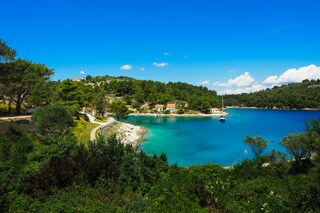
Off the coast of Croatia in the southern Adriatic Sea lie some thousand islands and the largest of them, Korçula, is considered the most beautiful. With an average of 3,000 hours of sunshine per annum, which guarantees a wide assortment of Mediterranean vegetation, it is not difficult to understand why seasoned travelers compare Korçula to a latter-day Eden. Separated from the mainland by a channel of only one mile, Korçula's main town, named the same as the island, ranks among the best preserved medieval towns in the Mediterranean. It is the island's main tourist, economic and cultural center. Thanks to its strategic location along the sea trade routes, Korçula has always attracted travelers and settlers. Korcula was founded by Greek colonists, who were followed by Illyrians, Romans and finally the Croats. The Korçula Statute of 1214 is one of the oldest legal documents to have been adopted in this part of Europe. The same century saw the birth of the famous world traveler, Marco Polo. The house said to be his birthplace can be seen in town. Korçulans have always been known as keen seafarers, excellent shipbuilders, stonemasons and artists. From their many voyages, sailors brought back new ideas, which eventually mixed with local customs. To this day, Korçula has maintained the tradition of performing knightly games such as the chivalrous Moreska dance, which has been in existence for more than 400 years. Visitors to Korçula enjoy its stunning location, natural beauty and medieval ambiance. And if that's not enough, the town offers numerous attractions that are within walking distance from the pier, including the City Museum and the Bishop's Treasury.
Dates & prices
Departs
Sat 24 Jul 2027
from £2,665 pp
Enquire now Call 020 7590 0610Per person, based on two sharing, cruise only. Updated daily and confirmed when you book.