
Summary
Itinerary & Map
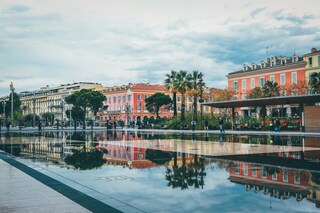
United with France only since 1860, Nice has its own history and atmosphere, which dates back 230,000 years. It was on Colline du Château (now château-less) and...
Full description
Livorno is a gritty city with a long and interesting history. In the early Middle Ages it alternately belonged to Pisa and Genoa. In 1421 Florence, seeking acce...
Full description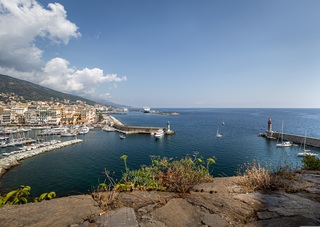
Corsica's northern capital, Bastia, is the centre of commerce and industry and a thriving freight and passenger port. Commerce, more than tourism, is its main f...
Full description
Naples, in the Campania region, is Italy's third largest city. Its claim to fame is the spectacular location along one of the world's most splendid bays, backed...
Full description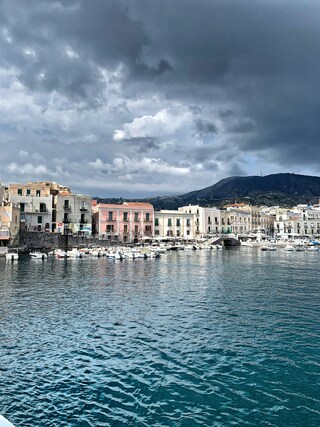
The largest and most developed of the Aeolians, Lipari welcomes you with distinctive pastel-color houses. Fields of spiky agaves dot the northernmost tip of the...
Full description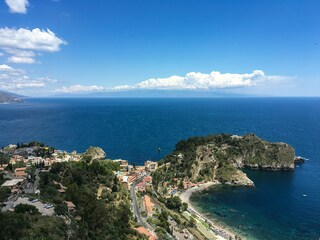
The medieval cliff-hanging town of Taormina is overrun with tourists, yet its natural beauty is still hard to dispute. The view of the sea and Mt. Etna from its...
Full description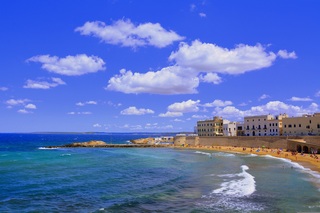
Kalè polis, meaning beautiful city, is the name ancient Greek mariners bestowed on Gallipoli, with good reason. Situated on a mound, the Old Town with its labyr...
Full description
Katakolon could not seem less of a cruise port if it tried. A tiny enclave clinging to the western Peloponnese coast, it's a sleepy place except when ships dock...
Full description
Oraia (beautiful) is the word Greeks use to describe Nafplion. The town's old section, on a peninsula jutting into the gulf of Argos, mixes Greek, Venetian, and...
Full description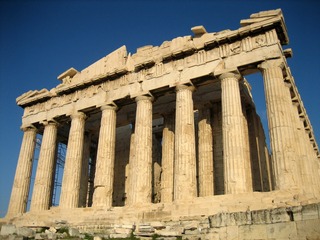
It's no wonder that all roads lead to the fascinating and maddening metropolis of Athens. Lift your eyes 200 feet above the city to the Parthenon, its honey-col...
Full description
United with France only since 1860, Nice has its own history and atmosphere, which dates back 230,000 years. It was on Colline du Château (now château-less) and...
Full description
Livorno is a gritty city with a long and interesting history. In the early Middle Ages it alternately belonged to Pisa and Genoa. In 1421 Florence, seeking acce...
Full description
Corsica's northern capital, Bastia, is the centre of commerce and industry and a thriving freight and passenger port. Commerce, more than tourism, is its main f...
Full description
Naples, in the Campania region, is Italy's third largest city. Its claim to fame is the spectacular location along one of the world's most splendid bays, backed...
Full description
The largest and most developed of the Aeolians, Lipari welcomes you with distinctive pastel-color houses. Fields of spiky agaves dot the northernmost tip of the...
Full description
The medieval cliff-hanging town of Taormina is overrun with tourists, yet its natural beauty is still hard to dispute. The view of the sea and Mt. Etna from its...
Full description
Kalè polis, meaning beautiful city, is the name ancient Greek mariners bestowed on Gallipoli, with good reason. Situated on a mound, the Old Town with its labyr...
Full description
Katakolon could not seem less of a cruise port if it tried. A tiny enclave clinging to the western Peloponnese coast, it's a sleepy place except when ships dock...
Full description
Oraia (beautiful) is the word Greeks use to describe Nafplion. The town's old section, on a peninsula jutting into the gulf of Argos, mixes Greek, Venetian, and...
Full description
It's no wonder that all roads lead to the fascinating and maddening metropolis of Athens. Lift your eyes 200 feet above the city to the Parthenon, its honey-col...
Full descriptionNice
United with France only since 1860, Nice has its own history and atmosphere, which dates back 230,000 years. It was on Colline du Château (now château-less) and at the Plage des Ponchettes, in front of the Old Town, that the Greeks established a market-port in 350 BC and named it Nikaia, which would become Marseilles' chief coastal rival. The Romans established themselves a little later on the hills of Cimiez (Cemenelum), already previously occupied by Ligurians and Celts, and quickly overshadowed the waterfront port. After falling to the Saracen invasions, Nice regained power as an independent state, becoming an important port in the early Middle Ages.So cocksure did it become that in 1388, Nice, along with the hill towns behind, effectively seceded from the county of Provence, under Louis d'Anjou, and allied itself with Savoie. Thus began its liaison with the House of Savoy, and through it with Piedmont and Sardinia, it was the Comté de Nice (Nice County). This relationship lasted some 500 years, tinting the culture, architecture, and dialect in rich Italian hues.By the 19th century Nice was flourishing commercially, locked in rivalry with the neighboring shipping port of Genoa. Another source of income: the dawning of tourism, as first the English, then the Russian nobility, discovered its extraordinary climate and superb waterfront position. A parade of fine stone mansions and hotels closed into a nearly solid wall of masonry, separated from the smooth-round rocks of the beach by what was originally named Camin deis Anglés (the English Way), which of course is now the famous Promenade des Anglais. This magnificent crescent, which is seeking UNESCO recognition, is one of the noblest in France. Many of Nice's most delightful attractions—the Cours Saleya market, the Old Town streets, the Hotel Negresco, and the Palais Masséna—are on or close to this 10-km (6-mile) waterfront, making it the first stop for most visitors, while the redevelopment of Nice's port, around the other side of the Colline du Château, makes it easier for amblers who want to take in the Genoese architecture or peruse the antiques at the Puces de Nice, now part of the Promenade des 100 Antiquaires, along Quai Papacino. Nice also has the distinction of the "Family Plus" label, with free strollers, play areas, and restaurants with child-friendly activities.
Livorno
Livorno is a gritty city with a long and interesting history. In the early Middle Ages it alternately belonged to Pisa and Genoa. In 1421 Florence, seeking access to the sea, bought it. Cosimo I (1519–74) started construction of the harbor in 1571, putting Livorno on the map. After Ferdinando I de' Medici (1549–1609) proclaimed Livorno a free city, it became a haven for people suffering from religious persecution; Roman Catholics from England and Jews and Moors from Spain and Portugal, among others, settled here. The Quattro Mori (Four Moors), also known as the Monument to Ferdinando I, commemorates this. (The statue of Ferdinando I dates from 1595, the bronze Moors by Pietro Tacca from the 1620s.)In the following centuries, and particularly in the 18th, Livorno boomed as a port. In the 19th century the town drew a host of famous Britons passing through on their grand tours. Its prominence continued up to World War II, when it was heavily bombed. Much of the town's architecture, therefore, postdates the war, and it's somewhat difficult to imagine what it might have looked like before. Livorno has recovered from the war, however, as it's become a huge point of departure for container ships, as well as the only spot in Tuscany for cruise ships to dock for the day.Most of Livorno's artistic treasures date from the 17th century and aren't all that interesting unless you dote on obscure baroque artists. Livorno's most famous native artist, Amedeo Modigliani (1884–1920), was of much more recent vintage. Sadly, there's no notable work by him in his hometown.There may not be much in the way of art, but it's still worth strolling around the city. The Mercato Nuovo, which has been around since 1894, sells all sorts of fruits, vegetables, grains, meat, and fish. Outdoor markets nearby are also chock-full of local color. The presence of Camp Darby, an American military base just outside town, accounts for the availability of many American products.If you have time, Livorno is worth a stop for lunch or dinner at the very least.
Bastia
Corsica's northern capital, Bastia, is the centre of commerce and industry and a thriving freight and passenger port. Commerce, more than tourism, is its main focus, providing employment for many Corsicans. Bastia's industrial sprawl, however, is offset by its aged charm. The presence of an overwhelming Italian atmosphere adds to the city's attraction. Two distinct areas comprise the city: Terra Vecchia, the old quarter, consisting of haphazard streets, flamboyant Baroque churches and lofty tenements, with their crumbling golden-grey walls set against a backdrop of fire-darkened hills; and the more orderly Terra Nova, the historic district favoured by prominent doctors, lawyers and architects. The city dates from Roman times, when a base was set up at Biguglia to the south. Under the Genoese, Bastia was the island's capital for four centuries and of major importance for the export of wine to the Italian mainland. They built a fortress (bastiglia), which gave the town its name. The Genoese also were responsible for laying the foundation for the area's prosperity by planting vines, olives, chestnut trees and other experimental crops. This resulted in an energetic and enterprising region, still a characteristic of today's northern Corsica. Although Napoleon had appointed Ajaccio the capital of the island in 1811- initiating a rivalry that still exists - Bastia established a stronger trading position with mainland France. As a result, the Nouveau Port was created in 1862 to cope with the increasing traffic with France and Italy. Bastia's economic prominence and a German division based here during World War II accounted for severe bombing attacks. Many buildings were destroyed, including much of the old governor's palace. Of the two largest towns on the island, Ajaccio and Bastia, the latter boasts a more genuine Corsican character. Visitors can experience an authentic feel of island life by wandering through the maze of narrow streets of Bastia's old quarter and by exploring its fortifications. Don't miss the vast Place Saint-Nicolas just north of the old quarter; it is the focal point of the city. Open to the sea and lined with shady trees and sidewalk cafes, it is a perfect place for people watching and for taking in the local ambiance. Pier Information The ship is scheduled to dock at the port of Bastia. The city's focal point, Place Saint-Nicolas, is a distance of 650 feet (200 metres) to walk. Taxis are generally available at the pier but it is highly recommended to book in advance if you want to be sure to get one. It is recommended to establish the fare before leaving the port. Shopping The main shopping streets, Boulevard Paoli and Rue Cesar Campinchi, are less than one half miles (500 metres) from the port terminal. Handicrafts and the area's specialties such as honey, wine and liqueurs may be of interest. Most shops are open from 9:00 a.m. to 12:00 p.m. and 2:30 p.m. to 7:00 p.m. Shops are closed for the day on Sundays and some shops may also close Monday mornings (some souvenirs shops may open Sundays during the high season of July-August). The local currency is the euro. Cuisine A variety of restaurants offer a good choice of eating possibilities. Some of the best restaurants are found around the Vieux Port and on the Quai des Martyrs. French cuisine and seafood feature prominently on menus as well as such Corsican specialties as wild boar, charcuterie and aziminu, a local version of bouillabaisse. Evidence of Bastia's strong Italian influence is apparent in the numerous pizza and pasta places in the Nouveau Port area. For outdoor dining and people watching, cafes around lively Place Saint-Nicolas are a perfect place. Other Sites Oratoire de Saint-Roch Located in the Terra Vecchia quarter, the chapel is a Genoese Baroque extravaganza built in 1604. The walls are covered with finely carved wooden panelling and the organ is magnificent with its decoration of gilt and wooden sculpture. Oratoire de L'Immaculee Conception Although its exterior is rather austere, the flamboyant interior of this 17th-century church with gilt and marble ceiling, frescoes and crystal chandeliers creates an ambiance of an opera house. Vieux Port Site of the original Porto Prado, the area around the Vieux Port is the most appealing part of town. Its soaring houses seem to bend inwards towards the water. Once busy with Genoese traders, the building of the ferry terminal and commercial docks have reduced much of the action at Vieux Port. Terra Nova As the administrative core of old Bastia, Terra Nova displays a distinct air of affluence. Its most impressive building is the 14th-century Governor's Palace. During the Genoese heyday the governor and the bishop lived here, entertaining foreign dignitaries and hosting massive parties. Private arrangements for independent sightseeing may be requested through the Tour Office on board, subject to the availability of English-speaking guides.
Naples
Naples, in the Campania region, is Italy's third largest city. Its claim to fame is the spectacular location along one of the world's most splendid bays, backed by the perfect cone of Mount Vesuvius. In addition to its beautiful setting, Naples' surprises with other outstanding attractions such as the Royal Palace, San Carlos Opera House, the impressive National Archaeological Museum and the Castel Nuovo, dating from the 13th-century. The city's central area is best explored on foot. Chaotic traffic conditions make driving around the city a very frustrating experience. Naples provides a convenient starting point for trips to such favored destinations as Pompeii, Herculaneum and Mount Vesuvius. The Isle of Capri can be reached via a 45-minute hydrofoil service. The region of Campania was home to Greeks settlers some 300 years before Rome was founded. Pompeii, too, was a Greek town before being conquered by the Romans during the 5th century BC. It was under the Romans that Pompeii flourished and grew prosperous. When Mount Vesuvius erupted in 79 AD, the population of 20,000 was wiped out, but dozens of buildings were preserved under layers of cinder more than 20 feet deep. The most important finds from Pompeii are displayed in Naples' National Archaeological Museum. A visit here will no doubt enhance a visit to ancient Pompeii.
Lipari
The largest and most developed of the Aeolians, Lipari welcomes you with distinctive pastel-color houses. Fields of spiky agaves dot the northernmost tip of the island, Acquacalda, indented with pumice and obsidian quarries. In the west is San Calogero, where you can explore hot springs and mud baths. From the red-lava base of the island rises a plateau crowned with a 16th-century castle and a 17th-century cathedral.
Taormina
The medieval cliff-hanging town of Taormina is overrun with tourists, yet its natural beauty is still hard to dispute. The view of the sea and Mt. Etna from its jagged cactus-covered cliffs is as close to perfection as a panorama can get—especially on clear days, when the snowcapped volcano's white puffs of smoke rise against the blue sky. Writers have extolled Taormina's beauty almost since it was founded in the 6th century BC by Greeks from nearby Naxos; Goethe and D. H. Lawrence were among its well-known enthusiasts. The town's boutique-lined main streets get old pretty quickly, but the many hiking paths that wind through the beautiful hills surrounding Taormina promise a timeless alternative. A trip up to stunning Castelmola (whether on foot or by car) should also be on your itinerary.
Gallipoli
Kalè polis, meaning beautiful city, is the name ancient Greek mariners bestowed on Gallipoli, with good reason. Situated on a mound, the Old Town with its labyrinth of winding lanes, emerges from the Ionian Sea. It is connected to the mainland and modern Gallipoli via a 17th-century bridge. The area lies on the Salentina Peninsula in the extreme southeast end of Italy, commonly referred to as the heel of the boot. The Salento region was inhabited already in prehistoric times; later centuries were marked by Greek, Norman, Byzantine and Baroque cultures. It is a land of farms, castles, works of art, myths and legends. Many heroic battles were fought; fierce resistance was shown by Gallipoli’s citizens against numerous invaders that included Romans, Vandals, Swabians, Venetians, French and lastly the English in 1809. In addition to its tumultuous history and natural beauty, the city’s claim to fame rests in its art treasures, most notably, the Basilica of Sant’Agata with its majestic 17th-century façade. Inside, the church contains a rich and important art collection with numerous works by its great native son, Giovanni Andrea Coppola.
Katakolon
Katakolon could not seem less of a cruise port if it tried. A tiny enclave clinging to the western Peloponnese coast, it's a sleepy place except when ships dock. But it's a popular cruise destination because of its proximity to Olympia. Ancient Olympia was one of the most important cities in classical Greece. The Sanctuary of Zeus was the city's raison d'être, and attracted pilgrims from around the eastern Mediterranean, and later the city played host to Olympic Games, the original athletic games that were the inspiration for today's modern sporting pan-planetary meet. At the foot of the tree-covered Kronion hill, in a valley near two rivers, Katakolon is today one of the most popular ancient sites in Greece. If you don't want to make the trip to Olympia, then Katakolon is an ideal place for a leisurely Greek lunch while you watch the fishermen mend their nets, but there's just not much else to do there.
Náfplion
Oraia (beautiful) is the word Greeks use to describe Nafplion. The town's old section, on a peninsula jutting into the gulf of Argos, mixes Greek, Venetian, and Turkish architecture; narrow streets, often just broad flights of stone stairs, climb the slopes beneath the walls of Acronafplia. Tree-shaded plazas surround neoclassic buildings. The Palamidi fortress—an elegant display of Venetian might from the early 1700s—guards the town. Nafplion deserves at least a leisurely day of your undivided attention, and you may want to spend several days or a week here and use the city as the base from which to explore the many surrounding ancient sights.
Piraeus
It's no wonder that all roads lead to the fascinating and maddening metropolis of Athens. Lift your eyes 200 feet above the city to the Parthenon, its honey-color marble columns rising from a massive limestone base, and you behold architectural perfection that has not been surpassed in 2,500 years. But, today, this shrine of classical form dominates a 21st-century boomtown. To experience Athens—Athína in Greek—fully is to understand the essence of Greece: ancient monuments surviving in a sea of cement, startling beauty amid the squalor, tradition juxtaposed with modernity. Locals depend on humor and flexibility to deal with the chaos; you should do the same. The rewards are immense. Although Athens covers a huge area, the major landmarks of the ancient Greek, Roman, and Byzantine periods are close to the modern city center. You can easily walk from the Acropolis to many other key sites, taking time to browse in shops and relax in cafés and tavernas along the way. From many quarters of the city you can glimpse "the glory that was Greece" in the form of the Acropolis looming above the horizon, but only by actually climbing that rocky precipice can you feel the impact of the ancient settlement. The Acropolis and Filopappou, two craggy hills sitting side by side; the ancient Agora (marketplace); and Kerameikos, the first cemetery, form the core of ancient and Roman Athens. Along the Unification of Archaeological Sites promenade, you can follow stone-paved, tree-lined walkways from site to site, undisturbed by traffic. Cars have also been banned or reduced in other streets in the historical center. In the National Archaeological Museum, vast numbers of artifacts illustrate the many millennia of Greek civilization; smaller museums such as the Goulandris Museum of Cycladic Art Museum and the Byzantine and Christian Museum illuminate the history of particular regions or periods. Athens may seem like one huge city, but it is really a conglomeration of neighborhoods with distinctive characters. The Eastern influences that prevailed during the 400-year rule of the Ottoman Empire are still evident in Monastiraki, the bazaar area near the foot of the Acropolis. On the northern slope of the Acropolis, stroll through Plaka (if possible by moonlight), an area of tranquil streets lined with renovated mansions, to get the flavor of the 19th-century's gracious lifestyle. The narrow lanes of Anafiotika, a section of Plaka, thread past tiny churches and small, color-washed houses with wooden upper stories, recalling a Cycladic island village. In this maze of winding streets, vestiges of the older city are everywhere: crumbling stairways lined with festive tavernas; dank cellars filled with wine vats; occasionally a court or diminutive garden, enclosed within high walls and filled with magnolia trees and the flaming trumpet-shaped flowers of hibiscus bushes. Formerly run-down old quarters, such as Thission, Gazi and Psirri, popular nightlife areas filled with bars and mezedopoleia (similar to tapas bars), are now in the process of gentrification, although they still retain much of their original charm, as does the colorful produce and meat market on Athinas. The area around Syntagma Square, the tourist hub, and Omonia Square, the commercial heart of the city about 1 km (½ mi) northwest, is distinctly European, having been designed by the court architects of King Otho, a Bavarian, in the 19th century. The chic shops and bistros of ritzy Kolonaki nestle at the foot of Mt. Lycabettus, Athens's highest hill (909 feet). Each of Athens's outlying suburbs has a distinctive character: in the north is wealthy, tree-lined Kifissia, once a summer resort for aristocratic Athenians, and in the south and southeast lie Glyfada, Voula, and Vouliagmeni, with their sandy beaches, seaside bars, and lively summer nightlife. Just beyond the city's southern fringes is Piraeus, a bustling port city of waterside fish tavernas and Saronic Gulf views.
Date & price
Select guest
Departs
Sat 7 Oct 2028
from £5,200 pp
Enquire now Call 020 7590 0610Per person, based on two sharing, cruise only. Updated daily and confirmed when you book.