
Summary
Itinerary & Map
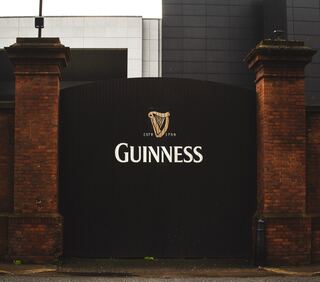
Dublin is making a comeback. The decade-long "Celtic Tiger" boom era was quickly followed by the Great Recession, but The Recovery has finally taken a precariou...
Full description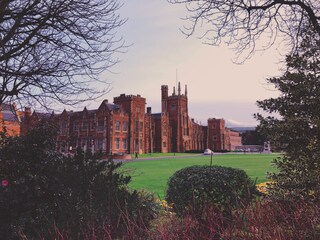
Before English and Scottish settlers arrived in the 1600s, Belfast was a tiny village called Béal Feirste ("sandbank ford") belonging to Ulster's ancient O'Neil...
Full description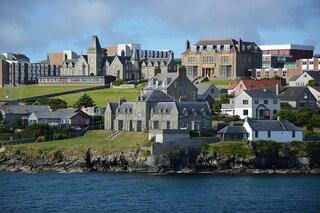
Founded by Dutch fishermen in the 17th century, Lerwick today is a busy town and administrative center. Handsome stone buildings—known as lodberries—line the ha...
Full descriptionExploring the sandstone cliff faces of the Isle of Noss will reveal ledges loaded with gannets, puffins, guillemots, shags, kittiwakes, Razorbills, fulmars and...
Full description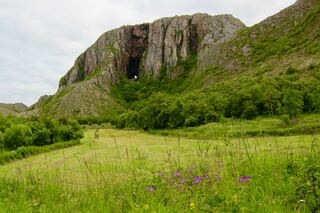
Sitting just below the Arctic Circle, a visit to Bronnoysund guarantees a journey of culture and extraordinary scenery. Bronnoysund is quintessential Norway, an...
Full description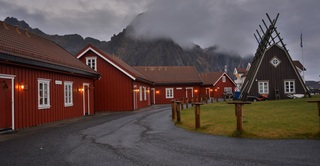
With its centre located on the island of Tromsø, the municipality of Tromsø is more than five times the size of Norway’s capital, Oslo, and is the world’s north...
Full description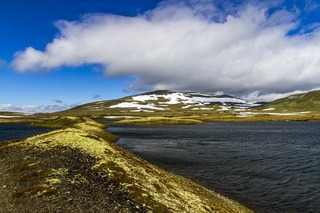
Almost half way between Tromsø and Svalbard is isolated Bear Island – considered the southernmost island of the Svalbard Archipelago. The unglaciated island is...
Full description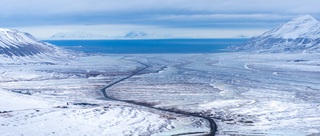
A flexible itinerary allows us to take advantage of favorable ice and weather conditions to travel through the northern stretches of Svalbard to points visited...
Full description
A flexible itinerary allows us to take advantage of favorable ice and weather conditions to travel through the northern stretches of Svalbard to points visited...
Full description
A flexible itinerary allows us to take advantage of favorable ice and weather conditions to travel through the northern stretches of Svalbard to points visited...
Full description
A flexible itinerary allows us to take advantage of favorable ice and weather conditions to travel through the northern stretches of Svalbard to points visited...
Full description
A flexible itinerary allows us to take advantage of favorable ice and weather conditions to travel through the northern stretches of Svalbard to points visited...
Full description
A flexible itinerary allows us to take advantage of favorable ice and weather conditions to travel through the northern stretches of Svalbard to points visited...
Full description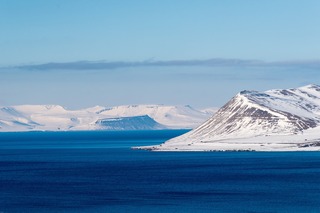
Longyearbyen is the biggest settlement in Svalbard. Seat of the Norwegian administration, it also has the best services and infrastructure in the archipelago. L...
Full description
Dublin is making a comeback. The decade-long "Celtic Tiger" boom era was quickly followed by the Great Recession, but The Recovery has finally taken a precariou...
Full description
Before English and Scottish settlers arrived in the 1600s, Belfast was a tiny village called Béal Feirste ("sandbank ford") belonging to Ulster's ancient O'Neil...
Full description
Founded by Dutch fishermen in the 17th century, Lerwick today is a busy town and administrative center. Handsome stone buildings—known as lodberries—line the ha...
Full descriptionExploring the sandstone cliff faces of the Isle of Noss will reveal ledges loaded with gannets, puffins, guillemots, shags, kittiwakes, Razorbills, fulmars and...
Full description
Sitting just below the Arctic Circle, a visit to Bronnoysund guarantees a journey of culture and extraordinary scenery. Bronnoysund is quintessential Norway, an...
Full description
With its centre located on the island of Tromsø, the municipality of Tromsø is more than five times the size of Norway’s capital, Oslo, and is the world’s north...
Full description
Almost half way between Tromsø and Svalbard is isolated Bear Island – considered the southernmost island of the Svalbard Archipelago. The unglaciated island is...
Full description
A flexible itinerary allows us to take advantage of favorable ice and weather conditions to travel through the northern stretches of Svalbard to points visited...
Full description
A flexible itinerary allows us to take advantage of favorable ice and weather conditions to travel through the northern stretches of Svalbard to points visited...
Full description
A flexible itinerary allows us to take advantage of favorable ice and weather conditions to travel through the northern stretches of Svalbard to points visited...
Full description
A flexible itinerary allows us to take advantage of favorable ice and weather conditions to travel through the northern stretches of Svalbard to points visited...
Full description
A flexible itinerary allows us to take advantage of favorable ice and weather conditions to travel through the northern stretches of Svalbard to points visited...
Full description
A flexible itinerary allows us to take advantage of favorable ice and weather conditions to travel through the northern stretches of Svalbard to points visited...
Full description
Longyearbyen is the biggest settlement in Svalbard. Seat of the Norwegian administration, it also has the best services and infrastructure in the archipelago. L...
Full descriptionDublin
Dublin is making a comeback. The decade-long "Celtic Tiger" boom era was quickly followed by the Great Recession, but The Recovery has finally taken a precarious hold. For visitors, this newer and wiser Dublin has become one of western Europe's most popular and delightful urban destinations. Whether or not you're out to enjoy the old or new Dublin, you'll find it a colossally entertaining city, all the more astonishing considering its intimate size.It is ironic and telling that James Joyce chose Dublin as the setting for his famous Ulysses, Dubliners, and A Portrait of the Artist as a Young Man because it was a "center of paralysis" where nothing much ever changed. Which only proves that even the greats get it wrong sometimes. Indeed, if Joyce were to return to his once-genteel hometown today—disappointed with the city's provincial outlook, he left it in 1902 at the age of 20—and take a quasi-Homeric odyssey through the city (as he so famously does in Ulysses), would he even recognize Dublin as his "Dear Dirty Dumpling, foostherfather of fingalls and dotthergills"?For instance, what would he make of Temple Bar—the city's erstwhile down-at-the-heels neighborhood, now crammed with cafés and trendy hotels and suffused with a nonstop, international-party atmosphere? Or the simple sophistication of the open-air restaurants of the tiny Italian Quarter (named Quartier Bloom after his own creation), complete with sultry tango lessons? Or of the hot–cool Irishness, where every aspect of Celtic culture results in sold-out theaters, from Once, the cult indie movie and Broadway hit, to Riverdance, the old Irish mass-jig recast as a Las Vegas extravaganza? Plus, the resurrected Joyce might be stirred by the songs of Hozier, fired up by the sultry acting of Michael Fassbender, and moved by the award-winning novels of Colum McCann. As for Ireland's capital, it's packed with elegant shops and hotels, theaters, galleries, coffeehouses, and a stunning variety of new, creative little restaurants can be found on almost every street in Dublin, transforming the provincial city that suffocated Joyce into a place almost as cosmopolitan as the Paris to which he fled. And the locals are a hell of a lot more fun! Now that the economy has finally turned a corner, Dublin citizens can cast a cool eye over the last 20 crazy years. Some argue that the boomtown transformation of their heretofore-tranquil city has permanently affected its spirit and character. These skeptics (skepticism long being a favorite pastime in the capital city) await the outcome of "Dublin: The Sequel," and their greatest fear is the possibility that the tattered old lady on the Liffey has become a little less unique, a little more like everywhere else.Oh ye of little faith: the rare ole gem that is Dublin is far from buried. The fundamentals—the Georgian elegance of Merrion Square, the Norman drama of Christ Church Cathedral, the foamy pint at an atmospheric pub—are still on hand to gratify. Most of all, there are the locals themselves: the nod and grin when you catch their eye on the street, the eagerness to hear half your life story before they tell you all of theirs, and their paradoxically dark but warm sense of humor. It's expected that 2016 will be an extra-special year in the capital, as centenary celebrations of the fateful 1916 Easter Rising will dominate much of the cultural calendar.
Belfast
Before English and Scottish settlers arrived in the 1600s, Belfast was a tiny village called Béal Feirste ("sandbank ford") belonging to Ulster's ancient O'Neill clan. With the advent of the Plantation period (when settlers arrived in the 1600s), Sir Arthur Chichester, from Devon in southwestern England, received the city from the English Crown, and his son was made Earl of Donegall. Huguenots fleeing persecution from France settled near here, bringing their valuable linen-work skills. In the 18th century, Belfast underwent a phenomenal expansion—its population doubled every 10 years, despite an ever-present sectarian divide. Although the Anglican gentry despised the Presbyterian artisans—who, in turn, distrusted the native Catholics—Belfast's growth continued at a dizzying speed. The city was a great Victorian success story, an industrial boomtown whose prosperity was built on trade, especially linen and shipbuilding. Famously (or infamously), the Titanic was built here, giving Belfast, for a time, the nickname "Titanic Town." Having laid the foundation stone of the city's university in 1845, Queen Victoria returned to Belfast in 1849 (she is recalled in the names of buildings, streets, bars, monuments, and other places around the city), and in the same year, the university opened under the name Queen's College. Nearly 40 years later, in 1888, Victoria granted Belfast its city charter. Today its population is nearly 300,000, tourist numbers have increased, and this dramatically transformed city is enjoying an unparalleled renaissance.This is all a welcome change from the period when news about Belfast meant reports about "the Troubles." Since the 1994 ceasefire, Northern Ireland's capital city has benefited from major hotel investment, gentrified quaysides (or strands), a sophisticated new performing arts center, and major initiatives to boost tourism. Although the 1996 bombing of offices at Canary Wharf in London disrupted the 1994 peace agreement, the ceasefire was officially reestablished on July 20, 1997, and this embattled city began its quest for a newfound identity.Since 2008, the city has restored all its major public buildings such as museums, churches, theaters, City Hall, Ulster Hall—and even the glorious Crown Bar—spending millions of pounds on its built heritage. A gaol that at the height of the Troubles held some of the most notorious murderers involved in paramilitary violence is now a major visitor attraction.Belfast's city center is made up of three roughly contiguous areas that are easy to navigate on foot. From the south end to the north, it's about an hour's leisurely walk.
Lerwick, Shetland Islands
Founded by Dutch fishermen in the 17th century, Lerwick today is a busy town and administrative center. Handsome stone buildings—known as lodberries—line the harbor; they provided loading bays for goods, some of them illegal. The town's twisting flagstone lanes and harbor once heaved with activity, and Lerwick is still an active port today. This is also where most visitors to Shetland dock, spilling out of cruise ships, allowing passengers to walk around the town.
Isle of Noss
Exploring the sandstone cliff faces of the Isle of Noss will reveal ledges loaded with gannets, puffins, guillemots, shags, kittiwakes, Razorbills, fulmars and Great Skuas. The island was recognized as a National Nature Reserve in 1955, and has one of Europe’s largest and most diverse seabird colonies. Sheep have grazed the inland hillsides of Noss since the late 1800s and early 1900s when around twenty people lived on the island to manage the sheep farm. Along with the sheep, shaggy Shetland ponies graze the windblown slopes of Noss.
Brønnøysund
Sitting just below the Arctic Circle, a visit to Bronnoysund guarantees a journey of culture and extraordinary scenery. Bronnoysund is quintessential Norway, and encompasses everything you'd expect from this stunning country - along with plenty of surprises along the way. Raking fjords, scattered islands, and roaring rivers provide a huge natural bounty - but it’s the Torghatten Mountain that’s Bronnoysund’s true crowning glory. Torghatten Mountain rises like a colossal castle of sheer granite, and is particularly striking because it’s punctured right through the centre by a giant hole. Line up the view just right, and you can see sunlight bursting through the hole, as if illuminated by a massive spotlight. It's hard to imagine how such a striking phenomenon would form naturally, and indeed the local folklore has a persuasive explanation – that it was created when an arrow ripped through the troll king's hat, which was thrown into the air to protect a fleeing girl. The hat turned to stone, and the arrow’s hole is preserved there to this day. If you care to climb Torghatten Mountain, you can walk through its cavernous interior, to look down over the red wooden barns and glistening lakes below.
Tromsø
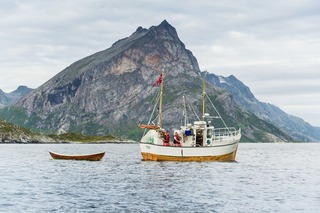
With its centre located on the island of Tromsø, the municipality of Tromsø is more than five times the size of Norway’s capital, Oslo, and is the world’s northernmost university city. Lying 200 miles inside the Arctic Circle, it is known as the 'Gateway to the Arctic' because it was used as a starting point for hunters looking for Arctic foxes, polar bears and seals. In the 19th century it was a base for explorers on Arctic expeditions – a history that is remembered in the city’s Polar Museum, which you can visit on an excursion. Also commemorated in the area is the history of Norway’s indigenous people, the Sami. Visitors can learn about the traditions, heritage and modern preservation of the Sami culture at the Tromsø Museum. Nowadays, Tromsø is a charming mix of old and new, with wooden buildings sitting alongside contemporary architecture such as the impressive glacier-like Arctic Cathedral, which features one of the largest stained glass windows in Europe. Looking down on the city is Mount Storsteinen, and a cable car runs to the top, giving wonderful views over the surrounding countryside of forested peaks and reindeer pastures.
Bear Island
Almost half way between Tromsø and Svalbard is isolated Bear Island – considered the southernmost island of the Svalbard Archipelago. The unglaciated island is an impressive Nature Reserve of steep, high cliffs that are frequented by seabirds, specifically at the southern tip. Brünnich’s Guillemots, Common Guillemots, Black Guillemots, Razorbills, Little Auks, Northern Fulmars, Glaucous Gulls, Black-legged Kittiwakes, and even Atlantic Puffins and Northern Gannets nest along the cliffs south of Sørhamna. Because of the large numbers of birds and the isolated location, Bear Island has been recognized as an Important Bird Area. It was once a hotspot for whaling and walrus hunting, and at one stage even mining. Bear Island received its name because of a polar bear encountered by early explorer Willem Barentsz. Today polar bears rarely visit the island and its only settlement is a meteorological station manned all-year round on the north side.
Svalbard Archipelago
A flexible itinerary allows us to take advantage of favorable ice and weather conditions to travel through the northern stretches of Svalbard to points visited by famous polar explorers such as Andrée, Amundsen and Nobile. Destinations might include the narrow waterways and striking mountains of Krossfjord and Raudfjord. The ship may visit the historic settings of Ny Alesund, Ny London or Amsterdamoya. And of course, we hope to see distinctly Arctic wildlife from walrus hauled out in noisy groups on remote shorelines, to reindeer grazing alpine slopes, and from ptarmigan in their camouflaged hiding places, to mighty polar bears striding the shores in search of their next meal.
Longyearbyen
Longyearbyen is the biggest settlement in Svalbard. Seat of the Norwegian administration, it also has the best services and infrastructure in the archipelago. Located deep in the Adventfjord, a sidearm of the Isfjorden (Icefjord), Longyearbyen’s airport can be used all-year round, but its harbor is blocked by ice in winter. Most shops, hotels, restaurants and a hospital are within easy walking distance of the port. One of the most prominent buildings in town is the UNIS center, where several Norwegian universities have joined forces to operate and offer the northernmost higher education to both Norwegian and international students. Adjacent to UNIS, and well worth a visit, is the Svalbard Museum, covering the natural history and exploitation of Svalbard. Remnants of the former mining activity can be seen all around Longyearbyen and even in town.
Date & price
Select guest
Departs
Wed 19 May 2027
from £21,900 pp
Enquire now Call 020 7590 0610Per person, based on two sharing, cruise only. Updated daily and confirmed when you book.