
Summary
Itinerary & Map
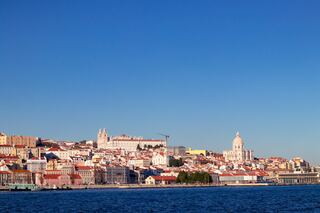
Set on seven hills on the banks of the River Tagus, Lisbon has been the capital of Portugal since the 13th century. It is a city famous for its majestic archite...
Full description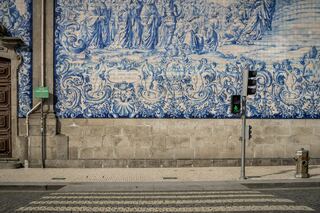
Lively, commercial Oporto is the second largest city in Portugal after Lisbon. Also called Porto for short, the word easily brings to mind the city's most famou...
Full description
La Coruña, the largest city in Spain's Galicia region, is among the country's busiest ports. The remote Galicia area is tucked into the northwest corner of the...
Full description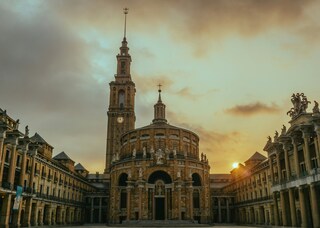
The Campo Valdés baths, dating back to the 1st century AD, and other reminders of Gijón's time as an ancient Roman port remain visible downtown. Gijón was almos...
Full description
Time in Bilbao (Bilbo, in Euskera) may be recorded as BG or AG (Before Guggenheim or After Guggenheim). Never has a single monument of art and architecture so r...
Full description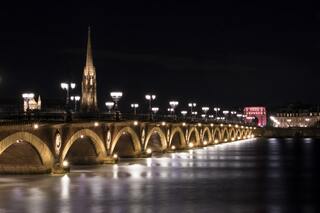
Bordeaux as a whole, rather than any particular points within it, is what you'll want to visit in order to understand why Victor Hugo described it as Versailles...
Full description
Bordeaux as a whole, rather than any particular points within it, is what you'll want to visit in order to understand why Victor Hugo described it as Versailles...
Full description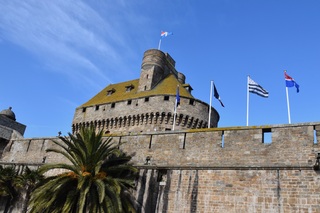
Thrust out into the sea and bound to the mainland only by tenuous man-made causeways, romantic St-Malo has built a reputation as a breeding ground for phenomena...
Full description
Honfleur, the most picturesque of the Côte Fleurie's seaside towns, is a time-burnished place with a surplus of half-timber houses and cobbled streets that are...
Full description
Originally a little fishing village, Cherbourg has developed into a historic port designed by Vauban. This was also a strategic naval port during the Napoleonic...
Full description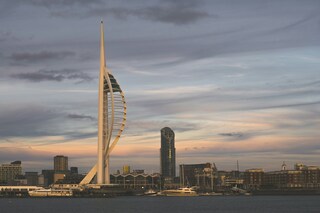
Portsmouth is one of the most densely populated cities in Southern England, and is unusual as most of its built-up area occupies Portsea Island, linked to the m...
Full description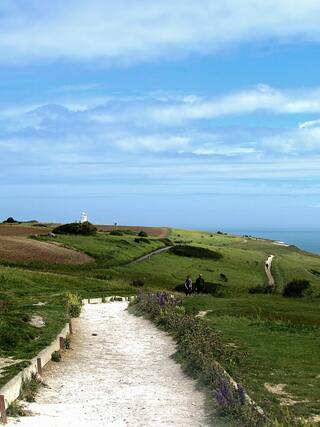
Known as the gateway of England, Dover welcomes millions of visitors from all over the globe each year in its role as the ferry capital of the world and the sec...
Full description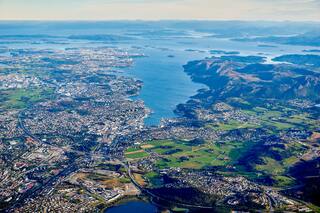
Overlooking the Atlantic Ocean, Stavanger flourished in the 19th century as a fishing port. While other towns in Norway have suffered with the decline of this i...
Full description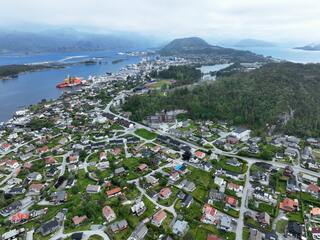
Sitting just below the Arctic Circle, a visit to Bronnoysund guarantees a journey of culture and extraordinary scenery. Bronnoysund is quintessential Norway, an...
Full description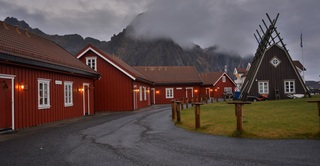
With its centre located on the island of Tromsø, the municipality of Tromsø is more than five times the size of Norway’s capital, Oslo, and is the world’s north...
Full description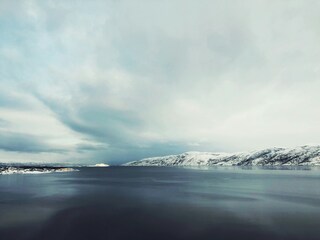
People have been attracted to the community of Alta for thousands of years, and prehistoric rock carvings discovered in 1973 can be seen at the Alta Museum. Sit...
Full description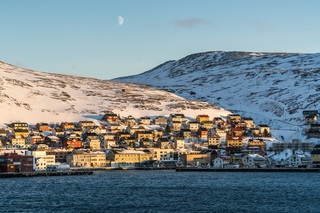
Searching in 1553 for a northeast passage to India, British navigator Richard Chancellor came upon a crag 307 yards above the Barents Sea. He named the jut of r...
Full description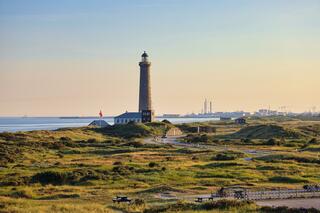

By the 11th century, Copenhagen was already an important trading and fishing centre and today you will find an attractive city which, although the largest in Sc...
Full description
Set on seven hills on the banks of the River Tagus, Lisbon has been the capital of Portugal since the 13th century. It is a city famous for its majestic archite...
Full description
Lively, commercial Oporto is the second largest city in Portugal after Lisbon. Also called Porto for short, the word easily brings to mind the city's most famou...
Full description
La Coruña, the largest city in Spain's Galicia region, is among the country's busiest ports. The remote Galicia area is tucked into the northwest corner of the...
Full description
The Campo Valdés baths, dating back to the 1st century AD, and other reminders of Gijón's time as an ancient Roman port remain visible downtown. Gijón was almos...
Full description
Time in Bilbao (Bilbo, in Euskera) may be recorded as BG or AG (Before Guggenheim or After Guggenheim). Never has a single monument of art and architecture so r...
Full description
Bordeaux as a whole, rather than any particular points within it, is what you'll want to visit in order to understand why Victor Hugo described it as Versailles...
Full description
Bordeaux as a whole, rather than any particular points within it, is what you'll want to visit in order to understand why Victor Hugo described it as Versailles...
Full description
Thrust out into the sea and bound to the mainland only by tenuous man-made causeways, romantic St-Malo has built a reputation as a breeding ground for phenomena...
Full description
Honfleur, the most picturesque of the Côte Fleurie's seaside towns, is a time-burnished place with a surplus of half-timber houses and cobbled streets that are...
Full description
Originally a little fishing village, Cherbourg has developed into a historic port designed by Vauban. This was also a strategic naval port during the Napoleonic...
Full description
Portsmouth is one of the most densely populated cities in Southern England, and is unusual as most of its built-up area occupies Portsea Island, linked to the m...
Full description
Known as the gateway of England, Dover welcomes millions of visitors from all over the globe each year in its role as the ferry capital of the world and the sec...
Full description
Overlooking the Atlantic Ocean, Stavanger flourished in the 19th century as a fishing port. While other towns in Norway have suffered with the decline of this i...
Full description
Sitting just below the Arctic Circle, a visit to Bronnoysund guarantees a journey of culture and extraordinary scenery. Bronnoysund is quintessential Norway, an...
Full description
With its centre located on the island of Tromsø, the municipality of Tromsø is more than five times the size of Norway’s capital, Oslo, and is the world’s north...
Full description
People have been attracted to the community of Alta for thousands of years, and prehistoric rock carvings discovered in 1973 can be seen at the Alta Museum. Sit...
Full description
Searching in 1553 for a northeast passage to India, British navigator Richard Chancellor came upon a crag 307 yards above the Barents Sea. He named the jut of r...
Full description
By the 11th century, Copenhagen was already an important trading and fishing centre and today you will find an attractive city which, although the largest in Sc...
Full descriptionLisbon
Set on seven hills on the banks of the River Tagus, Lisbon has been the capital of Portugal since the 13th century. It is a city famous for its majestic architecture, old wooden trams, Moorish features and more than twenty centuries of history. Following disastrous earthquakes in the 18th century, Lisbon was rebuilt by the Marques de Pombal who created an elegant city with wide boulevards and a great riverfront and square, Praça do Comércio. Today there are distinct modern and ancient sections, combining great shopping with culture and sightseeing in the Old Town, built on the city's terraced hillsides. The distance between the ship and your tour vehicle may vary. This distance is not included in the excursion grades.
Porto
Lively, commercial Oporto is the second largest city in Portugal after Lisbon. Also called Porto for short, the word easily brings to mind the city's most famous product - port wine. Oporto's strategic location on the north bank of the Douro River has accounted for the town's importance since ancient times. The Romans built a fort here where their trading route crossed the Douro, and the Moors brought their own culture to the area. Oporto profited from provisioning crusaders en route to the Holy Land and enjoyed the riches from Portuguese maritime discoveries during the 15th and 16th centuries. Later, port wine trade with Britain compensated for the loss of the spice trade and the end of gold and gem shipments from Brazil. In the 19th century, the city went through a period of new prosperity with the rise of industries. In its wake followed the building of workers' quarters and opulent residences. Since the declaration of Oporto as a World Heritage Site by UNESCO, the city aims to build up a cultural reference that will provide it with a new image, based on deep historical roots. Among the attractions that make Oporto such an interesting place are its graceful bridges spanning the Douro River, a picturesque riverfront quarter and, most notable, its world-famous port wine lodges. Although Oporto is a bustling centre and home to many different businesses, the source of its greatest fame is the rich, sweet fortified red wine we know as port.
La Coruña
La Coruña, the largest city in Spain's Galicia region, is among the country's busiest ports. The remote Galicia area is tucked into the northwest corner of the Iberian Peninsula, surprising visitors with its green and misty countryside that is so much unlike other parts of Spain. The name "Galicia" is Celtic in origin, for it was the Celts who occupied the region around the 6th-century BC and erected fortifications. La Coruña was already considered an important port under the Romans. They were followed by an invasion of Suevians, Visigoths and, much later in 730, the Moors. It was after Galicia was incorporated into the Kingdom of Asturias that the epic saga of the Pilgrimage to Santiago (St. James) began. From the 15th century, overseas trade developed rapidly; in 1720, La Coruña was granted the privilege of trading with America - a right previously only held by Cadiz and Seville. This was the great era when adventurous men voyaged to the colonies and returned with vast riches. Today, the city's significant expansion is evident in three distinct quarters: the town centre located along the isthmus; the business and commercial centre with wide avenues and shopping streets; and the "Ensanche" to the south, occupied by warehouses and factories. Many of the buildings in the old section feature the characteristic glazed façades that have earned La Coruña the name "City of Crystal." Plaza Maria Pita, the beautiful main square, is named after the local heroine who saved the town in 1589 when she seized the English standard from the beacon and gave the alarm, warning her fellow townsmen of the English attack.
Gijón
The Campo Valdés baths, dating back to the 1st century AD, and other reminders of Gijón's time as an ancient Roman port remain visible downtown. Gijón was almost destroyed in a 14th-century struggle over the Castilian throne, but by the 19th century it was a thriving port and industrial city. The modern-day city is part fishing port, part summer resort, and part university town, packed with cafés, restaurants, and sidrerías.
Bilbao
Time in Bilbao (Bilbo, in Euskera) may be recorded as BG or AG (Before Guggenheim or After Guggenheim). Never has a single monument of art and architecture so radically changed a city. Frank Gehry's stunning museum, Norman Foster's sleek subway system, the Santiago Calatrava glass footbridge and airport, the leafy César Pelli Abandoibarra park and commercial complex next to the Guggenheim, and the Philippe Starck AlhóndigaBilbao cultural center have contributed to an unprecedented cultural revolution in what was once the industry capital of the Basque Country.Greater Bilbao contains almost 1 million inhabitants, nearly half the total population of the Basque Country. Founded in 1300 by Vizcayan noble Diego López de Haro, Bilbao became an industrial center in the mid-19th century, largely because of the abundance of minerals in the surrounding hills. An affluent industrial class grew up here, as did the working class in suburbs that line the Margen Izquierda (Left Bank) of the Nervión estuary.Bilbao's new attractions get more press, but the city's old treasures still quietly line the banks of the rust-color Nervión River. The Casco Viejo (Old Quarter)—also known as Siete Calles (Seven Streets)—is a charming jumble of shops, bars, and restaurants on the river's Right Bank, near the Puente del Arenal bridge. This elegant proto-Bilbao nucleus was carefully restored after devastating floods in 1983. Throughout the Casco Viejo are ancient mansions emblazoned with family coats of arms, wooden doors, and fine ironwork balconies. The most interesting square is the 64-arch Plaza Nueva, where an outdoor market is pitched every Sunday morning.Walking the banks of the Nervión is a satisfying jaunt. After all, this was how—while out on a morning jog—Guggenheim director Thomas Krens first discovered the perfect spot for his project, nearly opposite the right bank's Deusto University. From the Palacio de Euskalduna upstream to the colossal Mercado de la Ribera, parks and green zones line the river. César Pelli's Abandoibarra project fills in the half mile between the Guggenheim and the Euskalduna bridge with a series of parks, the Deusto University library, the Meliá Bilbao Hotel, and a major shopping center.On the left bank, the wide, late-19th-century boulevards of the Ensanche neighborhood, such as Gran Vía (the main shopping artery) and Alameda de Mazarredo, are the city's more formal face. Bilbao's cultural institutions include, along with the Guggenheim, a major museum of fine arts (the Museo de Bellas Artes) and an opera society (Asociación Bilbaína de Amigos de la Ópera, or ABAO) with 7,000 members from Spain and southern France. In addition, epicureans have long ranked Bilbao's culinary offerings among the best in Spain. Don't miss a chance to ride the trolley line, the Euskotram, for a trip along the river from Atxuri Station to Basurto's San Mamés soccer stadium, reverently dubbed "la Catedral del Fútbol" (the Cathedral of Football).
Bordeaux
Bordeaux as a whole, rather than any particular points within it, is what you'll want to visit in order to understand why Victor Hugo described it as Versailles plus Antwerp, and why the painter Francisco de Goya, when exiled from his native Spain, chose it as his last home (he died here in 1828). The capital of southwest France and the region's largest city, Bordeaux remains synonymous with the wine trade: wine shippers have long maintained their headquarters along the banks of the Garonne, while buyers from around the world arrive for the huge biennial Vinexpo show (held in odd-number years).Bordeaux is, admittedly, a less exuberant city than many others in France, but lively and stylish elements are making a dent in its conservative veneer. The cleaned-up riverfront is said by some, after a bottle or two, to exude an elegance reminiscent of St. Petersburg, and that aura of 18th-century élan also permeates the historic downtown sector—“le vieux Bordeaux"—where fine shops invite exploration. To the south of the city center are old docklands undergoing renewal—one train station has now been transformed into a big multiplex movie theater—but the area is still a bit shady. To get a feel for the historic port of Bordeaux, take the 90-minute boat trip that leaves Quai Louis-XVIII every weekday afternoon, or the regular passenger ferry that plies the Garonne between Quai Richelieu and the Pont d'Aquitaine in summer. A nice time to stroll around the city center is the first Sunday of the month, when it's pedestrian-only and vehicles are banned.
Saint-Malo
Thrust out into the sea and bound to the mainland only by tenuous man-made causeways, romantic St-Malo has built a reputation as a breeding ground for phenomenal sailors. Many were fishermen, but others—most notably Jacques Cartier, who claimed Canada for Francis I in 1534—were New World explorers. Still others were corsairs, "sea dogs" paid by the French crown to harass the Limeys across the Channel: legendary ones like Robert Surcouf and Duguay-Trouin helped make St-Malo rich through their pillaging, in the process earning it the nickname "the pirates' city." The St-Malo you see today isn’t quite the one they called home because a weeklong fire in 1944, kindled by retreating Nazis, wiped out nearly all of the old buildings. Restoration work was more painstaking than brilliant, but the narrow streets and granite houses of the Vieille Ville were satisfactorily recreated, enabling St-Malo to regain its role as a busy fishing port, seaside resort, and tourist destination. The ramparts that help define this city figuratively and literally are authentic, and the flames also spared houses along Rue de Pelicot in the Vieille Ville. Battalions of tourists invade this quaint part of town in summer, so arrive off-season if you want to avoid crowds.
Honfleur
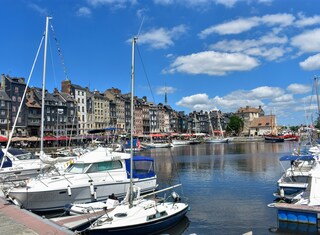
Honfleur, the most picturesque of the Côte Fleurie's seaside towns, is a time-burnished place with a surplus of half-timber houses and cobbled streets that are lined with a stunning selection of stylish boutiques. Much of its Renaissance architecture remains intact—especially around the 17th-century Vieux Bassin harbor, where the water is fronted on one side by two-story stone houses with low, sloping roofs and on the other by tall slate-topped houses with wooden facades. Maritime expeditions (including some of the first voyages to Canada) departed from here; later, Impressionists were inspired to capture it on canvas. But the town as a whole has become increasingly crowded since the Pont de Normandie opened in 1995. Providing a direct link with Upper Normandy, the world's sixth-largest cable-stayed bridge is supported by two concrete pylons taller than the Eiffel Tower and designed to resist winds of 257 kph (160 mph).
Cherbourg
Originally a little fishing village, Cherbourg has developed into a historic port designed by Vauban. This was also a strategic naval port during the Napoleonic wars; there is a marina with over 1000 moorings. “Cap de la Hague” is to the West and the “Pointe de Barfleur” to the East. This port, which belongs to Normandy, is a region that has provided inspiration for countless artists and writers, and is the land of apple orchards and rolling farmland dotted with villages of half-timbered houses. Boasting a wealth of abbeys and châteaux, as well as a superb coastline, it offers something for everyone. Cherbourg was also the first stop of RMS Titanic after it left Southampton, England. On 19 June 1864, the naval engagement between USS Kearsarge and CSS Alabama took place off Cherbourg. The Battle of Cherbourg, fought in June 1944 following the Normandy Invasion, ended with the capture of Cherbourg on June 30.
Portsmouth
Portsmouth is one of the most densely populated cities in Southern England, and is unusual as most of its built-up area occupies Portsea Island, linked to the mainland by road and rail bridges. Although there is a Roman fort at nearby Portchester, occupied later by the Saxons and Normans, there was no settlement on the site of Portsmouth at the time of the 1086 Domesday Book. The town developed in medieval times and received its first charter in 1194 from King Richard I; soon afterwards it became a major naval base. It has the world’s oldest dry dock, and is home to several famous ships, including HMS Victory, HMS Warrior and the Mary Rose, raised from the Solent in 1982. Portsmouth remains an important naval base and is home to a large proportion of the British service fleet. The waterfront area is now dominated by the Spinnaker Tower, 560 feet high, the United Kingdom’s tallest building outside London. Other things to see in the city include the house where Charles Dickens was born, and the City Museum, which contains a permanent exhibition devoted to another famous writer, Sir Arthur Conan Doyle, who lived in the town.
Dover
Known as the gateway of England, Dover welcomes millions of visitors from all over the globe each year in its role as the ferry capital of the world and the second busiest cruise port in the UK. The White Cliffs Country has a rich heritage. Within the walls of the town’s iconic castle, over 2,000 years of history waits to be explored, whilst the town’s museum is home to the Dover Bronze Age Boat, the world’s oldest known seagoing vessel. The town’s cliffs that are a welcome sight for today's cross-channel travellers also served as the control centre for the Dunkirk evacuation in 1940.
Stavanger
Overlooking the Atlantic Ocean, Stavanger flourished in the 19th century as a fishing port. While other towns in Norway have suffered with the decline of this industry, Stavanger has kept its economy booming by diversifying, first into shipbuilding and now into oil. These two contrasting industries have created a city of two halves – a modern area of high-rise buildings and a historic centre with cobbled streets and old wooden houses. The city centre was the birthplace of Alexander Kielland, one of the great 19th-century Norwegian novelists. Stavanger Cathedral, dating from 1125, is an impressive building and the only medieval cathedral in Norway that has not been substantially altered since it was first built. From Stavanger you can explore the attractive blue waters of Lysefjord, surrounded by cliffs and striking rock formations, and also visit Hafrsfjord where the Viking King Harald won an important battle that started the Unification of Norway. Those preferring to explore on their own may wish to visit the interesting Petroleum Museum.
Brønnøysund
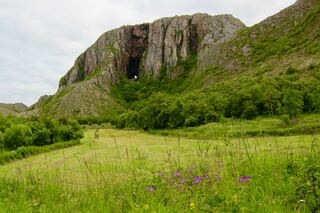
Sitting just below the Arctic Circle, a visit to Bronnoysund guarantees a journey of culture and extraordinary scenery. Bronnoysund is quintessential Norway, and encompasses everything you'd expect from this stunning country - along with plenty of surprises along the way. Raking fjords, scattered islands, and roaring rivers provide a huge natural bounty - but it’s the Torghatten Mountain that’s Bronnoysund’s true crowning glory. Torghatten Mountain rises like a colossal castle of sheer granite, and is particularly striking because it’s punctured right through the centre by a giant hole. Line up the view just right, and you can see sunlight bursting through the hole, as if illuminated by a massive spotlight. It's hard to imagine how such a striking phenomenon would form naturally, and indeed the local folklore has a persuasive explanation – that it was created when an arrow ripped through the troll king's hat, which was thrown into the air to protect a fleeing girl. The hat turned to stone, and the arrow’s hole is preserved there to this day. If you care to climb Torghatten Mountain, you can walk through its cavernous interior, to look down over the red wooden barns and glistening lakes below.
Tromsø
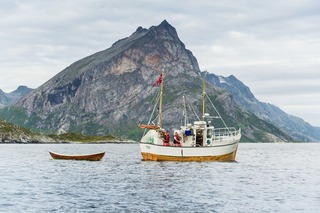
With its centre located on the island of Tromsø, the municipality of Tromsø is more than five times the size of Norway’s capital, Oslo, and is the world’s northernmost university city. Lying 200 miles inside the Arctic Circle, it is known as the 'Gateway to the Arctic' because it was used as a starting point for hunters looking for Arctic foxes, polar bears and seals. In the 19th century it was a base for explorers on Arctic expeditions – a history that is remembered in the city’s Polar Museum, which you can visit on an excursion. Also commemorated in the area is the history of Norway’s indigenous people, the Sami. Visitors can learn about the traditions, heritage and modern preservation of the Sami culture at the Tromsø Museum. Nowadays, Tromsø is a charming mix of old and new, with wooden buildings sitting alongside contemporary architecture such as the impressive glacier-like Arctic Cathedral, which features one of the largest stained glass windows in Europe. Looking down on the city is Mount Storsteinen, and a cable car runs to the top, giving wonderful views over the surrounding countryside of forested peaks and reindeer pastures.
Alta
People have been attracted to the community of Alta for thousands of years, and prehistoric rock carvings discovered in 1973 can be seen at the Alta Museum. Situated at the head of the Altafjord, it is a lush, green and hospitable shelter in the otherwise cold and windswept Finnmark landscape. Halfway between the grim, barren mountain plateau and the wet, stormy coast, Alta offers tree-clad valleys, pleasant temperatures and no more rain than the Sahara. However at 70 degrees North it is quite a different story in winter, when heavy snowfalls and sub-zero temperatures are the order of the day, and clear dark night skies become the arena for dazzling displays of the elusive Aurora Borealis, also referred to as 'the temperamental lady' by Laplanders. The world’s first Northern Lights Observatory, which played an important role in the development of geophysical and meteorological research during the first half of the 20th century, is located just 12 miles from Alta. Perched atop Haldde Mountain, it towers almost 3,000 feet above Kafjord, where the battleship Tirpitz was based during the Second World War.
Honningsvåg
Searching in 1553 for a northeast passage to India, British navigator Richard Chancellor came upon a crag 307 yards above the Barents Sea. He named the jut of rock North Cape, or Nordkapp. Today Europe's northernmost point is a rite-of-passage journey for nearly all Scandinavians and many others. Most cruise passengers visit Nordkapp from Honningsvåg, a fishing village on Magerøya Island. The journey from Honningsvåg to Nordkapp covers about 35 km (22 miles) across a landscape characterized by rocky tundra and grazing reindeer, which are rounded up each spring by Sami herdsmen in boats. The herdsmen herd the reindeer across a mile-wide channel from their winter home on the mainland. Honningvåg's northerly location makes for long, dark winter nights and perpetually sun-filled summer days. The village serves as the gateway to Arctic exploration and the beautiful Nordkapp Plateau, a destination that calls to all visitors of this region. Most of those who journey to Nordkapp (North Cape), the northernmost tip of Europe, are in it for a taste of this unique, otherworldly, rugged yet delicate landscape. You'll see an incredible treeless tundra, with crumbling mountains and sparse dwarf plants. The subarctic environment is very vulnerable, so don't disturb the plants. Walk only on marked trails and don't remove stones, leave car marks, or make campfires. Because the roads are closed in winter, the only access is from the tiny fishing village of Skarsvåg via Sno-Cat, a thump-and-bump ride that's as unforgettable as the desolate view.
Copenhagen
By the 11th century, Copenhagen was already an important trading and fishing centre and today you will find an attractive city which, although the largest in Scandinavia, has managed to retain its low-level skyline. Discover some of the famous attractions including Gefion Fountain and Amalienborg Palace, perhaps cruise the city’s waterways, visit Rosenborg Castle or explore the medieval fishing village of Dragoer. Once the home of Hans Christian Andersen, Copenhagen features many reminders of its fairytale heritage and lives up to the reputation immortalised in the famous song ‘Wonderful Copenhagen’.
Date & price
Departs
Sat 26 May 2029
from £11,499 pp
Enquire now Call 020 7590 0610Per person, based on two sharing, cruise only. Updated daily and confirmed when you book.