
Summary
Itinerary & Map
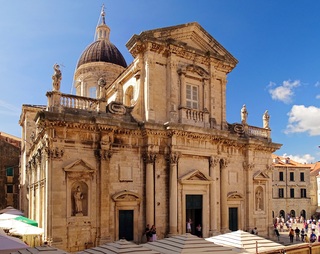
Nothing can prepare you for your first sight of Dubrovnik. Lying 216 km (135 miles) southeast of Split and commanding a jaw-dropping coastal location, it is one...
Full description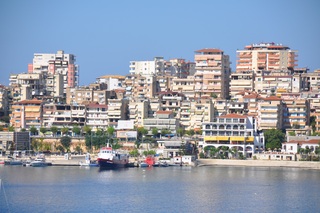
Sarandë is a city in southern Albania on the coast of the Ionian Sea. Sarandë can be reached easily from the Greek island of Corfu by ferry. An early Christian...
Full description
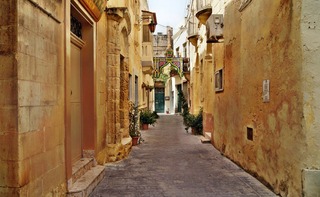
Malta's capital, the minicity of Valletta, has ornate palaces and museums protected by massive fortifications of honey-color limestone. Houses along the narrow...
Full description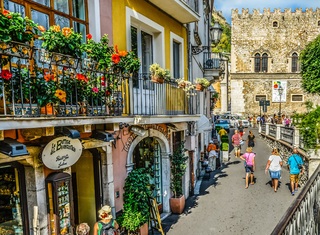

At first glance, it's hard to imagine that this resort destination was one of the world's great naval powers, and a sturdy rival of Genoa and Pisa for control o...
Full description
Italy's vibrant capital lives in the present, but no other city on earth evokes its past so powerfully. For over 2,500 years, emperors, popes, artists, and comm...
Full description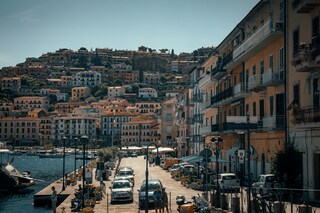
Trapani, the most important town on Sicily’s west coast, lies below the headland of Mount Erice and offers stunning views of the Egadi Islands on a clear day. T...
Full description
Known in Sardinia as Casteddu, the island's capital has steep streets and impressive Italianate architecture, from modern to medieval. This city of nearly 160,0...
Full description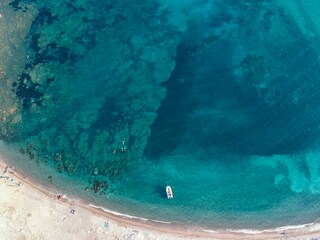
Located in the South of Corsica, Bonifacio is one of the island’s most beautiful destinations. From its breathtaking views and sandy white islands to its histor...
Full description
Considered Corsica’s primary commercial and cultural hub, the largest city and regional capital of Ajaccio is situated on the west coast of the island, approxim...
Full description
On one of the best stretches of the Mediterranean, this classic luxury destination is one of the most sought-after addresses in the world. With all the high-ris...
Full description
Nothing can prepare you for your first sight of Dubrovnik. Lying 216 km (135 miles) southeast of Split and commanding a jaw-dropping coastal location, it is one...
Full description
Sarandë is a city in southern Albania on the coast of the Ionian Sea. Sarandë can be reached easily from the Greek island of Corfu by ferry. An early Christian...
Full description
Malta's capital, the minicity of Valletta, has ornate palaces and museums protected by massive fortifications of honey-color limestone. Houses along the narrow...
Full description
At first glance, it's hard to imagine that this resort destination was one of the world's great naval powers, and a sturdy rival of Genoa and Pisa for control o...
Full description
Italy's vibrant capital lives in the present, but no other city on earth evokes its past so powerfully. For over 2,500 years, emperors, popes, artists, and comm...
Full description
Trapani, the most important town on Sicily’s west coast, lies below the headland of Mount Erice and offers stunning views of the Egadi Islands on a clear day. T...
Full description
Known in Sardinia as Casteddu, the island's capital has steep streets and impressive Italianate architecture, from modern to medieval. This city of nearly 160,0...
Full description
Located in the South of Corsica, Bonifacio is one of the island’s most beautiful destinations. From its breathtaking views and sandy white islands to its histor...
Full description
Considered Corsica’s primary commercial and cultural hub, the largest city and regional capital of Ajaccio is situated on the west coast of the island, approxim...
Full description
On one of the best stretches of the Mediterranean, this classic luxury destination is one of the most sought-after addresses in the world. With all the high-ris...
Full descriptionDubrovnik
Nothing can prepare you for your first sight of Dubrovnik. Lying 216 km (135 miles) southeast of Split and commanding a jaw-dropping coastal location, it is one of the world's most beautiful fortified cities. Its massive stone ramparts and fortress towers curve around a tiny harbor, enclosing graduated ridges of sun-bleached orange-tiled roofs, copper domes, and elegant bell towers. Your imagination will run wild picturing what it looked like seven centuries ago when the walls were built, without any suburbs or highways around it, just this magnificent stone city rising out of the sea.In the 7th century AD, residents of the Roman city Epidaurum (now Cavtat) fled the Avars and Slavs of the north and founded a new settlement on a small rocky island, which they named Laus, and later Ragusa. On the mainland hillside opposite the island, the Slav settlement called Dubrovnik grew up. In the 12th century the narrow channel separating the two settlements was filled in (now the main street through the Old Town, called Stradun), and Ragusa and Dubrovnik became one. The city was surrounded by defensive walls during the 13th century, and these were reinforced with towers and bastions in the late 15th century.From 1358 to 1808 the city thrived as a powerful and remarkably sophisticated independent republic, reaching its golden age during the 16th century. In 1667 many of its splendid Gothic and Renaissance buildings were destroyed by an earthquake. The defensive walls survived the disaster, and the city was rebuilt in baroque style.Dubrovnik lost its independence to Napoléon in 1808, and in 1815 passed to Austria-Hungary. During the 20th century, as part of Yugoslavia, the city became a popular tourist destination, and in 1979 it was listed as a UNESCO World Heritage Site. During the war for independence, it came under heavy siege. Thanks to careful restoration, few traces of damage remain; however, there are maps inside the Pile and Ploče Gates illustrating the points around the city where damage was done. It’s only when you experience Dubrovnik yourself that you can understand what a treasure the world nearly lost
Sarandë
Sarandë is a city in southern Albania on the coast of the Ionian Sea. Sarandë can be reached easily from the Greek island of Corfu by ferry. An early Christian monastery dedicated to 40 saints (Santi Quaranta) gave Sarandë its name. The city center of Sarandë has been scarred by communist architecture but since the fall of communism many small shops and bars have sprung up which give it a Mediterranean feel. This southernmost harbour of Albania was once the ancient port of Onchesmos. Today, Sarandë’s main attractions are its sunny climate and the nearby ruins of Butrint. Please Note: For your convenience, shore excursions offered for this port of call are available to reserve in advance at www.silversea.com, unless otherwise noted in the description. The deadline to reserve these tours is August 19, after which they will be available for purchase on board, unless otherwise noted in the description. Pier Information The ship is scheduled to anchor at Main Pier. The town center is 875 yards from the pier. Taxis are generally available at the pier. Shopping Typical souvenirs include t-shirts, postcards, wood carvings and dolls in national costume. Cuisine Albanian cuisine has been strongly influenced by Turkey. Grilled meats like shisqubap (shish kebab), romstek (minced meat patties) and gofte (meat balls) are served all across the Balkans. Some local dishes include comlek (meat and onion stew), fërges (a rich beef stew), rosto me salcë kosi (roast beef with sour cream) and tavë kosi (mutton with yoghurt. Lake Shkodra carp and Lake Ohrid trout are the most common fish dishes. Try the ice cream (akullore), which is popular everywhere. Other Sites Blue Eye Spring The iridescent blue water gushes from the depths of the earth and feeds the Bistrica River. Catacombs Recently discovered catacombs of the church of the Forty Saints can also be explored. Private arrangements for independent sightseeing may be requested through the Tour Office on board.
Valletta
Malta's capital, the minicity of Valletta, has ornate palaces and museums protected by massive fortifications of honey-color limestone. Houses along the narrow streets have overhanging wooden balconies for people-watching from indoors. Generations ago they gave housebound women a window on the world of the street. The main entrance to town is through the City Gate (where all bus routes end), which leads onto Triq Repubblika (Republic Street), the spine of the grid-pattern city and the main shopping street. Triq Mercante (Merchant Street) parallels Repubblika to the east and is also good for strolling. From these two streets, cross streets descend toward the water; some are stepped. Valletta's compactness makes it ideal to explore on foot. City Gate and the upper part of Valletta are experiencing vast redevelopment that includes a new Parliament Building and open-air performance venue. The complex, completed mid-2013, has numerous pedestrian detours in place along with building noise and dust. Before setting out along Republic Street, stop at the tourist information office on Merchant Street for maps and brochures.
Amalfi
At first glance, it's hard to imagine that this resort destination was one of the world's great naval powers, and a sturdy rival of Genoa and Pisa for control of the Mediterranean in the 11th and 12th centuries. Once the seat of the Amalfi Maritime Republic, the town is set in a verdant valley of the Lattari Mountains, with cream-colored and pastel-hued buildings tightly packing a gorge on the Bay of Salerno. The harbor, which once launched the greatest fleet in Italy, now bobs with ferries and blue-and-white fishing boats. The main street, lined with shops and pasticcerie, has replaced a raging mountain torrent, and terraced hills flaunt the green and gold of lemon groves. Bearing testimony to its great trade with Tunis, Tripoli, and Algiers, Amalfi remains honeycombed with Arab-Sicilian cloisters and covered passages. In a way Amalfi has become great again, showing off its medieval glory days with sea pageants, convents-turned-hotels, ancient paper mills, covered streets, and its glimmering cathedral.
Civitavecchia
Italy's vibrant capital lives in the present, but no other city on earth evokes its past so powerfully. For over 2,500 years, emperors, popes, artists, and common citizens have left their mark here. Archaeological remains from ancient Rome, art-stuffed churches, and the treasures of Vatican City vie for your attention, but Rome is also a wonderful place to practice the Italian-perfected il dolce far niente, the sweet art of idleness. Your most memorable experiences may include sitting at a caffè in the Campo de' Fiori or strolling in a beguiling piazza.
Trapani, Sicily
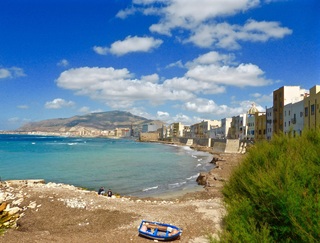
Trapani, the most important town on Sicily’s west coast, lies below the headland of Mount Erice and offers stunning views of the Egadi Islands on a clear day. Trapani’s Old District occupies a scimitarshaped promontory between the open sea on the north and the salt marshes to the south. The ancient industry of extracting salt from the marshes has recently been revived, and it is documented in the Museo delle Saline. In addition to the salt marshes,Trapani’s other interesting environs include the beautiful little hill town of Erice, the promontory of Capo San Vito stretching north beyond the splendid headland of Monte Cofano, the lovely island of Motya and the town of Marsala. Trips farther afield will take you to the magnificent site of Segesta or the Egadi Islands, reached by boat or hydrofoil from Trapani Port.
Cagliari
Known in Sardinia as Casteddu, the island's capital has steep streets and impressive Italianate architecture, from modern to medieval. This city of nearly 160,000 people is characterized by a busy commercial center and waterfront with broad avenues and arched arcades, as well as by the typically narrow streets of the old hilltop citadel (called, simply, “Castello”). The Museo Archeologico makes a good starting point to a visit. The imposing Bastione di Saint Remy and Mercato di San Benedetto (one of the best fish markets in Italy) are both musts.
Bonifacio, Corsica and Olbia
Located in the South of Corsica, Bonifacio is one of the island’s most beautiful destinations. From its breathtaking views and sandy white islands to its historic citadel, the city is a must visit for anyone travelling to the island.
Ajaccio, Corsica
Considered Corsica’s primary commercial and cultural hub, the largest city and regional capital of Ajaccio is situated on the west coast of the island, approximately 644 km (400 miles) southeast of Marseille, France. Founded in 1492, vestiges of ancient Corsica in this ville impériale revolve around the city’s most famous son, Napoléon Bonaparte, whose family home—now the national museum Maison Bonaparte—pays tribute to the emperor’s historical influence.Remnants from what was originally a 12th-century Genoese colony are still visible around the Old Town near the imposing citadel and watchtower. Perfect for exploring, the luminous seaside city surrounded by snowcapped mountains and pretty beaches offers numerous sites, eateries, side streets, and a popular harbor, where sailboats and fishing vessels moor in the picturesque Tino Rossi port lined with well-established restaurants and cafés serving fresh local fare.
Monte-Carlo
On one of the best stretches of the Mediterranean, this classic luxury destination is one of the most sought-after addresses in the world. With all the high-rise towers you have to look hard to find the Belle Époque grace of yesteryear. But if you head to the town's great 1864 landmark Hôtel de Paris—still a veritable crossroads of the buffed and befurred Euro-gentry—or enjoy a grand bouffe at its famous Louis XV restaurant, or attend the opera, or visit the ballrooms of the casino, you may still be able to conjure up Monaco's elegant past. Prince Albert II, a political science graduate from Amherst College, traces his ancestry to Otto Canella, who was born in 1070. The Grimaldi dynasty began with Otto's great-great-great-grandson, Francesco Grimaldi, also known as Frank the Rogue. Expelled from Genoa, Frank and his cronies disguised themselves as monks and in 1297 seized the fortified medieval town known today as Le Rocher (the Rock). Except for a short break under Napoléon, the Grimaldis have been here ever since, which makes them the oldest reigning family in Europe. In the 1850s a Grimaldi named Charles III made a decision that turned the Rock into a giant blue chip. Needing revenue but not wanting to impose additional taxes on his subjects, he contracted with a company to open a gambling facility. The first spin of the roulette wheel was on December 14, 1856. There was no easy way to reach Monaco then—no carriage roads or railroads—so no one came. Between March 15 and March 20, 1857, one person entered the casino—and won two francs. In 1868, however, the railroad reached Monaco, and it was filled with Englishmen who came to escape the London fog. The effects were immediate. Profits were so great that Charles eventually abolished all direct taxes. Almost overnight, a threadbare principality became an elegant watering hole for European society. Dukes (and their mistresses) and duchesses (and their gigolos) danced and dined their way through a world of spinning roulette wheels and bubbling champagne—preening themselves for nights at the opera, where such artists as Vaslav Nijinsky, Sarah Bernhardt, and Enrico Caruso came to perform. Along with the tax system, its sensational position on a broad, steep peninsula that bulges into the Mediterranean—its harbor sparkling with luxury cruisers, its posh mansions angling awnings toward the nearly perpetual sun—continues to draw the rich and famous. One of the latest French celebrities to declare himself "Monégasque," thus giving up his French passport, is superchef Alain Ducasse, who said that he made the choice out of affection for Monaco rather than tax reasons. Pleasure boats vie with luxury cruisers in their brash beauty and Titanic scale, and teams of handsome young men—themselves dyed blond and tanned to match—scour and polish every gleaming surface. As you might expect, all this glitz doesn't come cheap. Eating is expensive, and even the most modest hotels cost more here than in nearby Nice or Menton. As for taxis, they don't even have meters so you are completely at the driver's mercy (with prices skyrocketing during events such as the Grand Prix). For the frugal, Monaco is the ultimate day-trip, although parking is as coveted as a room with a view. At the very least you can afford a coffee at Starbucks. The harbor district, known as La Condamine, connects the new quarter, officially known as Monte Carlo with Monaco-Ville (or Le Rocher), a medieval town on the Rock, topped by the palace, the cathedral, and the Oceanography Museum. Have no fear that you'll need to climb countless steps to get to Monaco-Ville, as there are plenty of elevators and escalators climbing the steep cliffs. But shuttling between the lovely casino grounds of Monte Carlo and Old Monaco, separated by a vast port, is a daunting proposition for ordinary mortals without wings, so hop on the No. 1 bus from Saint Roman, or No. 2 from the Jardin Exotique - Both stop at Place du Casino and come up to Monaco Ville.
Dates & prices
Departs
Sat 28 Jul 2029
from £7,799 pp
Enquire now Call 020 7590 0610Per person, based on two sharing, cruise only. Updated daily and confirmed when you book.