
Summary
Itinerary & Map
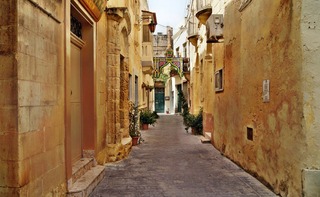
Malta's capital, the minicity of Valletta, has ornate palaces and museums protected by massive fortifications of honey-color limestone. Houses along the narrow...
Full description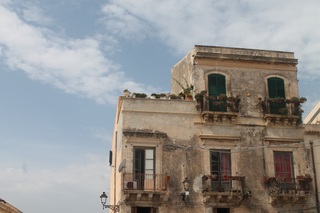
Siracusa, known to English speakers as Syracuse, is a wonder to behold. One of the great ancient capitals of Western civilization, the city was founded in 734 B...
Full description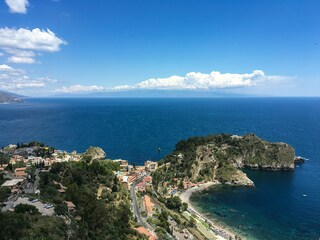
The medieval cliff-hanging town of Taormina is overrun with tourists, yet its natural beauty is still hard to dispute. The view of the sea and Mt. Etna from its...
Full description
At first glance, it's hard to imagine that this resort destination was one of the world's great naval powers, and a sturdy rival of Genoa and Pisa for control o...
Full description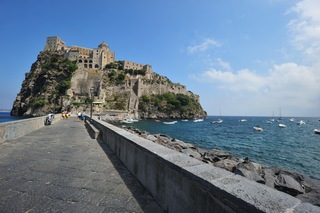
Naples, in the Campania region, is Italy's third largest city. Its claim to fame is the spectacular location along one of the world's most splendid bays, backed...
Full description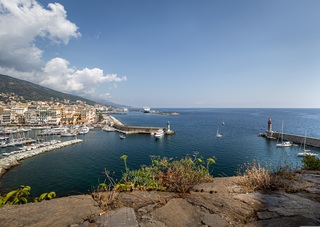
Corsica's northern capital, Bastia, is the centre of commerce and industry and a thriving freight and passenger port. Commerce, more than tourism, is its main f...
Full description
Elba is the Tuscan archipelago's largest island, but it resembles nearby verdant Corsica more than it does its rocky Italian sisters, thanks to a network of und...
Full description
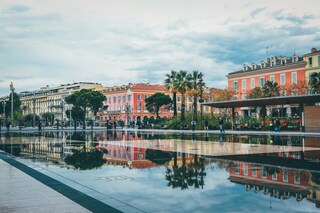
United with France only since 1860, Nice has its own history and atmosphere, which dates back 230,000 years. It was on Colline du Château (now château-less) and...
Full description
Malta's capital, the minicity of Valletta, has ornate palaces and museums protected by massive fortifications of honey-color limestone. Houses along the narrow...
Full description
Siracusa, known to English speakers as Syracuse, is a wonder to behold. One of the great ancient capitals of Western civilization, the city was founded in 734 B...
Full description
The medieval cliff-hanging town of Taormina is overrun with tourists, yet its natural beauty is still hard to dispute. The view of the sea and Mt. Etna from its...
Full description
At first glance, it's hard to imagine that this resort destination was one of the world's great naval powers, and a sturdy rival of Genoa and Pisa for control o...
Full description
Naples, in the Campania region, is Italy's third largest city. Its claim to fame is the spectacular location along one of the world's most splendid bays, backed...
Full description
Corsica's northern capital, Bastia, is the centre of commerce and industry and a thriving freight and passenger port. Commerce, more than tourism, is its main f...
Full description
Elba is the Tuscan archipelago's largest island, but it resembles nearby verdant Corsica more than it does its rocky Italian sisters, thanks to a network of und...
Full description
United with France only since 1860, Nice has its own history and atmosphere, which dates back 230,000 years. It was on Colline du Château (now château-less) and...
Full descriptionValletta
Malta's capital, the minicity of Valletta, has ornate palaces and museums protected by massive fortifications of honey-color limestone. Houses along the narrow streets have overhanging wooden balconies for people-watching from indoors. Generations ago they gave housebound women a window on the world of the street. The main entrance to town is through the City Gate (where all bus routes end), which leads onto Triq Repubblika (Republic Street), the spine of the grid-pattern city and the main shopping street. Triq Mercante (Merchant Street) parallels Repubblika to the east and is also good for strolling. From these two streets, cross streets descend toward the water; some are stepped. Valletta's compactness makes it ideal to explore on foot. City Gate and the upper part of Valletta are experiencing vast redevelopment that includes a new Parliament Building and open-air performance venue. The complex, completed mid-2013, has numerous pedestrian detours in place along with building noise and dust. Before setting out along Republic Street, stop at the tourist information office on Merchant Street for maps and brochures.
Siracuse, Sicily
Siracusa, known to English speakers as Syracuse, is a wonder to behold. One of the great ancient capitals of Western civilization, the city was founded in 734 BC by Greek colonists from Corinth and soon grew to rival, and even surpass, Athens in splendor and power. It became the largest, wealthiest city-state in the West and a bulwark of Greek civilization. Although Siracusa lived under tyranny, rulers such as Dionysius filled their courts with Greeks of the highest cultural stature—among them the playwrights Aeschylus and Euripides, and the philosopher Plato. The Athenians, who didn't welcome Siracusa's rise, set out to conquer Sicily, but the natives outsmarted them in what was one of the greatest military campaigns in ancient history (413 BC). The city continued to prosper until it was conquered two centuries later by the Romans.Present-day Siracusa still has some of the finest examples of Baroque art and architecture; dramatic Greek and Roman ruins; and a Duomo that's the stuff of legend—a microcosm of the city's entire history in one building. The modern city also has a wonderful, lively, Baroque old town worthy of extensive exploration, as well as pleasant piazzas, outdoor cafés and bars, and a wide assortment of excellent seafood. There are essentially two areas to explore in Siracusa: the Parco Archeologico (Archaeological Zone), on the mainland; and the island of Ortygia, the ancient city first inhabited by the Greeks, which juts out into the Ionian Sea and is connected to the mainland by two small bridges. Ortygia is becoming increasingly popular with tourists, and is starting to lose its old-fashioned charm in favor of modern boutiques.Siracusa's old nucleus of Ortygia, a compact area, is a pleasure to amble around without getting unduly tired. In contrast, mainland Siracusa is a grid of wider avenues. At the northern end of Corso Gelone, above Viale Paolo Orsi, the orderly grid gives way to the ancient quarter of Neapolis, where the sprawling Parco Archeologico is accessible from Viale Teracati (an extension of Corso Gelone). East of Viale Teracati, about a 10-minute walk from the Parco Archeologico, the district of Tyche holds the archaeological museum and the church and catacombs of San Giovanni, both off Viale Teocrito (drive or take a taxi or city bus from Ortygia). Coming from the train station, it's a 15-minute trudge to Ortygia along Via Francesco Crispi and Corso Umberto. If you're not up for that, take one of the free electric buses leaving every 10 minutes from the bus station around the corner.
Taormina
The medieval cliff-hanging town of Taormina is overrun with tourists, yet its natural beauty is still hard to dispute. The view of the sea and Mt. Etna from its jagged cactus-covered cliffs is as close to perfection as a panorama can get—especially on clear days, when the snowcapped volcano's white puffs of smoke rise against the blue sky. Writers have extolled Taormina's beauty almost since it was founded in the 6th century BC by Greeks from nearby Naxos; Goethe and D. H. Lawrence were among its well-known enthusiasts. The town's boutique-lined main streets get old pretty quickly, but the many hiking paths that wind through the beautiful hills surrounding Taormina promise a timeless alternative. A trip up to stunning Castelmola (whether on foot or by car) should also be on your itinerary.
Amalfi
At first glance, it's hard to imagine that this resort destination was one of the world's great naval powers, and a sturdy rival of Genoa and Pisa for control of the Mediterranean in the 11th and 12th centuries. Once the seat of the Amalfi Maritime Republic, the town is set in a verdant valley of the Lattari Mountains, with cream-colored and pastel-hued buildings tightly packing a gorge on the Bay of Salerno. The harbor, which once launched the greatest fleet in Italy, now bobs with ferries and blue-and-white fishing boats. The main street, lined with shops and pasticcerie, has replaced a raging mountain torrent, and terraced hills flaunt the green and gold of lemon groves. Bearing testimony to its great trade with Tunis, Tripoli, and Algiers, Amalfi remains honeycombed with Arab-Sicilian cloisters and covered passages. In a way Amalfi has become great again, showing off its medieval glory days with sea pageants, convents-turned-hotels, ancient paper mills, covered streets, and its glimmering cathedral.
Naples
Naples, in the Campania region, is Italy's third largest city. Its claim to fame is the spectacular location along one of the world's most splendid bays, backed by the perfect cone of Mount Vesuvius. In addition to its beautiful setting, Naples' surprises with other outstanding attractions such as the Royal Palace, San Carlos Opera House, the impressive National Archaeological Museum and the Castel Nuovo, dating from the 13th-century. The city's central area is best explored on foot. Chaotic traffic conditions make driving around the city a very frustrating experience. Naples provides a convenient starting point for trips to such favored destinations as Pompeii, Herculaneum and Mount Vesuvius. The Isle of Capri can be reached via a 45-minute hydrofoil service. The region of Campania was home to Greeks settlers some 300 years before Rome was founded. Pompeii, too, was a Greek town before being conquered by the Romans during the 5th century BC. It was under the Romans that Pompeii flourished and grew prosperous. When Mount Vesuvius erupted in 79 AD, the population of 20,000 was wiped out, but dozens of buildings were preserved under layers of cinder more than 20 feet deep. The most important finds from Pompeii are displayed in Naples' National Archaeological Museum. A visit here will no doubt enhance a visit to ancient Pompeii.
Bastia
Corsica's northern capital, Bastia, is the centre of commerce and industry and a thriving freight and passenger port. Commerce, more than tourism, is its main focus, providing employment for many Corsicans. Bastia's industrial sprawl, however, is offset by its aged charm. The presence of an overwhelming Italian atmosphere adds to the city's attraction. Two distinct areas comprise the city: Terra Vecchia, the old quarter, consisting of haphazard streets, flamboyant Baroque churches and lofty tenements, with their crumbling golden-grey walls set against a backdrop of fire-darkened hills; and the more orderly Terra Nova, the historic district favoured by prominent doctors, lawyers and architects. The city dates from Roman times, when a base was set up at Biguglia to the south. Under the Genoese, Bastia was the island's capital for four centuries and of major importance for the export of wine to the Italian mainland. They built a fortress (bastiglia), which gave the town its name. The Genoese also were responsible for laying the foundation for the area's prosperity by planting vines, olives, chestnut trees and other experimental crops. This resulted in an energetic and enterprising region, still a characteristic of today's northern Corsica. Although Napoleon had appointed Ajaccio the capital of the island in 1811- initiating a rivalry that still exists - Bastia established a stronger trading position with mainland France. As a result, the Nouveau Port was created in 1862 to cope with the increasing traffic with France and Italy. Bastia's economic prominence and a German division based here during World War II accounted for severe bombing attacks. Many buildings were destroyed, including much of the old governor's palace. Of the two largest towns on the island, Ajaccio and Bastia, the latter boasts a more genuine Corsican character. Visitors can experience an authentic feel of island life by wandering through the maze of narrow streets of Bastia's old quarter and by exploring its fortifications. Don't miss the vast Place Saint-Nicolas just north of the old quarter; it is the focal point of the city. Open to the sea and lined with shady trees and sidewalk cafes, it is a perfect place for people watching and for taking in the local ambiance. Pier Information The ship is scheduled to dock at the port of Bastia. The city's focal point, Place Saint-Nicolas, is a distance of 650 feet (200 metres) to walk. Taxis are generally available at the pier but it is highly recommended to book in advance if you want to be sure to get one. It is recommended to establish the fare before leaving the port. Shopping The main shopping streets, Boulevard Paoli and Rue Cesar Campinchi, are less than one half miles (500 metres) from the port terminal. Handicrafts and the area's specialties such as honey, wine and liqueurs may be of interest. Most shops are open from 9:00 a.m. to 12:00 p.m. and 2:30 p.m. to 7:00 p.m. Shops are closed for the day on Sundays and some shops may also close Monday mornings (some souvenirs shops may open Sundays during the high season of July-August). The local currency is the euro. Cuisine A variety of restaurants offer a good choice of eating possibilities. Some of the best restaurants are found around the Vieux Port and on the Quai des Martyrs. French cuisine and seafood feature prominently on menus as well as such Corsican specialties as wild boar, charcuterie and aziminu, a local version of bouillabaisse. Evidence of Bastia's strong Italian influence is apparent in the numerous pizza and pasta places in the Nouveau Port area. For outdoor dining and people watching, cafes around lively Place Saint-Nicolas are a perfect place. Other Sites Oratoire de Saint-Roch Located in the Terra Vecchia quarter, the chapel is a Genoese Baroque extravaganza built in 1604. The walls are covered with finely carved wooden panelling and the organ is magnificent with its decoration of gilt and wooden sculpture. Oratoire de L'Immaculee Conception Although its exterior is rather austere, the flamboyant interior of this 17th-century church with gilt and marble ceiling, frescoes and crystal chandeliers creates an ambiance of an opera house. Vieux Port Site of the original Porto Prado, the area around the Vieux Port is the most appealing part of town. Its soaring houses seem to bend inwards towards the water. Once busy with Genoese traders, the building of the ferry terminal and commercial docks have reduced much of the action at Vieux Port. Terra Nova As the administrative core of old Bastia, Terra Nova displays a distinct air of affluence. Its most impressive building is the 14th-century Governor's Palace. During the Genoese heyday the governor and the bishop lived here, entertaining foreign dignitaries and hosting massive parties. Private arrangements for independent sightseeing may be requested through the Tour Office on board, subject to the availability of English-speaking guides.
Portoferraio
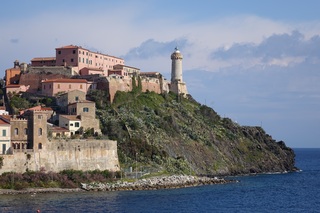
Elba is the Tuscan archipelago's largest island, but it resembles nearby verdant Corsica more than it does its rocky Italian sisters, thanks to a network of underground springs that keep it lush and green. It's this combination of semitropical vegetation and dramatic mountain scenery—unusual in the Mediterranean—that has made Elba so prized for so long, and the island's uniqueness continues to draw boatloads of visitors throughout the warm months. A car is very useful for getting around the island, but public buses stop at most towns several times a day; the tourist office has timetables.
Nice
United with France only since 1860, Nice has its own history and atmosphere, which dates back 230,000 years. It was on Colline du Château (now château-less) and at the Plage des Ponchettes, in front of the Old Town, that the Greeks established a market-port in 350 BC and named it Nikaia, which would become Marseilles' chief coastal rival. The Romans established themselves a little later on the hills of Cimiez (Cemenelum), already previously occupied by Ligurians and Celts, and quickly overshadowed the waterfront port. After falling to the Saracen invasions, Nice regained power as an independent state, becoming an important port in the early Middle Ages.So cocksure did it become that in 1388, Nice, along with the hill towns behind, effectively seceded from the county of Provence, under Louis d'Anjou, and allied itself with Savoie. Thus began its liaison with the House of Savoy, and through it with Piedmont and Sardinia, it was the Comté de Nice (Nice County). This relationship lasted some 500 years, tinting the culture, architecture, and dialect in rich Italian hues.By the 19th century Nice was flourishing commercially, locked in rivalry with the neighboring shipping port of Genoa. Another source of income: the dawning of tourism, as first the English, then the Russian nobility, discovered its extraordinary climate and superb waterfront position. A parade of fine stone mansions and hotels closed into a nearly solid wall of masonry, separated from the smooth-round rocks of the beach by what was originally named Camin deis Anglés (the English Way), which of course is now the famous Promenade des Anglais. This magnificent crescent, which is seeking UNESCO recognition, is one of the noblest in France. Many of Nice's most delightful attractions—the Cours Saleya market, the Old Town streets, the Hotel Negresco, and the Palais Masséna—are on or close to this 10-km (6-mile) waterfront, making it the first stop for most visitors, while the redevelopment of Nice's port, around the other side of the Colline du Château, makes it easier for amblers who want to take in the Genoese architecture or peruse the antiques at the Puces de Nice, now part of the Promenade des 100 Antiquaires, along Quai Papacino. Nice also has the distinction of the "Family Plus" label, with free strollers, play areas, and restaurants with child-friendly activities.
Date & price
Select guest
Departs
Wed 6 Oct 2027
from £6,100 pp
Enquire now Call 020 7590 0610Per person, based on two sharing, cruise only. Updated daily and confirmed when you book.