
Summary
Discover New Zealand like never before, gliding through dramatic fjords, exploring charming coastal towns, and encountering incredible wildlife. Immerse yourself in Maori culture and experience the country’s breathtaking landscapes up close as you sail aboard your ultra-luxury Scenic Discovery Yacht.
Embark on a breathtaking 14-day Signature Yacht Cruise from Auckland to Timaru aboard Scenic Eclipse II, where luxury and discovery combine in New Zealand’s most iconic landscapes. Explore pristine beaches, award-winning vineyards, and historic Art Deco towns; glide through the dramatic fjords of Dusky, Doubtful and Milford Sounds; and witness remarkable wildlife along the way. Immerse yourself in Maori culture, wander charming coastal settlements, and indulge in world-class dining, spa experiences, and personalised service on board, making this a once-in-a-lifetime journey of natural beauty, cultural discovery, and refined comfort.
Itinerary & Map

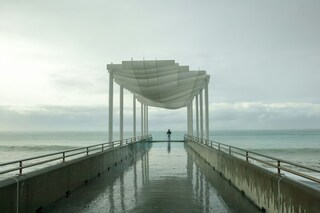
The earthquake that struck Napier at 10:46 am on February 3, 1931, was—at 7.8 on the Richter scale—the largest quake ever recorded in New Zealand. The coastline...
Full description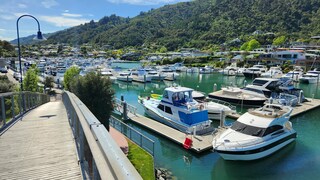
The maritime township of Picton (population 4,000) lies at the head of Queen Charlotte Sound and is the arrival point for ferries from the North Island, as well...
Full description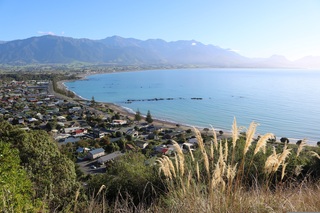
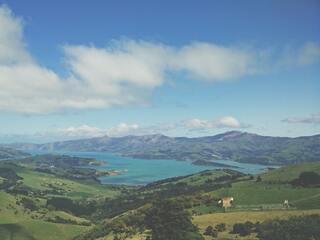

Oban, "little bay" in Gaelic, today has a resident population of 8,500 and is the unofficial capital of the West Highlands - the "Gateway to the Isles." The pan...
Full description
European whaling ships first called at Otago Province during the early decades of the 1800s, yielding a mixed response from the native Māori. In 1848 Dunedin wa...
Full description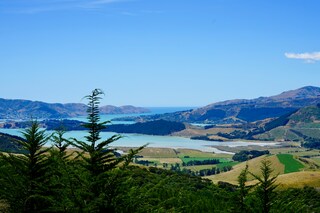
Christchurch is one of New Zealand’s most English cities. The Anglisation of the area is quickly evident throughout. The name Christchurch, is named after one o...
Full description
The earthquake that struck Napier at 10:46 am on February 3, 1931, was—at 7.8 on the Richter scale—the largest quake ever recorded in New Zealand. The coastline...
Full description
The maritime township of Picton (population 4,000) lies at the head of Queen Charlotte Sound and is the arrival point for ferries from the North Island, as well...
Full description
Oban, "little bay" in Gaelic, today has a resident population of 8,500 and is the unofficial capital of the West Highlands - the "Gateway to the Isles." The pan...
Full description
European whaling ships first called at Otago Province during the early decades of the 1800s, yielding a mixed response from the native Māori. In 1848 Dunedin wa...
Full description
Christchurch is one of New Zealand’s most English cities. The Anglisation of the area is quickly evident throughout. The name Christchurch, is named after one o...
Full descriptionAuckland, New Zealand
Napier, New Zealand
The earthquake that struck Napier at 10:46 am on February 3, 1931, was—at 7.8 on the Richter scale—the largest quake ever recorded in New Zealand. The coastline was wrenched upward several feet. Almost all the town's brick buildings collapsed; many people were killed on the footpaths as they rushed outside. The quake triggered fires throughout town, and with water mains shattered, little could be done to stop the blazes that devoured the remaining wooden structures. Only a few buildings survived (the Public Service Building with its neoclassical pillars is one), and the death toll was well over 100.The surviving townspeople set up tents and cookhouses in Nelson Park, and then tackled the city's reconstruction at a remarkable pace. In the rush to rebuild, Napier went mad for art deco, the bold, geometric style that had burst on the global design scene in 1925. Now a walk through the art deco district, concentrated between Emerson, Herschell, Dalton, and Browning streets, is a stylistic immersion. The decorative elements are often above the ground floors, so keep your eyes up.
Picton, New Zealand
The maritime township of Picton (population 4,000) lies at the head of Queen Charlotte Sound and is the arrival point for ferries from the North Island, as well as a growing number of international cruise ships. It plays a major role in providing services and transport by water taxi to a multitude of remote communities in the vast area of islands, peninsulas, and waterways that make up the Marlborough Sounds Maritime Park. There's plenty to do in town, with crafts markets in summer, historical sights to see, and walking tracks to scenic lookouts over the sounds. The main foreshore is lined by London Quay, which looks up Queen Charlotte Sound to the bays beyond. High Street runs down to London Quay from the hills, and between them these two streets make up the center of town.
Oban, Stewart Island, New Zealand
Oban, "little bay" in Gaelic, today has a resident population of 8,500 and is the unofficial capital of the West Highlands - the "Gateway to the Isles." The panoramic views of the mountains, lochs and islands which have captivated artists, authors, composers, and poets for centuries are as striking now as they were when Dunollie Castle, a ruined keep which has stood sentinel over the narrow entrance to the sheltered bay for around six hundred years, was the northern outpost of the Dalriadic Scots. It is no surprise to find Oban in the 21st-century remains a magnet for travellers from all over the world. The town's present day popularity owes much to the Victorians, and as early as 1812, when the Comet steamship linked Oban with Glasgow, the town played host to intrepid travellers touring Staffa - the inspiration for Mendelssohn's Hebridean Overture - and Iona - home of Scottish Christianity since St Columba stepped ashore in AD563. Indeed once Oban had the royal seal of approval from Queen Victoria, who called it "one of the finest spots we have seen," the town's destiny as an endearingly enchanting holiday destination was as firmly set as the lava columns of Fingal's Cave in Oban is justifiably known as the “gateway to the Isles.” The town's south pier is the embarkation point for car ferries to Mull, Coll, Tiree, Barra, South Uist, Colonsay, Lismore and Islay. From these islands you can travel further a field to Iona, Staffa and to many of the smaller less well known isles.
Port Chalmers (Dunedin), New Zealand
European whaling ships first called at Otago Province during the early decades of the 1800s, yielding a mixed response from the native Māori. In 1848 Dunedin was settled, and by the mid-1860s the city was the economic hub of the Otago gold rush. Dunedin's historical wealth endures in such institutions as the University of Otago, the oldest in the country. But if any region can bring out the bird-watcher in you, this is it; the area is home to the Royal Albatross and yellow-eyed penguins.
Timaru (Christchurch), New Zealand
Christchurch is one of New Zealand’s most English cities. The Anglisation of the area is quickly evident throughout. The name Christchurch, is named after one of the most famous Oxford Colleges. Traditional English styled punts can be seen drifting lazily along the Avon River, and customary striped blazers are still worn by students at Christ’s College.
Date & price
Select guest
Flights included
Departs
Thu 30 Nov 2028
from £13,633 pp
Enquire now Call 020 7590 0610Per person, based on two sharing, flights included. Updated daily and confirmed when you book. Flights from UK airports only.