
Summary
Sail around Japan on a complete circumnavigation that links 14 ports across three main islands and one South Korean city. Depart Osaka through the Seto Inland Sea, cross to Busan, trace the Sea of Japan coast through sacred islands and mountain-backed harbours, round the northern cape at Hokkaido, and return along the Pacific via Sendai, Tokyo and Toba during the country's celebrated cherry blossom season.
This 15-day Signature Yacht Cruise on board Scenic Eclipse II, your ultra-luxury Scenic Discovery Yacht, charts a rare course around the entire Japanese archipelago. Begin in Osaka and sail west to Matsuyama's legendary hot springs and the shrine town of Hofu, before crossing to Busan in South Korea for a day of coastal temples and vibrant markets. Returning to Japan, the voyage follows the Sea of Japan northward through the remote Oki Islands, a World Heritage-listed Global Geopark, the pine-clad sandbars of Miyazu, and the mountain-framed harbours of Toyama and Niigata. Continue to Akita's samurai heritage before crossing to Hakodate on Hokkaido. The Pacific coast reveals a different rhythm as you call at Sendai, Oarai and Tokyo, then round the Kii Peninsula at Toba before completing the circle in Osaka. Timed to coincide with Japan's iconic cherry blossom season, this is a voyage of extraordinary depth and variety for travellers seeking the full breadth of Japan.
Itinerary & Map
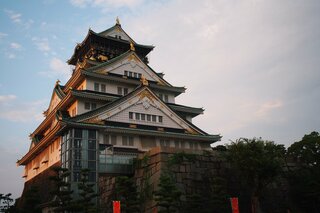
From Minami's neon-lighted Dotombori and historic Tenno-ji to the high-rise class and underground shopping labyrinths of Kita, Osaka is a city that pulses with...
Full description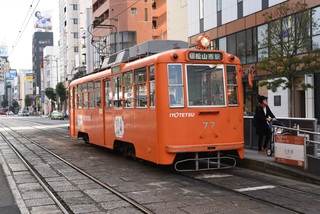
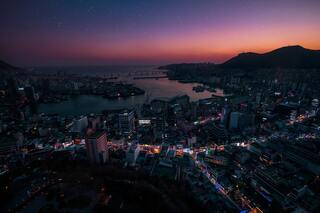
White-sand city beaches and hot-spring resorts may not be everyone's first image of Korea, but these are what Koreans flock to Busan for all year. And there are...
Full description
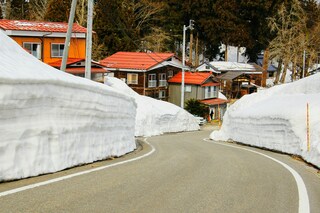
Niigata city is the capital of Niigata prefecture and faces the Japan Sea on the island of Honshu, the largest of the four islands that comprise Japan. With a p...
Full description
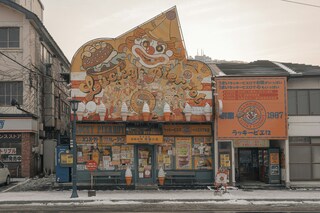
Facing out on two bays, Hakodate is a 19th-century port town, with clapboard buildings on sloping streets, a dockside tourist zone, streetcars, and fresh fish o...
Full description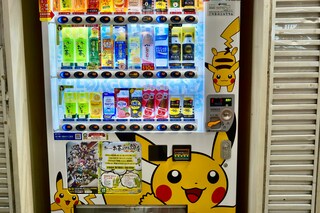
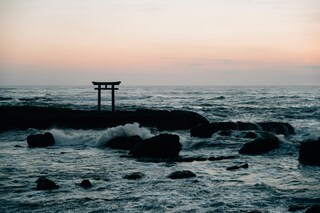
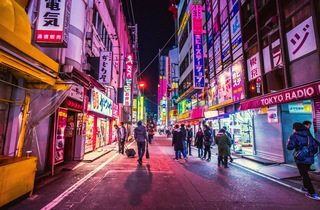
Lights, sushi, manga! Sprawling, frenetic, and endlessly fascinating, Japan’s capital is a city of contrasts. Shrines and gardens are pockets of calm between fa...
Full description
From Minami's neon-lighted Dotombori and historic Tenno-ji to the high-rise class and underground shopping labyrinths of Kita, Osaka is a city that pulses with...
Full description
From Minami's neon-lighted Dotombori and historic Tenno-ji to the high-rise class and underground shopping labyrinths of Kita, Osaka is a city that pulses with...
Full description
White-sand city beaches and hot-spring resorts may not be everyone's first image of Korea, but these are what Koreans flock to Busan for all year. And there are...
Full description
Niigata city is the capital of Niigata prefecture and faces the Japan Sea on the island of Honshu, the largest of the four islands that comprise Japan. With a p...
Full description
Facing out on two bays, Hakodate is a 19th-century port town, with clapboard buildings on sloping streets, a dockside tourist zone, streetcars, and fresh fish o...
Full description
Lights, sushi, manga! Sprawling, frenetic, and endlessly fascinating, Japan’s capital is a city of contrasts. Shrines and gardens are pockets of calm between fa...
Full description
From Minami's neon-lighted Dotombori and historic Tenno-ji to the high-rise class and underground shopping labyrinths of Kita, Osaka is a city that pulses with...
Full descriptionOsaka, Japan
From Minami's neon-lighted Dotombori and historic Tenno-ji to the high-rise class and underground shopping labyrinths of Kita, Osaka is a city that pulses with its own unique rhythm. Though Osaka has no shortage of tourist sites, it is the city itself that is the greatest attraction. Home to some of Japan's best food, most unique fashions, and warmest locals, Osaka does not beg to be explored—it demands it. More than anywhere else in Japan, it rewards the impulsive turn down an interesting side street or the chat with a random stranger. People do not come here to see the city, they come to experience it.Excluded from the formal circles of power and aristocratic culture in 16th-century Edo (Tokyo), Osaka took advantage of its position as Japan's trading center, developing its own art forms such as Bunraku puppet theater and Rakugo comic storytelling. It was in Osaka that feudal Japan's famed Floating World—the dining, theater, and pleasure district—was at its strongest and most inventive. Wealthy merchants and common laborers alike squandered fortunes on culinary delights, turning Osaka into "Japan's Kitchen," a moniker the city still has today. Though the city suffered a blow when the Meiji government canceled all of the samurai class's outstanding debts to the merchants, it was quick to recover. At the turn of the 20th century, it had become Japan's largest and most prosperous city, a center of commerce and manufacturing.Today Osaka remains Japan's iconoclastic metropolis, refusing to fit Tokyo's norms and expectations. Unlike the hordes of Tokyo, Osakans are fiercely independent. As a contrast to the neon and concrete surroundings, the people of Osaka are known as Japan's friendliest and most outgoing. Ask someone on the street for directions in Tokyo and you are lucky to get so much as a glance. Ask someone in Osaka and you get a conversation.The main areas of the city, Kita (north) and Minami (south), are divided by two rivers: the Dojima-gawa and the Tosabori-gawa. Between Kita and Minami is Naka-no-shima, an island and the municipal center of Osaka. Kita (north of Chuo Dori) is Osaka's economic hub and contains Osaka's largest stations: JR Osaka and Hankyu Umeda. The area is crammed with shops, department stores, and restaurants. Nearby are a nightlife district, Kita-shinchi; Naka-no-shima and the Museum of Oriental Ceramics; Osaka-jo (Osaka Castle); and Osaka Koen (Osaka Park). Restaurants, bars, department stores, and boutiques attract Osaka's youth to Minami (south Chuo Dori); theatergoers head to the National Bunraku Theatre and electronics-lovers to Den Den Town. For a glimpse of old Osaka, visit Tenno-ji Temple and Shin Sekai. The main stations are Namba, Shin-sai-bashi, Namba Nankai, and Tenno-ji. There's easy access to the Municipal Museum of Fine Art and Sumiyoshi Taisha (Sumiyoshi Grand Shrine).The bay area, to the west of the city center, is home to the Osaka Aquarium and Universal Studios Japan. The Shinkansen stops at Shin-Osaka, three stops (about five minutes) north of Osaka Station on the Mido-suji subway line. To the north of Shin-Osaka is Senri Expo Park.
Busan, South Korea
White-sand city beaches and hot-spring resorts may not be everyone's first image of Korea, but these are what Koreans flock to Busan for all year. And there are plenty of opportunities for rest, relaxation, retail therapy, and even a touch of glamour every October with the Busan International Film Festival. Busan's beaches are the big summertime draw but there is plenty to be seen year round. Quintessential experiences include taking some rest and relaxation at a local spa and exploring the Beomeosa temple complex.
Niigata, Japan
Niigata city is the capital of Niigata prefecture and faces the Japan Sea on the island of Honshu, the largest of the four islands that comprise Japan. With a population of 810,000, Niigata is the largest Honshu city along the Japan Sea coast. The city is located at 300 km northwest of Tokyo and the bullet train would take you there in only two hours. Niigata offers four distinct seasons throughout the year, and people may find the winter season to be the best time to visit as many people would come for winter sports such as skiing or snowboarding. However, you will find the place abundantly beautiful throughout the year as well. Niigata is famous for growing rice as well as fresh seafood. If you try white rice without any seasonings, you would be able to taste the difference and appreciate its flavour. Thanks to the quality of the rice, they produce great Sake in the area. If you have time, why don’t you extend your journey to one of the famous Sake Brewery?
Hakodate, Japan
Facing out on two bays, Hakodate is a 19th-century port town, with clapboard buildings on sloping streets, a dockside tourist zone, streetcars, and fresh fish on every menu. In the downtown historic quarter, a mountain rises 1,100 feet above the city on the southern point of the narrow peninsula. Russians, Americans, Chinese, and Europeans have all left their mark; this was one of the first three Japanese ports the Meiji government opened up to international trade in 1859. The main sights around the foot of Mt. Hakodate can be done in a day, but the city is best appreciated with an overnight stay for the illumination in the historic area, the night views from either the mountain or the fort tower, and the fish market at dawn. City transport is easy to navigate and English information is readily available. Evening departure trains from Tokyo arrive here at dawn—perfect for fish-market breakfasts.
Tokyo, Japan
Lights, sushi, manga! Sprawling, frenetic, and endlessly fascinating, Japan’s capital is a city of contrasts. Shrines and gardens are pockets of calm between famously crowded streets and soaring office buildings. Mom-and-pop noodle houses share street space with Western-style chain restaurants and exquisite fine dining. Shopping yields lovely folk arts as well as the newest electronics. And nightlife kicks off with karaoke or sake and continues with techno clubs and more. Whether you seek the traditional or the cutting edge, Tokyo will provide it.
Date & price
Select guest
Flights included
Departs
Thu 5 Apr 2029
from £21,553 pp
Enquire now Call 020 7590 0610Per person, based on two sharing, flights included. Updated daily and confirmed when you book. Flights from UK airports only.