
Summary
Journey through Argentina and Chile, from the elegant boulevards of Buenos Aires and Santiago to the immense glaciers, jagged peaks and untamed wilderness of Patagonia, where nature reveals itself on a truly epic scale.
From the elegant Boulevards of Buenos Aires and Santiago to the glacier-carved landscapes of Patagonia and the colourful streets of Valparaíso, this journey explores the southern tip of South America at its most captivating.
Beyond the great cities lies Patagonia, a vast, untamed wilderness of soaring peaks, immense glaciers, and remote landscapes that spans both Argentina and Chile. Stay in Ushuaia, the world's southernmost city, often known as the ‘end of the world’, where snow-capped mountains meet the Beagle Channel and the road south simply runs out. From Tierra del Fuego to Torres del Paine, discover a landscape of epic horizons that rank among the planet’s greatest bucket-list destinations.
There are memorable moments at every turn – from watching ice calve into Lake Argentino to standing at the end of the Pan-American Highway in Tierra del Fuego. Balanced with time to slow down over a glass of Chilean wine, linger in characterful neighbourhoods, and soak up extraordinary landscapes, this is a journey through a part of the world that feels both vast and deeply rewarding. Ideal for curious travellers drawn to dramatic scenery, wildlife and culture in equal measure, it’s a holiday for those who find inspiration in the world’s wild corners.
Itinerary & Map
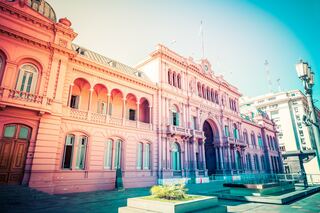
Glamorous and gritty, Buenos Aires is two cities in one. What makes Argentina's capital so fascinating is its dual heritage—part European, part Latin American....
Full description
Glamorous and gritty, Buenos Aires is two cities in one. What makes Argentina's capital so fascinating is its dual heritage—part European, part Latin American....
Full description
Glamorous and gritty, Buenos Aires is two cities in one. What makes Argentina's capital so fascinating is its dual heritage—part European, part Latin American....
Full description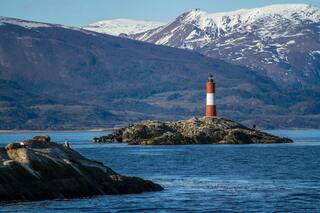
At 55 degrees latitude south, Ushuaia (pronounced oo-swy-ah) is closer to the South Pole than to Argentina's northern border with Bolivia. It is the capital and...
Full description
At 55 degrees latitude south, Ushuaia (pronounced oo-swy-ah) is closer to the South Pole than to Argentina's northern border with Bolivia. It is the capital and...
Full description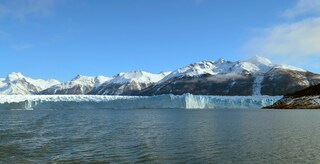
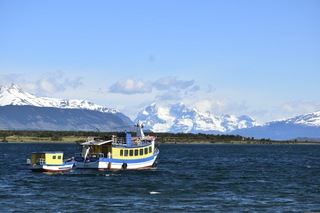
With a population of roughly 18,000, Puerto Natales is the capital of the Ultima Esperanza Province. Founded in 1911, it quickly developed into a major resident...
Full description
With a population of roughly 18,000, Puerto Natales is the capital of the Ultima Esperanza Province. Founded in 1911, it quickly developed into a major resident...
Full description

Valparaíso's dramatic topography—45 cerros, or hills, overlooking the ocean—requires the use of winding pathways and wooden ascensores (funiculars) to get up ma...
Full description
Valparaíso's dramatic topography—45 cerros, or hills, overlooking the ocean—requires the use of winding pathways and wooden ascensores (funiculars) to get up ma...
Full description
Glamorous and gritty, Buenos Aires is two cities in one. What makes Argentina's capital so fascinating is its dual heritage—part European, part Latin American....
Full description
Glamorous and gritty, Buenos Aires is two cities in one. What makes Argentina's capital so fascinating is its dual heritage—part European, part Latin American....
Full description
Glamorous and gritty, Buenos Aires is two cities in one. What makes Argentina's capital so fascinating is its dual heritage—part European, part Latin American....
Full description
At 55 degrees latitude south, Ushuaia (pronounced oo-swy-ah) is closer to the South Pole than to Argentina's northern border with Bolivia. It is the capital and...
Full description
At 55 degrees latitude south, Ushuaia (pronounced oo-swy-ah) is closer to the South Pole than to Argentina's northern border with Bolivia. It is the capital and...
Full description
With a population of roughly 18,000, Puerto Natales is the capital of the Ultima Esperanza Province. Founded in 1911, it quickly developed into a major resident...
Full description
With a population of roughly 18,000, Puerto Natales is the capital of the Ultima Esperanza Province. Founded in 1911, it quickly developed into a major resident...
Full description
Valparaíso's dramatic topography—45 cerros, or hills, overlooking the ocean—requires the use of winding pathways and wooden ascensores (funiculars) to get up ma...
Full description
Valparaíso's dramatic topography—45 cerros, or hills, overlooking the ocean—requires the use of winding pathways and wooden ascensores (funiculars) to get up ma...
Full descriptionDAY 1
Glamorous and gritty, Buenos Aires is two cities in one. What makes Argentina's capital so fascinating is its dual heritage—part European, part Latin American. Plaza de Mayo resembles a grand square in Madrid, and the ornate Teatro Colón would not be out of place in Vienna. But you’ll know you’re in South America by the leather shoes for sale on cobbled streets and impromptu parades of triumphant soccer fans. Limited-production wines, juicy steaks, and ice cream in countless flavors are among the old-world imports the city has perfected.
DAY 5
At 55 degrees latitude south, Ushuaia (pronounced oo-swy-ah) is closer to the South Pole than to Argentina's northern border with Bolivia. It is the capital and tourism base for Tierra del Fuego, the island at the southernmost tip of Argentina.Although its stark physical beauty is striking, Tierra del Fuego's historical allure is based more on its mythical past than on rugged reality. The island was inhabited for 6,000 years by Yámana, Haush, Selk'nam, and Alakaluf Indians. But in 1902 Argentina, eager to populate Patagonia to bolster its territorial claims, moved to initiate an Ushuaian penal colony, establishing the permanent settlement of its most southern territories and, by implication, everything in between.When the prison closed in 1947, Ushuaia had a population of about 3,000, made up mainly of former inmates and prison staff. Today the Indians of Darwin's "missing link" theory are long gone—wiped out by diseases brought by settlers and by indifference to their plight—and the 60,000 residents of Ushuaia are hitching their star to tourism.The city rightly (if perhaps too loudly) promotes itself as the southernmost city in the world (Puerto Williams, a few miles south on the Chilean side of the Beagle Channel, is a small town). You can make your way to the tourism office to get your clichéd, but oh-so-necessary, "Southernmost City in the World" passport stamp. Ushuaia feels like a frontier boomtown, at heart still a rugged, weather-beaten fishing village, but exhibiting the frayed edges of a city that quadrupled in size in the '70s and '80s and just keeps growing. Unpaved portions of Ruta 3, the last stretch of the Pan-American Highway, which connects Alaska to Tierra del Fuego, are finally being paved. The summer months (December through March) draw more than 120,000 visitors, and dozens of cruise ships. The city is trying to extend those visits with events like March's Marathon at the End of the World and by increasing the gamut of winter activities buoyed by the excellent snow conditions.A terrific trail winds through the town up to the Martial Glacier, where a ski lift can help cut down a steep kilometer of your journey. The chaotic and contradictory urban landscape includes a handful of luxury hotels amid the concrete of public housing projects. Scores of "sled houses" (wooden shacks) sit precariously on upright piers, ready for speedy displacement to a different site. But there are also many small, picturesque homes with tiny, carefully tended gardens. Many of the newer homes are built in a Swiss-chalet style, reinforcing the idea that this is a town into which tourism has breathed new life. At the same time, the weather-worn pastel colors that dominate the town's landscape remind you that Ushuaia was once just a tiny fishing village, snuggled at the end of the Earth.As you stand on the banks of the Canal Beagle (Beagle Channel) near Ushuaia, the spirit of the farthest corner of the world takes hold. What stands out is the light: at sundown the landscape is cast in a subdued, sensual tone; everything feels closer, softer, and more human in dimension despite the vastness of the setting. The snowcapped mountains reflect the setting sun back onto a stream rolling into the channel, as nearby peaks echo their image—on a windless day—in the still waters.Above the city rise the last mountains of the Andean Cordillera, and just south and west of Ushuaia they finally vanish into the often-stormy sea. Snow whitens the peaks well into summer. Nature is the principal attraction here, with trekking, fishing, horseback riding, wildlife spotting, and sailing among the most rewarding activities, especially in the Parque Nacional Tierra del Fuego (Tierra del Fuego National Park).
DAY 10
With a population of roughly 18,000, Puerto Natales is the capital of the Ultima Esperanza Province. Founded in 1911, it quickly developed into a major residential center and shipping port for the area’s products. Nestled on a gently-sloping point amid spectacular scenery, the town overlooks the Ultima Esperanza Gulf and has a nice view of the Balmaceda Mountain. It provides services for the region’s intense livestock activity. Many of its inhabitants work at the Argentinian coal mines in Rio Turbio and return home over the weekend. A growing number of tourists are using the town as a jumping-off point for visiting the spectacular Torres del Paine and Balmaceda National Parks, and the nearby fjords. In 1892 and 1897, two geographic surveyors mapped the area and ascertained its potential for livestock farming. The first expedition was led by Capt. Eberhard, while the second, a Swedish one, was led by Otto Nordenskjöld. Eberhard discovered the Milodón Cave and was one of the first settlers in the area. A German-born immigrant in transit along the Strait of Magellan, he disembarked in Punta Arenas and decided to stay in this area. His brother continued to California, their original destination, where he later founded the renowned Eberhard Faber pencil making company. When the area opened to settlement in 1893, the lands lying along the coast were occupied mostly by German and English settlers who had previously come to Punta Arenas. There still remain a few interesting buildings dating from the estancia heydays. Pier Information The ship will remain at anchor. Guests will be brought ashore by ship’s tenders to the jetty located close to the center of town, which can be reached on foot. Shopping The main shopping area is located about 11 blocks from the landing jetty. Cuisine Two of the better restaurants in town are Tranquera and Circulo Español. Other Sites Cerro DoroteaA walk up this hill rewards with superb views of the whole Ultima Esperanza Sound.Milodón Cave National MonumentAbout 15 miles out of Puerto Natales stands this monument near the cave, where in 1895 Capt. Eberhard found the nearly intact remains of a prehistoric animal called milodón, a type of ground sloth. The finding caused such a stir that Wellington Furlog, a scientiest at Cornell University, set out in 1907 to comb Patagonia in search of living specimens of this species.
DAY 15
Valparaíso's dramatic topography—45 cerros, or hills, overlooking the ocean—requires the use of winding pathways and wooden ascensores (funiculars) to get up many of the grades. The slopes are covered by candy-color houses—there are almost no apartments in the city—most of which have exteriors of corrugated metal peeled from shipping containers decades ago. Valparaíso has served as Santiago's port for centuries. Before the Panama Canal opened, Valparaíso was the busiest port in South America. Harsh realities—changing trade routes, industrial decline—have diminished its importance, but it remains Chile's principal port. Most shops, banks, restaurants, bars, and other businesses cluster along the handful of streets called El Plan (the flat area) that are closest to the shoreline. Porteños (which means "the residents of the port") live in the surrounding hills in an undulating array of colorful abodes. At the top of any of the dozens of stairways, the paseos (promenades) have spectacular views; many are named after prominent Yugoslavian, Basque, and German immigrants. Neighborhoods are named for the hills they cover. With the jumble of power lines overhead and the hundreds of buses that slow down—but never completely stop—to pick up agile riders, it's hard to forget you're in a city. Still, walking is the best way to experience Valparaíso. Be careful where you step, though—locals aren't very conscientious about curbing their dogs.
Dates & prices
Select guest
Flights included from London Heathrow
Departs
Tue 22 Feb 2028
from £6,599 pp
Enquire now Call 020 7590 0610Per person, based on two sharing, flights included. Updated daily and confirmed when you book. Flights from UK airports only.