
Summary
Sicily is a treasure trove of history and culture, from ancient Greek temples and meticulously preserved Roman mosaics to dazzling coastlines, sandy shores, and exquisite Baroque architecture.
On this remarkable journey, we’ll explore both the iconic landmarks and hidden gems of this captivating island, including UNESCO World Heritage sites, incredible archaeological wonders, charming villages, historic towns, and a variety of spectacular landscapes. In your free time, you can unwind by immersing yourself in the island’s relaxed atmosphere, whether by savouring a meal at a local trattoria or lounging on its idyllic beaches. We'll indulge in local cuisine at an agriturismo (which roughly translates to farm-stay or a rural guesthouse), the perfect backdrop for a spot of Sicilian lunch.
This trip is perfect for those who wish to dive deeper into Sicily’s rich heritage and uncover its fascinating past. With our signature tour, you get the exclusive experience of travelling in smaller groups for a more intimate and personal tour of Sicily's most enchanting destinations.
Itinerary & Map
Once the intellectual capital of southern Europe, Palermo has always been at the crossroads of civilization. Favorably situated on a crescent-shaped bay at the...
Full description
The medieval cliff-hanging town of Taormina is overrun with tourists, yet its natural beauty is still hard to dispute. The view of the sea and Mt. Etna from its...
Full description
Siracusa, known to English speakers as Syracuse, is a wonder to behold. One of the great ancient capitals of Western civilization, the city was founded in 734 B...
Full description
Siracusa, known to English speakers as Syracuse, is a wonder to behold. One of the great ancient capitals of Western civilization, the city was founded in 734 B...
Full description
Catania is an ancient port city on Sicily's east coast. It sits at the foot of Mt. Etna, an active volcano with trails leading up to the summit. The city's wide...
Full description
Once the intellectual capital of southern Europe, Palermo has always been at the crossroads of civilization. Favorably situated on a crescent-shaped bay at the...
Full description
The medieval cliff-hanging town of Taormina is overrun with tourists, yet its natural beauty is still hard to dispute. The view of the sea and Mt. Etna from its...
Full description
Siracusa, known to English speakers as Syracuse, is a wonder to behold. One of the great ancient capitals of Western civilization, the city was founded in 734 B...
Full description
Siracusa, known to English speakers as Syracuse, is a wonder to behold. One of the great ancient capitals of Western civilization, the city was founded in 734 B...
Full description
Catania is an ancient port city on Sicily's east coast. It sits at the foot of Mt. Etna, an active volcano with trails leading up to the summit. The city's wide...
Full descriptionDAY 4
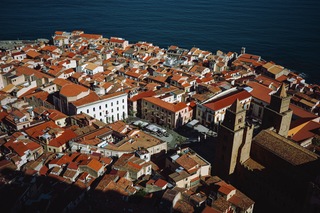
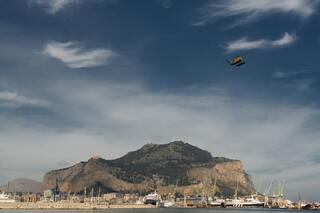
Once the intellectual capital of southern Europe, Palermo has always been at the crossroads of civilization. Favorably situated on a crescent-shaped bay at the foot of Monte Pellegrino, it has attracted almost every culture touching the Mediterranean world. To Palermo's credit, it has absorbed these diverse cultures into a unique personality that is at once Arab and Christian, Byzantine and Roman, Norman and Italian. The city's heritage encompasses all of Sicily's varied ages, but its distinctive aspect is its Arab-Norman identity, an improbable marriage that, mixed in with Byzantine and Jewish elements, created some resplendent works of art. No less noteworthy than the architecture is Palermo's chaotic vitality, on display at some of Italy's most vibrant outdoor markets, public squares, street bazaars, and food vendors, and above all in its grand climax of Italy's most spectacular passeggiata (the leisurely social stroll along the principal thoroughfare).
DAY 7
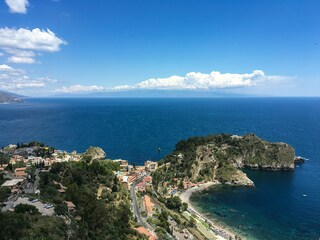
The medieval cliff-hanging town of Taormina is overrun with tourists, yet its natural beauty is still hard to dispute. The view of the sea and Mt. Etna from its jagged cactus-covered cliffs is as close to perfection as a panorama can get—especially on clear days, when the snowcapped volcano's white puffs of smoke rise against the blue sky. Writers have extolled Taormina's beauty almost since it was founded in the 6th century BC by Greeks from nearby Naxos; Goethe and D. H. Lawrence were among its well-known enthusiasts. The town's boutique-lined main streets get old pretty quickly, but the many hiking paths that wind through the beautiful hills surrounding Taormina promise a timeless alternative. A trip up to stunning Castelmola (whether on foot or by car) should also be on your itinerary.
DAY 8
Siracusa, known to English speakers as Syracuse, is a wonder to behold. One of the great ancient capitals of Western civilization, the city was founded in 734 BC by Greek colonists from Corinth and soon grew to rival, and even surpass, Athens in splendor and power. It became the largest, wealthiest city-state in the West and a bulwark of Greek civilization. Although Siracusa lived under tyranny, rulers such as Dionysius filled their courts with Greeks of the highest cultural stature—among them the playwrights Aeschylus and Euripides, and the philosopher Plato. The Athenians, who didn't welcome Siracusa's rise, set out to conquer Sicily, but the natives outsmarted them in what was one of the greatest military campaigns in ancient history (413 BC). The city continued to prosper until it was conquered two centuries later by the Romans.Present-day Siracusa still has some of the finest examples of Baroque art and architecture; dramatic Greek and Roman ruins; and a Duomo that's the stuff of legend—a microcosm of the city's entire history in one building. The modern city also has a wonderful, lively, Baroque old town worthy of extensive exploration, as well as pleasant piazzas, outdoor cafés and bars, and a wide assortment of excellent seafood. There are essentially two areas to explore in Siracusa: the Parco Archeologico (Archaeological Zone), on the mainland; and the island of Ortygia, the ancient city first inhabited by the Greeks, which juts out into the Ionian Sea and is connected to the mainland by two small bridges. Ortygia is becoming increasingly popular with tourists, and is starting to lose its old-fashioned charm in favor of modern boutiques.Siracusa's old nucleus of Ortygia, a compact area, is a pleasure to amble around without getting unduly tired. In contrast, mainland Siracusa is a grid of wider avenues. At the northern end of Corso Gelone, above Viale Paolo Orsi, the orderly grid gives way to the ancient quarter of Neapolis, where the sprawling Parco Archeologico is accessible from Viale Teracati (an extension of Corso Gelone). East of Viale Teracati, about a 10-minute walk from the Parco Archeologico, the district of Tyche holds the archaeological museum and the church and catacombs of San Giovanni, both off Viale Teocrito (drive or take a taxi or city bus from Ortygia). Coming from the train station, it's a 15-minute trudge to Ortygia along Via Francesco Crispi and Corso Umberto. If you're not up for that, take one of the free electric buses leaving every 10 minutes from the bus station around the corner.
DAY 11
Catania is an ancient port city on Sicily's east coast. It sits at the foot of Mt. Etna, an active volcano with trails leading up to the summit. The city's wide central square, Piazza del Duomo, features the whimsical Fontana dell'Elefante statue and richly decorated Catania Cathedral. In the southwest corner of the square, La Pescheria weekday fish market is a rowdy spectacle surrounded by seafood restaurants.
Dates & prices
Select guest
Flights included from London Gatwick
Departs
Sun 5 Sep 2027
from £3,299 pp
Enquire now Call 020 7590 0610Per person, based on two sharing, flights included. Updated daily and confirmed when you book. Flights from UK airports only.