
Summary
In alliance with Smithsonian Journeys.
This cruise is part of a collection of PONANT voyages that are specially-tailored for English-speaking travelers who want to engage with the world. In addition to the usual elements of the PONANT experience, the listed price for these voyages includes transfers to and from the ship, talks and discussions aboard ship by world class experts, and a shore excursion or activity in each port of call that encourages guests to embrace the sights, sounds, tastes, and smells of the local environment and culture.Set sail with PONANT aboard Le Soléal for a 9-day cruise to discover the many traditions and emblematic sites of the Land of the Rising Sun.Your voyage begins in Busan, South Korea. Busan offers a range of experiences during a full day of exploration after an overnight in port: Haedong Yonggungsa Temple, built in 1376 overlooking the sea; the Busan Museum of Art, featuring an outdoor sculpture garden as well as exhibits of contemporary Korean artists; Gyeongju Historic Areas, designated a UNESCO World Heritage site representing the flowering of Silla culture between the 7th and 10th centuries; and a Korean Tea Ceremony at the Hongbeopsa Temple, famous for having the largest Buddha statue in Asia.Crossing the strait to Japan, the richness from which to choose is immediately apparent in Sakaiminato, where options include Matsue Castle, built entirely of pine in 1611; the Adachi Museum of Art, displaying the great masters of modern Japanese painting and sculpture; a demonstration of the ancient craft of making paper (washi) from tree bark; and Yushien Garden, a landscape garden in traditional style, famous for its peonies.Le Soléal sails on to Hagi, whose contributions to Japan’s industrialization and modernization have been honored by UNESCO. At Hagi Castle Town, walk in the steps of the samurai as you stroll its beautifully preserved streets.Call in Moji, which enjoyed its heyday in the early 20th century as the center for Japanese trade with China. Nearby is Kozan-ji Temple, founded in the Kamakura period and the oldest Zen style temple in Japan.Le Soléal sails next to Beppu, renowned for its extensive system of hot springs or onsen. Choose to visit Chinoike Jigoku, one of the oldest natural hot springs in Japan and unique for its deep red color due to its iron oxide content. Or opt to discover a beautiful steaming blue pond and bubbling mud pond at Kamado Jigoku, also known as "Cooking Pot Hell.”Then call at Miyajima, the gateway to the majestic Itsukushima Shinto Shrine, listed as a UNESCO World Heritage site, whose magnificent vermillion torii gate appears to float on water. This afternoon, continue to Hiroshima, whose UNESCO World Heritage-listed Hiroshima Peace Memorial bears witness to the horrific aftermath of the world’s first atomic bomb explosion on August 6, 1945. You may also choose to visit the Saijo sake brewing district for a tasting.Your final port of call is in Tamano, a former feudal domain with a unique cultural heritage. From here you will be able to admire the famous Korakuen Garden, one of the country’s must-see landscaped gardens.Your voyage ends in Osaka, a modern city in the heart of the Japanese archipelago.Itinerary & Map
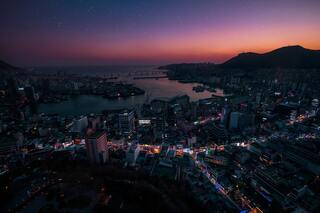
White-sand city beaches and hot-spring resorts may not be everyone's first image of Korea, but these are what Koreans flock to Busan for all year. And there are...
Full description
White-sand city beaches and hot-spring resorts may not be everyone's first image of Korea, but these are what Koreans flock to Busan for all year. And there are...
Full description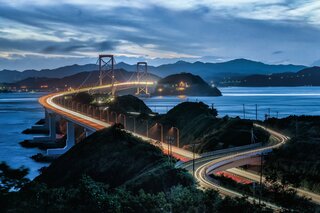
Sakaiminato is a small city almost totally surrounded by water: the Sea of Japan to the east, the Sakai Channel to the north and Lake Nakaumi to the west. Acros...
Full description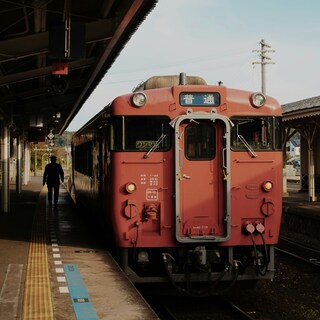
Hagi is a former castle town located in the middle of Yamaguchi prefecture along the coast of the Sea of Japan. It is surrounded by the ocean, mountain and Abug...
Full description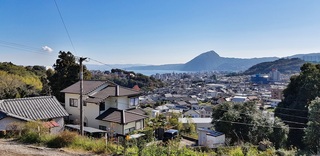
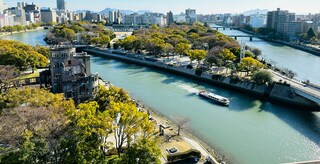
History buffs will want to write home Hiroshima. Despite being devastated in 1945, this Japanese city is known to all for its commitment peace – its ruin on the...
Full description
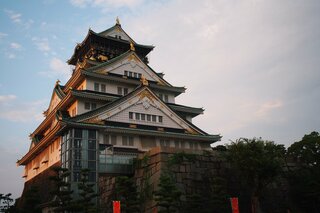
From Minami's neon-lighted Dotombori and historic Tenno-ji to the high-rise class and underground shopping labyrinths of Kita, Osaka is a city that pulses with...
Full description
White-sand city beaches and hot-spring resorts may not be everyone's first image of Korea, but these are what Koreans flock to Busan for all year. And there are...
Full description
White-sand city beaches and hot-spring resorts may not be everyone's first image of Korea, but these are what Koreans flock to Busan for all year. And there are...
Full description
Sakaiminato is a small city almost totally surrounded by water: the Sea of Japan to the east, the Sakai Channel to the north and Lake Nakaumi to the west. Acros...
Full description
Hagi is a former castle town located in the middle of Yamaguchi prefecture along the coast of the Sea of Japan. It is surrounded by the ocean, mountain and Abug...
Full description
History buffs will want to write home Hiroshima. Despite being devastated in 1945, this Japanese city is known to all for its commitment peace – its ruin on the...
Full description
From Minami's neon-lighted Dotombori and historic Tenno-ji to the high-rise class and underground shopping labyrinths of Kita, Osaka is a city that pulses with...
Full descriptionBusan
White-sand city beaches and hot-spring resorts may not be everyone's first image of Korea, but these are what Koreans flock to Busan for all year. And there are plenty of opportunities for rest, relaxation, retail therapy, and even a touch of glamour every October with the Busan International Film Festival. Busan's beaches are the big summertime draw but there is plenty to be seen year round. Quintessential experiences include taking some rest and relaxation at a local spa and exploring the Beomeosa temple complex.
Sakaiminato
Sakaiminato is a small city almost totally surrounded by water: the Sea of Japan to the east, the Sakai Channel to the north and Lake Nakaumi to the west. Across the lake the towns of Matsue and Yasugi offer interesting experiences. Matsue is known as the “Town of Water” next to scenic Lake Shinji and Lake Nakaumi. It has one of the very few wooden castles that still remain in Japan. Touring the castle and boat rides on the Horikawa River and the castle’s moat are popular. Yasugi has the Adachi Museum of Art, a private museum that houses one of the finest collections of contemporary Japanese paintings, but also has a 165,000 square metres garden –with plants and rocks collected by the museum’s founder. Six different gardens show different scenarios depending on the season. These gardens have been selected as “Japan’s best garden” for several years.
Hagi
Hagi is a former castle town located in the middle of Yamaguchi prefecture along the coast of the Sea of Japan. It is surrounded by the ocean, mountain and Abugawa River. Early in the 17th century, Terumoto Mori built Hagi Castle at the foot of Mt. Shizuki-yama, and the area served as the seat of the Yamaguchi prefecture government until the middle of 19th century. Around then, Hagi produced many capable men who played a leading role in the construction of modern day Japan, including Hirobumi Ito who became the first prime minister in Japan. You will still see a castle town itself which was built 400 years ago and you can get the feel of how it was like during the Samurai period. During your visit, we recommend experiencing the Hagi-yaki pottery which was brought from Korea in the early 17th century. Its colour is very unique and changes over time due to its porous nature. You can find many craft shops specialized for Hagi-yaki pottery all over the town. Last but not least, do not forget that Hagi is also famous for summer tangerines, and there are several shops which sells soft ice cream with summer tangerine flavour.
Hiroshima and Itsukushima
History buffs will want to write home Hiroshima. Despite being devastated in 1945, this Japanese city is known to all for its commitment peace – its ruin on the 6th August 1945 led to the end of the war and today, the Peace Memorial (a UNESCO World Heritage Site) , is a constant reminder of the destruction that war brings. A walk in the leafy boulevards of Peace Memorial Park brings quiet contemplation. The Flames of Peace – set in the park’s central feature pond – burn brightly and will continue to do so until all the nuclear bombs I the world have been destroyed. There are many other inspiring messages of hope around the city too; the Children’s’ Peace Monument just north of the park is a homage to little Sadako Sasaki, who was just two in 1945. When she developed leukemia in 1956, she believed that if she folded 1,000 paper cranes – a symbol of longevity and happiness in Japan – she would recover. Sadly she died before she finished her task but her classmates finished the rest. It is impossible to ignore the events of 1945 in Hiroshima, but this is far from a depressing place. The great efforts that have been made in rebuilding of the city over the years have given Hiroshima a vibrant, eclectic edge, with the downtown shopping area and street food stalls being well worth a visit. The proximity to Miyajima and its iconic, impressive, Torii gate should not be overlooked either. If you are lucky enough to visit during the unpredictable and short-lived Sakura (cherry blossom) season, then the extraordinary sight of the delicate pink blossom floating across the water to the red gate, means you can consider yourself one of the luckiest people on the planet.
Osaka
From Minami's neon-lighted Dotombori and historic Tenno-ji to the high-rise class and underground shopping labyrinths of Kita, Osaka is a city that pulses with its own unique rhythm. Though Osaka has no shortage of tourist sites, it is the city itself that is the greatest attraction. Home to some of Japan's best food, most unique fashions, and warmest locals, Osaka does not beg to be explored—it demands it. More than anywhere else in Japan, it rewards the impulsive turn down an interesting side street or the chat with a random stranger. People do not come here to see the city, they come to experience it.Excluded from the formal circles of power and aristocratic culture in 16th-century Edo (Tokyo), Osaka took advantage of its position as Japan's trading center, developing its own art forms such as Bunraku puppet theater and Rakugo comic storytelling. It was in Osaka that feudal Japan's famed Floating World—the dining, theater, and pleasure district—was at its strongest and most inventive. Wealthy merchants and common laborers alike squandered fortunes on culinary delights, turning Osaka into "Japan's Kitchen," a moniker the city still has today. Though the city suffered a blow when the Meiji government canceled all of the samurai class's outstanding debts to the merchants, it was quick to recover. At the turn of the 20th century, it had become Japan's largest and most prosperous city, a center of commerce and manufacturing.Today Osaka remains Japan's iconoclastic metropolis, refusing to fit Tokyo's norms and expectations. Unlike the hordes of Tokyo, Osakans are fiercely independent. As a contrast to the neon and concrete surroundings, the people of Osaka are known as Japan's friendliest and most outgoing. Ask someone on the street for directions in Tokyo and you are lucky to get so much as a glance. Ask someone in Osaka and you get a conversation.The main areas of the city, Kita (north) and Minami (south), are divided by two rivers: the Dojima-gawa and the Tosabori-gawa. Between Kita and Minami is Naka-no-shima, an island and the municipal center of Osaka. Kita (north of Chuo Dori) is Osaka's economic hub and contains Osaka's largest stations: JR Osaka and Hankyu Umeda. The area is crammed with shops, department stores, and restaurants. Nearby are a nightlife district, Kita-shinchi; Naka-no-shima and the Museum of Oriental Ceramics; Osaka-jo (Osaka Castle); and Osaka Koen (Osaka Park). Restaurants, bars, department stores, and boutiques attract Osaka's youth to Minami (south Chuo Dori); theatergoers head to the National Bunraku Theatre and electronics-lovers to Den Den Town. For a glimpse of old Osaka, visit Tenno-ji Temple and Shin Sekai. The main stations are Namba, Shin-sai-bashi, Namba Nankai, and Tenno-ji. There's easy access to the Municipal Museum of Fine Art and Sumiyoshi Taisha (Sumiyoshi Grand Shrine).The bay area, to the west of the city center, is home to the Osaka Aquarium and Universal Studios Japan. The Shinkansen stops at Shin-Osaka, three stops (about five minutes) north of Osaka Station on the Mido-suji subway line. To the north of Shin-Osaka is Senri Expo Park.
Dates & prices
Select guest
Departs
Sat 1 May 2027
from £8,350 pp
Enquire now Call 020 7590 0610Per person, based on two sharing, cruise only. Updated daily and confirmed when you book.