
Summary
This PONANT adventure has been designed in partnership with SEDNA, a specialist in polar expeditions and immersive exploration. Its founder, Nicolas Dubreuil, has been exploring the polar regions for more than thirty years and will be leading this expedition aboard Le Commandant Charcot.
Far more than a journey to Antarctica, this exceptional voyage has been conceived as a true exploration: each stop is an invitation to leave the ship and discover, understand and fully experience the territories of the Far South. From the Falkland Islands and their extraordinary birdlife to the vast king penguin colonies of South Georgia and the endless ice of the Weddell Sea, the itinerary follows in the wake of the women and men who, for generations, have lived, worked and explored at the far reaches of the Far South. Farmers on the subantarctic islands, sailors, scientists and explorers: each in their own way has faced isolation, the elements and the power of a natural world that sets its own rules.Conditions permitting, you too may have the opportunity to share in this experience by spending a night ashore or on the sea ice, camping in a tent alongside scientists, or even staying on a remote farm in the Falkland Islands. These rare experiences offer a chance to truly immerse yourself in these remarkable environments. Thanks to the ship's exceptional capabilities, the expedition will attempt to venture deep into the Weddell Sea, into a world where the ice, weather and wildlife dictate the course of the journey. Penguins, seals, whales and perhaps even the legendary emperor penguin will be your companions on an adventure whose programme will be shaped each day by the opportunities that arise. Here, the itinerary is only the start: the expedition will be defined by the experiences that unfold along the way.We are privileged guests in these extreme lands, where we are at the mercy of the weather and the ice conditions. Our commitment to respecting this environment imposes certain rules of conduct upon us. Our navigation, mainly in the fjords, will be determined by the type of ice we come across; as the coastal ice must be preserved, we will take this factor into account from day to day in our itineraries. The sailing program, shore visits, activities and observation of fauna cannot be guaranteed and are subject to weather and ice conditions. These experiences are unique and vary from day to day and for each departure. The Captain and the Expedition Leader will make every effort to ensure that your experience is as rich as possible, while complying with applicable safety rules and AECO regulations.Itinerary & Map
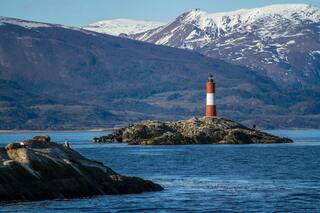
At 55 degrees latitude south, Ushuaia (pronounced oo-swy-ah) is closer to the South Pole than to Argentina's northern border with Bolivia. It is the capital and...
Full description
At 55 degrees latitude south, Ushuaia (pronounced oo-swy-ah) is closer to the South Pole than to Argentina's northern border with Bolivia. It is the capital and...
Full description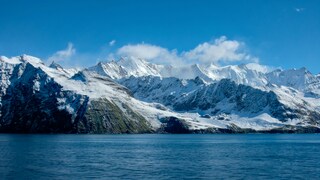
South Georgia is a breathtaking destination of towering snow-covered mountains, mighty glaciers, and low-lying grasslands that attract an astounding concentrati...
Full description
South Georgia is a breathtaking destination of towering snow-covered mountains, mighty glaciers, and low-lying grasslands that attract an astounding concentrati...
Full description
South Georgia is a breathtaking destination of towering snow-covered mountains, mighty glaciers, and low-lying grasslands that attract an astounding concentrati...
Full description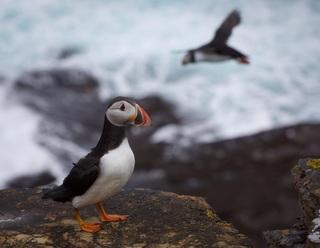
Hidden in the Southern Ocean close to the Antarctic Peninsula and discovered by seal hunters in 1821, these far-flung mountainous islands have more than 85% of...
Full description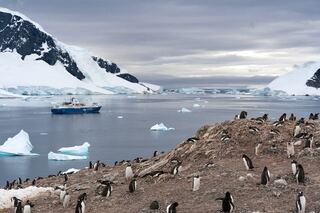
Remote and otherworldly, Antarctic is irresistible for its spectacular iceberg sculptures and calving glaciers, and for the possibility of up-close encounters w...
Full description
Remote and otherworldly, Antarctic is irresistible for its spectacular iceberg sculptures and calving glaciers, and for the possibility of up-close encounters w...
Full description
At 55 degrees latitude south, Ushuaia (pronounced oo-swy-ah) is closer to the South Pole than to Argentina's northern border with Bolivia. It is the capital and...
Full description
At 55 degrees latitude south, Ushuaia (pronounced oo-swy-ah) is closer to the South Pole than to Argentina's northern border with Bolivia. It is the capital and...
Full description
At 55 degrees latitude south, Ushuaia (pronounced oo-swy-ah) is closer to the South Pole than to Argentina's northern border with Bolivia. It is the capital and...
Full description
South Georgia is a breathtaking destination of towering snow-covered mountains, mighty glaciers, and low-lying grasslands that attract an astounding concentrati...
Full description
South Georgia is a breathtaking destination of towering snow-covered mountains, mighty glaciers, and low-lying grasslands that attract an astounding concentrati...
Full description
South Georgia is a breathtaking destination of towering snow-covered mountains, mighty glaciers, and low-lying grasslands that attract an astounding concentrati...
Full description
Hidden in the Southern Ocean close to the Antarctic Peninsula and discovered by seal hunters in 1821, these far-flung mountainous islands have more than 85% of...
Full description
Remote and otherworldly, Antarctic is irresistible for its spectacular iceberg sculptures and calving glaciers, and for the possibility of up-close encounters w...
Full description
Remote and otherworldly, Antarctic is irresistible for its spectacular iceberg sculptures and calving glaciers, and for the possibility of up-close encounters w...
Full description
At 55 degrees latitude south, Ushuaia (pronounced oo-swy-ah) is closer to the South Pole than to Argentina's northern border with Bolivia. It is the capital and...
Full descriptionUshuaia
At 55 degrees latitude south, Ushuaia (pronounced oo-swy-ah) is closer to the South Pole than to Argentina's northern border with Bolivia. It is the capital and tourism base for Tierra del Fuego, the island at the southernmost tip of Argentina.Although its stark physical beauty is striking, Tierra del Fuego's historical allure is based more on its mythical past than on rugged reality. The island was inhabited for 6,000 years by Yámana, Haush, Selk'nam, and Alakaluf Indians. But in 1902 Argentina, eager to populate Patagonia to bolster its territorial claims, moved to initiate an Ushuaian penal colony, establishing the permanent settlement of its most southern territories and, by implication, everything in between.When the prison closed in 1947, Ushuaia had a population of about 3,000, made up mainly of former inmates and prison staff. Today the Indians of Darwin's "missing link" theory are long gone—wiped out by diseases brought by settlers and by indifference to their plight—and the 60,000 residents of Ushuaia are hitching their star to tourism.The city rightly (if perhaps too loudly) promotes itself as the southernmost city in the world (Puerto Williams, a few miles south on the Chilean side of the Beagle Channel, is a small town). You can make your way to the tourism office to get your clichéd, but oh-so-necessary, "Southernmost City in the World" passport stamp. Ushuaia feels like a frontier boomtown, at heart still a rugged, weather-beaten fishing village, but exhibiting the frayed edges of a city that quadrupled in size in the '70s and '80s and just keeps growing. Unpaved portions of Ruta 3, the last stretch of the Pan-American Highway, which connects Alaska to Tierra del Fuego, are finally being paved. The summer months (December through March) draw more than 120,000 visitors, and dozens of cruise ships. The city is trying to extend those visits with events like March's Marathon at the End of the World and by increasing the gamut of winter activities buoyed by the excellent snow conditions.A terrific trail winds through the town up to the Martial Glacier, where a ski lift can help cut down a steep kilometer of your journey. The chaotic and contradictory urban landscape includes a handful of luxury hotels amid the concrete of public housing projects. Scores of "sled houses" (wooden shacks) sit precariously on upright piers, ready for speedy displacement to a different site. But there are also many small, picturesque homes with tiny, carefully tended gardens. Many of the newer homes are built in a Swiss-chalet style, reinforcing the idea that this is a town into which tourism has breathed new life. At the same time, the weather-worn pastel colors that dominate the town's landscape remind you that Ushuaia was once just a tiny fishing village, snuggled at the end of the Earth.As you stand on the banks of the Canal Beagle (Beagle Channel) near Ushuaia, the spirit of the farthest corner of the world takes hold. What stands out is the light: at sundown the landscape is cast in a subdued, sensual tone; everything feels closer, softer, and more human in dimension despite the vastness of the setting. The snowcapped mountains reflect the setting sun back onto a stream rolling into the channel, as nearby peaks echo their image—on a windless day—in the still waters.Above the city rise the last mountains of the Andean Cordillera, and just south and west of Ushuaia they finally vanish into the often-stormy sea. Snow whitens the peaks well into summer. Nature is the principal attraction here, with trekking, fishing, horseback riding, wildlife spotting, and sailing among the most rewarding activities, especially in the Parque Nacional Tierra del Fuego (Tierra del Fuego National Park).
South Georgia Island and At Sea
South Georgia is a breathtaking destination of towering snow-covered mountains, mighty glaciers, and low-lying grasslands that attract an astounding concentration of wildlife. It is possible to find Southern fur seals, Southern elephant seals and a variety of albatross species including Black-browed, Light-mantled Sooty, Grey-headed and the spectacular Wandering Albatross, plus thousands of King and Macaroni Penguins. South Georgia is also linked to the early Antarctic explorers. Captain James Cook first stepped ashore in 1775, but perhaps more famous is Ernest Shackleton’s arrival in 1916 following the sinking of his ship Endurance. Shackleton’s grave and the whaling museum at Grytviken are highlights, as would be a visit to one of the King Penguin colonies at Salisbury Plain or Gold Harbour.
South Orkney Islands
Hidden in the Southern Ocean close to the Antarctic Peninsula and discovered by seal hunters in 1821, these far-flung mountainous islands have more than 85% of their surface glaciated. Despite the ravages caused by whale and seal hunting, today a sizeable leopard seal population can be found there, along with chinstrap penguins and snow petrels. One of its four main islands, Laurie Island is home to an old scientific station that is still in operation.
Antarctic Peninsula
Remote and otherworldly, Antarctic is irresistible for its spectacular iceberg sculptures and calving glaciers, and for the possibility of up-close encounters with marine mammals and the iconic penguins. The Antarctic Peninsula – the main peninsula closest to South America – has a human history of almost 200 years, with explorers, sealers, whalers, and scientists who have come to work, and eventually intrepid visitors coming to enjoy this pristine and remote wilderness. It is a region of protected bays, unscaled snow-capped mountains, vast glaciers and a few places where whalers or scientists have worked. Just as irresistible are the many Gentoo and Chinstrap Penguin colonies, the seals basking on ice floes, the whales and orcas.
Date & price
Select guest
Departs
Wed 29 Nov 2028
from £27,660 pp
Enquire now Call 020 7590 0610Per person, based on two sharing, cruise only. Updated daily and confirmed when you book.