
Summary
Set off to discover the wild and melancholic lands of the British archipelagos and Celtic shores. During this cruise, nature will reveal itself in all its raw and captivating splendour: steep cliffs, windswept beaches, verdant moors and secret gardens come together to compose a landscape of mystical beauty. On each port of call, the ancient heritage of the sites is embodied through the Viking vestiges, the ruins of forgotten castles, villages of authentic charm and welcoming cities. A real journey back into time, into the heart of nature steeped in legends.
Itinerary & Map
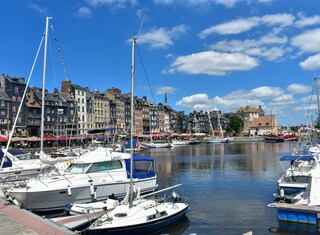
Honfleur, the most picturesque of the Côte Fleurie's seaside towns, is a time-burnished place with a surplus of half-timber houses and cobbled streets that are...
Full description
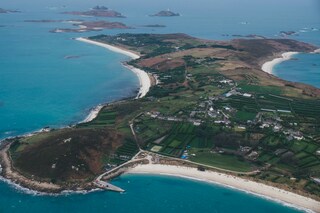
St Mary’s is the Isle of Scilly’s largest island with a population of 1800 residents and an area of 6.58 square Kilometres; this is the gateway to the rest of t...
Full description

Cork City received its first charter in 1185 from Prince John of Norman England, and it takes its name from the Irish word corcaigh, meaning "marshy place." The...
Full description
Dublin is making a comeback. The decade-long "Celtic Tiger" boom era was quickly followed by the Great Recession, but The Recovery has finally taken a precariou...
Full description
The Isle of Man, situated in the Irish Sea off the west coast of England, is a mountainous, cliff-fringed island and one of Britain’s most beautiful spots. Meas...
Full description
Start your adventure in Scotland’s largest city, Glasgow which is overflowing with historic landmarks and a vibrant culture. The distinct architecture is remini...
Full description
Honfleur, the most picturesque of the Côte Fleurie's seaside towns, is a time-burnished place with a surplus of half-timber houses and cobbled streets that are...
Full description
St Mary’s is the Isle of Scilly’s largest island with a population of 1800 residents and an area of 6.58 square Kilometres; this is the gateway to the rest of t...
Full description
Cork City received its first charter in 1185 from Prince John of Norman England, and it takes its name from the Irish word corcaigh, meaning "marshy place." The...
Full description
Dublin is making a comeback. The decade-long "Celtic Tiger" boom era was quickly followed by the Great Recession, but The Recovery has finally taken a precariou...
Full description
The Isle of Man, situated in the Irish Sea off the west coast of England, is a mountainous, cliff-fringed island and one of Britain’s most beautiful spots. Meas...
Full description
Start your adventure in Scotland’s largest city, Glasgow which is overflowing with historic landmarks and a vibrant culture. The distinct architecture is remini...
Full descriptionHonfleur
Honfleur, the most picturesque of the Côte Fleurie's seaside towns, is a time-burnished place with a surplus of half-timber houses and cobbled streets that are lined with a stunning selection of stylish boutiques. Much of its Renaissance architecture remains intact—especially around the 17th-century Vieux Bassin harbor, where the water is fronted on one side by two-story stone houses with low, sloping roofs and on the other by tall slate-topped houses with wooden facades. Maritime expeditions (including some of the first voyages to Canada) departed from here; later, Impressionists were inspired to capture it on canvas. But the town as a whole has become increasingly crowded since the Pont de Normandie opened in 1995. Providing a direct link with Upper Normandy, the world's sixth-largest cable-stayed bridge is supported by two concrete pylons taller than the Eiffel Tower and designed to resist winds of 257 kph (160 mph).
Saint Mary's, Isles of Scilly
St Mary’s is the Isle of Scilly’s largest island with a population of 1800 residents and an area of 6.58 square Kilometres; this is the gateway to the rest of the magnificent islands. Hugh town -a beautiful Old town with its own beach, nature reserve and church is the main attractions of St Mary’s, with tiny streets brimming with shops to pick up the perfect souvenir. St Mary’s is a hidden gem, with long stretches of white sandy beaches and a breath-taking untouched landscape. The coastline holds many archaeological sites along with miles of splendid walks along the coastal and country paths.
Cork
Cork City received its first charter in 1185 from Prince John of Norman England, and it takes its name from the Irish word corcaigh, meaning "marshy place." The original 6th-century settlement was spread over 13 small islands in the River Lee. Major development occurred during the 17th and 18th centuries with the expansion of the butter trade, and many attractive Georgian-design buildings with wide bowfront windows were constructed during this time. As late as 1770 Cork's present-day main streets—Grand Parade, Patrick Street, and the South Mall—were submerged under the Lee. Around 1800, when the Lee was partially dammed, the river divided into two streams that now flow through the city, leaving the main business and commercial center on an island, not unlike Paris's Île de la Cité. As a result, the city has a number of bridges and quays, which, although initially confusing, add greatly to the port's unique character. Cork can be very "Irish" (hurling, Gaelic football, televised plowing contests, music pubs, and peat smoke). But depending on what part of town you're in, Cork can also be distinctly un-Irish—the sort of place where hippies, gays, and farmers drink at the same pub.
Dublin
Dublin is making a comeback. The decade-long "Celtic Tiger" boom era was quickly followed by the Great Recession, but The Recovery has finally taken a precarious hold. For visitors, this newer and wiser Dublin has become one of western Europe's most popular and delightful urban destinations. Whether or not you're out to enjoy the old or new Dublin, you'll find it a colossally entertaining city, all the more astonishing considering its intimate size.It is ironic and telling that James Joyce chose Dublin as the setting for his famous Ulysses, Dubliners, and A Portrait of the Artist as a Young Man because it was a "center of paralysis" where nothing much ever changed. Which only proves that even the greats get it wrong sometimes. Indeed, if Joyce were to return to his once-genteel hometown today—disappointed with the city's provincial outlook, he left it in 1902 at the age of 20—and take a quasi-Homeric odyssey through the city (as he so famously does in Ulysses), would he even recognize Dublin as his "Dear Dirty Dumpling, foostherfather of fingalls and dotthergills"?For instance, what would he make of Temple Bar—the city's erstwhile down-at-the-heels neighborhood, now crammed with cafés and trendy hotels and suffused with a nonstop, international-party atmosphere? Or the simple sophistication of the open-air restaurants of the tiny Italian Quarter (named Quartier Bloom after his own creation), complete with sultry tango lessons? Or of the hot–cool Irishness, where every aspect of Celtic culture results in sold-out theaters, from Once, the cult indie movie and Broadway hit, to Riverdance, the old Irish mass-jig recast as a Las Vegas extravaganza? Plus, the resurrected Joyce might be stirred by the songs of Hozier, fired up by the sultry acting of Michael Fassbender, and moved by the award-winning novels of Colum McCann. As for Ireland's capital, it's packed with elegant shops and hotels, theaters, galleries, coffeehouses, and a stunning variety of new, creative little restaurants can be found on almost every street in Dublin, transforming the provincial city that suffocated Joyce into a place almost as cosmopolitan as the Paris to which he fled. And the locals are a hell of a lot more fun! Now that the economy has finally turned a corner, Dublin citizens can cast a cool eye over the last 20 crazy years. Some argue that the boomtown transformation of their heretofore-tranquil city has permanently affected its spirit and character. These skeptics (skepticism long being a favorite pastime in the capital city) await the outcome of "Dublin: The Sequel," and their greatest fear is the possibility that the tattered old lady on the Liffey has become a little less unique, a little more like everywhere else.Oh ye of little faith: the rare ole gem that is Dublin is far from buried. The fundamentals—the Georgian elegance of Merrion Square, the Norman drama of Christ Church Cathedral, the foamy pint at an atmospheric pub—are still on hand to gratify. Most of all, there are the locals themselves: the nod and grin when you catch their eye on the street, the eagerness to hear half your life story before they tell you all of theirs, and their paradoxically dark but warm sense of humor. It's expected that 2016 will be an extra-special year in the capital, as centenary celebrations of the fateful 1916 Easter Rising will dominate much of the cultural calendar.
Douglas
The Isle of Man, situated in the Irish Sea off the west coast of England, is a mountainous, cliff-fringed island and one of Britain’s most beautiful spots. Measuring just 30 miles by 13 miles, the Isle of Man remains semi-autonomous. With its own postage stamps, laws, currency, and the Court of Tynwald (the world’s oldest democratic parliament), the Isle of Man is rich with history and lore.Inhabited from Neolithic times, the island became a refuge for Irish missionaries after the 5th Century. Norsemen took the island during the 9th Century and sold it to Scotland in 1266. However, since the 14th Century, it has been held by England. Manx, the indigenous Celtic language, is still spoken by a small minority. The Isle of Man has no income tax, which has encouraged many Britains to regard the island as a refuge. Otherwise, it is populated by Gaelic farmers, fishermen, and the famous tailless manx cats. The varied landscape features austere moorlands and wooded glens, interspersed by fine castles, narrow-gauge railways, and scores of standing stones with Celtic crosses. The hilly terrain rises to a height of 2,036 feet at Mount Snaefell, which dominates the center of the island.
Glasgow
Start your adventure in Scotland’s largest city, Glasgow which is overflowing with historic landmarks and a vibrant culture. The distinct architecture is reminiscent classic 19th-century fused together with modern early 20th-century dubbed ‘Glasgow Style’. The checkerboard layout makes the city easy to navigate with lively street entertainment around every corner.
Date & price
Select guest
Departs
Tue 4 May 2027
from £4,010 pp
Enquire now Call 020 7590 0610Per person, based on two sharing, cruise only. Updated daily and confirmed when you book.