
Summary
Itinerary & Map
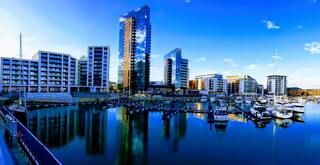
Lying near the head of Southampton Water, a peninsula between the estuaries of the Rivers Test and Itchen, Southampton is Britain’s largest cruise port. It has...
Full description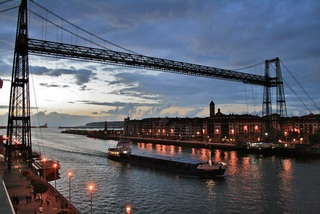
Situated on the Garonne River, 70 miles (113 km) inland from the Atlantic, Bordeaux's origin can be traced back to the 3rd century when it was Aquitaine's Roman...
Full description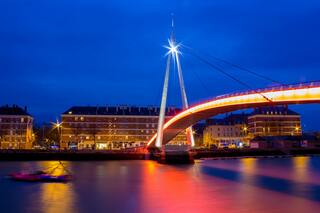
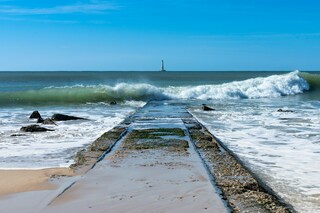
Le Havre, founded by King Francis I of France in 1517, is located inUpper Normandy on the north bank of the mouth of the River Seine, which isconsidered the mos...
Full description
Lying near the head of Southampton Water, a peninsula between the estuaries of the Rivers Test and Itchen, Southampton is Britain’s largest cruise port. It has...
Full description
Lying near the head of Southampton Water, a peninsula between the estuaries of the Rivers Test and Itchen, Southampton is Britain’s largest cruise port. It has...
Full description
Situated on the Garonne River, 70 miles (113 km) inland from the Atlantic, Bordeaux's origin can be traced back to the 3rd century when it was Aquitaine's Roman...
Full description
Le Havre, founded by King Francis I of France in 1517, is located inUpper Normandy on the north bank of the mouth of the River Seine, which isconsidered the mos...
Full description
Lying near the head of Southampton Water, a peninsula between the estuaries of the Rivers Test and Itchen, Southampton is Britain’s largest cruise port. It has...
Full descriptionSouthampton
Lying near the head of Southampton Water, a peninsula between the estuaries of the Rivers Test and Itchen, Southampton is Britain’s largest cruise port. It has been one of England’s major ports since the Middle Ages, when it exported wool and hides from the hinterland and imported wine from Bordeaux. The city suffered heavy damage during World War Two and as a result the centre has been extensively rebuilt, but there are still some interesting medieval buildings including the Bargate, one of the finest city gatehouses in England.
Le Verdon-sur-Mer
Situated on the Garonne River, 70 miles (113 km) inland from the Atlantic, Bordeaux's origin can be traced back to the 3rd century when it was Aquitaine's Roman capital called Burdigala. From 1154 to 1453, the town prospered under the rule of the English, whose fondness for the region's red wines gave impetus to the local wine industry. At various times, Bordeaux even served as the nation's capital: in 1870, at the beginning of World War I, and for two weeks in 1940 before the Vichy government was proclaimed. Bordeaux's neo-classical architecture, wide avenues and well-tended public squares and parks lend the city a certain grandeur. Excellent museums, an imposing cathedral and a much-praised theatre add to the city's attractions. The principal highlights, clustered around the town centre, can easily be explored on foot.
Le Havre
Le Havre, founded by King Francis I of France in 1517, is located inUpper Normandy on the north bank of the mouth of the River Seine, which isconsidered the most frequented waterway in the world. Its port is ranked thesecond largest in France. The city was originally built on marshland andmudflats that were drained in the 1500’s. During WWII most of Le Havre wasdestroyed by Allied bombing raids. Post war rebuilding of the city followed thedevelopment plans of the well-known Belgian architect Auguste Perre. Thereconstruction was so unique that the entire city was listed as a UNESCO WorldHeritage Site in 2005.
Dates & prices
Select guest
Departs
Sun 8 Oct 2028
Arvia
from £629 pp
Enquire now Call 020 7590 0610Per person, based on two sharing, cruise only. Updated daily and confirmed when you book.