
Summary
Itinerary & Map
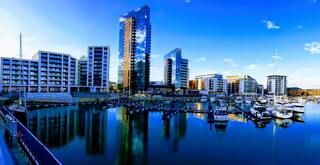
Lying near the head of Southampton Water, a peninsula between the estuaries of the Rivers Test and Itchen, Southampton is Britain’s largest cruise port. It has...
Full description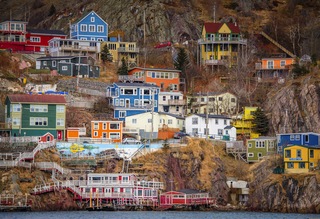
Old meets new in the province's capital (metro-area population a little more than 200,000), with modern office buildings surrounded by heritage shops and colorf...
Full description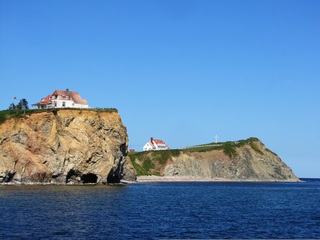

Havre St. Pierre is a tiny seaside port on the north shore of the Saint Lawrence River in Quebec. It was settled in 1857 by Acadians from the Magdalen Island, a...
Full description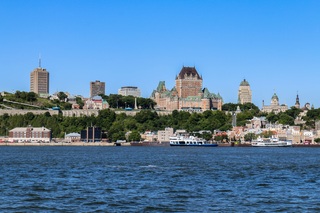
Québec City's alluring setting atop Cape Diamond (Cap Diamant) evokes a past of high adventure, military history, and exploration. This French-speaking capital...
Full description
Québec City's alluring setting atop Cape Diamond (Cap Diamant) evokes a past of high adventure, military history, and exploration. This French-speaking capital...
Full description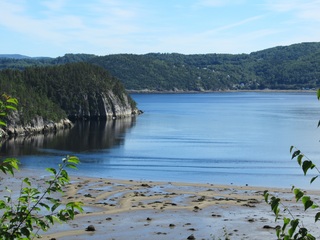
Just after visiting Saguenay, the wonderful Saguenay River pours into the massive St. Lawrence River. Before then, however, it slices through one of the world's...
Full description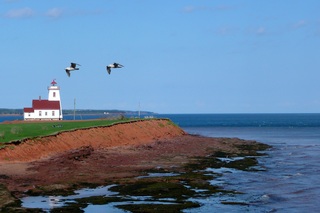
Designated as the Island capital in 1765, Charlottetown is both PEI’s oldest and largest urban center. However, since the whole "metropolitan" area only has a p...
Full descriptionThe Îles-de-la-Madeleine, or 'Magdalen Islands', form a small archipelago in the Gulf of Saint Lawrence with a land area of 79.36 square miles (205.53 square ki...
Full description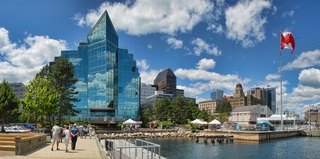
Surrounded by natural treasures and glorious seascapes, Halifax is an attractive and vibrant hub with noteworthy historic and modern architecture, great dining...
Full description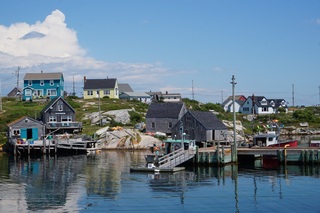
If you come directly to Cape Breton via plane, ferry, or cruise ship, Sydney is where you’ll land. If you’re seeking anything resembling an urban experience, it...
Full description
Lying near the head of Southampton Water, a peninsula between the estuaries of the Rivers Test and Itchen, Southampton is Britain’s largest cruise port. It has...
Full description
Lying near the head of Southampton Water, a peninsula between the estuaries of the Rivers Test and Itchen, Southampton is Britain’s largest cruise port. It has...
Full description
Old meets new in the province's capital (metro-area population a little more than 200,000), with modern office buildings surrounded by heritage shops and colorf...
Full description
Havre St. Pierre is a tiny seaside port on the north shore of the Saint Lawrence River in Quebec. It was settled in 1857 by Acadians from the Magdalen Island, a...
Full description
Québec City's alluring setting atop Cape Diamond (Cap Diamant) evokes a past of high adventure, military history, and exploration. This French-speaking capital...
Full description
Québec City's alluring setting atop Cape Diamond (Cap Diamant) evokes a past of high adventure, military history, and exploration. This French-speaking capital...
Full description
Just after visiting Saguenay, the wonderful Saguenay River pours into the massive St. Lawrence River. Before then, however, it slices through one of the world's...
Full description
Designated as the Island capital in 1765, Charlottetown is both PEI’s oldest and largest urban center. However, since the whole "metropolitan" area only has a p...
Full descriptionThe Îles-de-la-Madeleine, or 'Magdalen Islands', form a small archipelago in the Gulf of Saint Lawrence with a land area of 79.36 square miles (205.53 square ki...
Full description
Surrounded by natural treasures and glorious seascapes, Halifax is an attractive and vibrant hub with noteworthy historic and modern architecture, great dining...
Full description
If you come directly to Cape Breton via plane, ferry, or cruise ship, Sydney is where you’ll land. If you’re seeking anything resembling an urban experience, it...
Full description
Lying near the head of Southampton Water, a peninsula between the estuaries of the Rivers Test and Itchen, Southampton is Britain’s largest cruise port. It has...
Full descriptionSouthampton
Lying near the head of Southampton Water, a peninsula between the estuaries of the Rivers Test and Itchen, Southampton is Britain’s largest cruise port. It has been one of England’s major ports since the Middle Ages, when it exported wool and hides from the hinterland and imported wine from Bordeaux. The city suffered heavy damage during World War Two and as a result the centre has been extensively rebuilt, but there are still some interesting medieval buildings including the Bargate, one of the finest city gatehouses in England.
Saint-John's, Newfoundland and Labrador
Old meets new in the province's capital (metro-area population a little more than 200,000), with modern office buildings surrounded by heritage shops and colorful row houses. St. John's mixes English and Irish influences, Victorian architecture and modern convenience, and traditional music and rock and roll into a heady brew. The arts scene is lively, but overall the city moves at a relaxed pace.For centuries, Newfoundland was the largest supplier of salt cod in the world, and St. John's Harbour was the center of the trade. As early as 1627, the merchants of Water Street—then known as the Lower Path—were doing a thriving business buying fish, selling goods, and supplying alcohol to soldiers and sailors.
Havre-Saint-Pierre, Québec
Havre St. Pierre is a tiny seaside port on the north shore of the Saint Lawrence River in Quebec. It was settled in 1857 by Acadians from the Magdalen Island, and still today locals speak a dialect more similar to Acadian French than to Quebec French. It was originally called Saint-Pierre-de-la-Pointe-aux-Esquimaux until 1927, when it was officially shortened to Havre St Pierre. Until recently the local economy relied mainly on fishing and lumbering, today it is mainly a titanium ore-transhipment port. Nearby is one of the world’s most amazing natural phenomena – the Mingan Archipelago. They are the largest group of erosional monoliths in Canada, and were declared a Nation Park in 1984. These limestone monoliths have formed over thousands of years by wave action, strong winds and seasonal freezing and thawing. The result is a unique set of large limestone sculptures.
Quebec City, Québec
Québec City's alluring setting atop Cape Diamond (Cap Diamant) evokes a past of high adventure, military history, and exploration. This French-speaking capital city is the only walled city north of Mexico. Visitors come for the delicious and inventive cuisine, the remarkable historical continuity, and to share in the seasonal exuberance of the largest Francophone population outside France.The historic heart of this community is the Old City (Vieux-Québec), comprising the part of Upper Town (Haute-Ville) surrounded by walls and Lower Town (Basse-Ville), which spreads out at the base of the hill from Place Royale. Many sets of staircases and the popular funicular link the top of the hill with the bottom. Cobblestone streets, horse-drawn carriages, and elaborate cathedrals here are charming in all seasons. The Old City earned recognition as an official UNESCO World Heritage site in 1985, thanks largely to city planners who managed to update and preserve the 400-year-old buildings and attractions without destroying what made them worth preserving. The most familiar icon of the city, Fairmont Château Frontenac, is set on the highest point in Upper Town, where it holds court over the entire city.Sitting proudly above the confluence of the St. Lawrence and St. Charles rivers, the city's famous military fortification, La Citadelle, built in the early 19th century, remains the largest of its kind in North America. In summer, visitors should try to catch the Changing of the Guard, held every morning at 10 am; you can get much closer to the guards here than at Buckingham Palace in London.Enchanting as it is, the Old City is just a small part of the true Québec City experience. Think outside the walls and explore St-Roch, a downtown hot spot, which has artsy galleries, foodie haunts, and a bustling square. Cruise the Grande-Allée and avenue Cartier to find a livelier part of town dotted with nightclubs and fun eateries. Or while away the hours in St-Jean-Baptiste, a neighborhood with trendy shops and hipster hangouts.
Saguenay, Québec
Just after visiting Saguenay, the wonderful Saguenay River pours into the massive St. Lawrence River. Before then, however, it slices through one of the world's most southerly fjords and dense forests of towering pine trees. The nature watching here is nothing short of sublime, with outdoor spots like the Parc National du Fjord-du-Saguenay offering panoramic vistas and sandy river-beaches. Island-sized blue whales cruise through the waters of the mighty rivers, and flick gallons of water into the air effortlessly with a single swish of their colossal tails. With hiking, kayaking and cycling opportunities inviting you to explore the spectacular scenery - you'll find endless ways to fall in love with this majestic outdoor escape. In fall, gorgeous colours ripple through the foliage, and in doing so, they provide one of nature's greatest performances.
Charlottetown, Prince Edward Island
Designated as the Island capital in 1765, Charlottetown is both PEI’s oldest and largest urban center. However, since the whole "metropolitan" area only has a population of about 65,000, a pleasing small-town atmosphere remains. The city is a winner appearance-wise as well. Peppered with gingerbread-clad homes, converted warehouses, striking churches, and monumental government buildings, Charlottetown’s core seems relatively unchanged from its 19th-century heyday when it hosted the conference that led to the formation of Canada. The city is understandably proud of its role as the "Birthplace of Confederation" and, in summer, downtown streets are dotted with people dressed as personages from the past who’ll regale you with tales about the Confederation debate.
Magdalen Islands, Québec
The Îles-de-la-Madeleine, or 'Magdalen Islands', form a small archipelago in the Gulf of Saint Lawrence with a land area of 79.36 square miles (205.53 square kilometres). Though closer to Prince Edward Island and Nova Scotia, the islands form part of the Canadian province of Quebec. Les Îles-de-la-Madeleine encompass eight major islands: Havre-Aubert, Grande Entrée, Cap aux Meules, Grosse-Île, Havre aux Maisons, Pointe-Aux-Loups, Île d'Entrée and Brion. All except Brion are inhabited. Several other tiny islands are also considered part of the archipelago: Rocher aux Oiseaux; Île aux Loups-marins; Île Paquet; and Rocher du Corps Mort. Although Europeans first arrived on the islands in the mid-1600s, Mi'kmaq Indians had been visiting the islands for hundreds of years, and numerous archaeological sites have been excavated on the archipelago. By the mid-18th century, the islands were inhabited by French-speaking Acadians, and administered as part of the colony of Newfoundland from 1763-1774, when they were annexed to Quebec by the Quebec Act. A segment of the population are English descendants from survivors of the over 400 shipwrecks on the islands. The construction of lighthouses eventually reduced the number of shipwrecks, but many old hulks remain on the beaches and under the waters. Until the 20th century, the islands were completely isolated during the winter months due to the pack ice that made the trip to the mainland impassable by boat. However, a new wireless telegraph station provided Magdalens with year-round communication with the outside world. In recent years, the pristine natural beauty of the Îles-de-la-Madeleine, along with the archipelago's strategic geographic location in the heart of the Gulf of Saint Lawrence, has made tourism an important part of the local economy. The well-preserved natural heritage, extraordinarily beautiful marine landscapes and exceptional coastline of the Îles-de-la-Madeleine offer visitors a unique opportunity to explore the area's natural splendour. The panoramic archipelago features dramatic red cliffs, rolling green hills, brightly-coloured houses, intimate inlets, hidden coves, and over 180 miles (290 kilometres) of honey-coloured and white-sand beaches; half of the archipelago's islands are linked by sand dunes. The Îles-de-la-Madeleine are also home to a wealth of diverse marine life, bird species, and flora and fauna to discover. The Îles-de-la-Madeleine offer a truly distinctive blend of Acadian, Madelinot, French and English cultures, traditions and communities that make this breath-taking archipelago a truly unforgettable destination. You can explore the people and history of the islands during visits to the many wonderful museums and interpretation centres, public areas and historical sites, art galleries, artisan workshops, archival centres, performing arts and theatres, industrial facilities, culinary and wine shops, charming boutiques, and cultural and gourmet festivals and events. The exquisite natural and coastal splendour of the Îles-de-la-Madeleine include a host of incredibly scenic and memorable sightseeing venues. Land-based excursions include picturesque nature hikes, walking trails, bicycling, bird-watching, horseback riding, golfing at the Club de golf des Iles, kite-flying, and flightseeing. The teeming coastal waters are ideally-suited for seal- and whale-watching, mariculture, canoeing, sea-kayaking, surfing, windsurfing and kitesurfing, fishing, boating, sailing and Zodiac tours, snorkelling, scuba diving, and more. Private arrangements for independent sightseeing may be requested through the Shore Concierge Office on board the ship.
Halifax, Nova Scotia
Surrounded by natural treasures and glorious seascapes, Halifax is an attractive and vibrant hub with noteworthy historic and modern architecture, great dining and shopping, and a lively nightlife and festival scene. The old city manages to feel both hip and historic. Previous generations had the foresight to preserve the cultural and architectural integrity of the city, yet students from five local universities keep it lively and current. It's a perfect starting point to any tour of the Atlantic provinces, but even if you don't venture beyond its boundaries, you will get a real taste of the region.It was Halifax’s natural harbor—the second largest in the world after Sydney, Australia’s—that first drew the British here in 1749, and today most major sites are conveniently located either along it or on the Citadel-crowned hill overlooking it. That’s good news for visitors because this city actually covers quite a bit of ground.Since amalgamating with Dartmouth (directly across the harbor) and several suburbs in 1996, Halifax has been absorbed into the Halifax Regional Municipality, and the HRM, as it is known, has around 415,000 residents. That may not sound like a lot by U.S. standards, but it makes Nova Scotia’s capital the most significant Canadian urban center east of Montréal.There's easy access to the water, and despite being the focal point of a busy commercial port, Halifax Harbour doubles as a playground, with one of the world's longest downtown boardwalks. It's a place where container ships, commuter ferries, cruise ships, and tour boats compete for space, and where workaday tugs and fishing vessels tie up beside glitzy yachts. Like Halifax as a whole, the harbor represents a blend of the traditional and the contemporary.
Sydney, Nova Scotia
If you come directly to Cape Breton via plane, ferry, or cruise ship, Sydney is where you’ll land. If you’re seeking anything resembling an urban experience, it’s also where you’ll want to stay: after all, this is the island’s sole city. Admittedly, it is not the booming center it was a century ago when the continent’s largest steel plant was located here (that era is evoked in Fall on Your Knees, an Oprah Book Club pick penned by Cape Bretoner Anne-Marie MacDonald). However, Sydney has a revitalized waterfront and smattering of Loyalist-era buildings that appeal to visitors. Moreover, it offers convenient access to popular attractions in the region—like the Miner’s Museum in nearby Glace Bay (named for the glace, or ice, that filled its harbor in winter), the Fortress at Louisbourg, and beautiful Bras d'Or Lake.
Date & price
Select guest
Departs
Fri 17 Sep 2027
from £3,499 pp
Enquire now Call 020 7590 0610Per person, based on two sharing, cruise only. Updated daily and confirmed when you book.