
Summary
Itinerary & Map
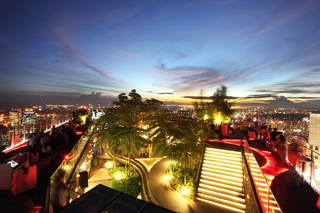
The main island of Singapore is shaped like a flattened diamond, 42 km (26 miles) east to west and 23 km (14 miles) north to south. Near the northern peak is th...
Full description
The main island of Singapore is shaped like a flattened diamond, 42 km (26 miles) east to west and 23 km (14 miles) north to south. Near the northern peak is th...
Full description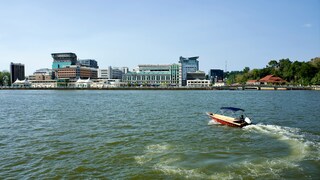
The microscopic Sultanate of Brunei lays claim to one of the most dramatic rags-to-riches stories. Thanks to oil, the Sultan of Brunei is one of the richest men...
Full description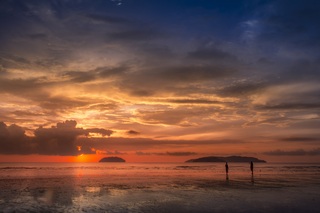
The capital of Sabah, Borneo's northernmost state, Kota Kinabalu is wedged between a tropical rainforest and the South China Sea. Many explorers use it as a lau...
Full description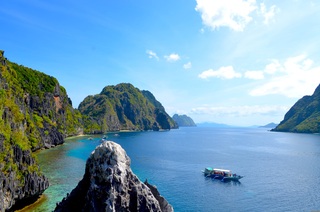
The Spanish arrived at this beautiful corner of the world in March of 1872, founding the city, that would eventually become the Capital of Palawan. In 2011, the...
Full description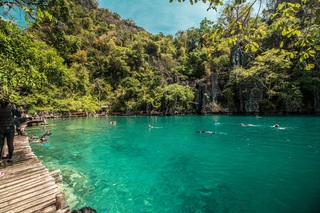
Spoken of with awed reverence in scuba-diving circles, Coron's dramatic rock protrusions, which jut from emerald seas and glorious sweeps of sand, make it a des...
Full description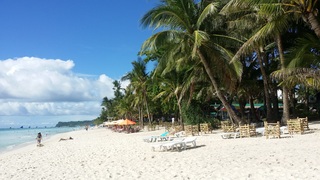
MANILA, the capital city of the Philippines, was founded in, 1571 by Spanish conquistador Miguel López de Legazpi. It is one of the oldest cities in the country...
Full description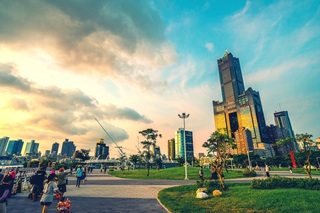
Kaohsiung is Taiwan’s second largest city, its biggest seaport, and the world’s fourth largest container port. It entered the 21st century as a newly emerging i...
Full description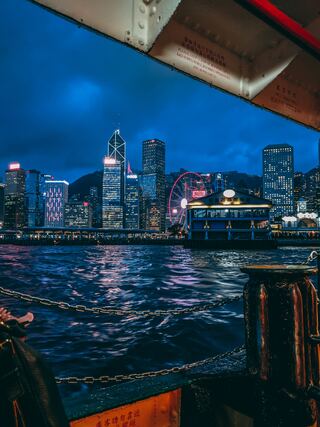
The Hong Kong Island skyline, with its ever-growing number of skyscrapers, speaks to ambition and money. Paris, London, even New York were centuries in the maki...
Full description
The Hong Kong Island skyline, with its ever-growing number of skyscrapers, speaks to ambition and money. Paris, London, even New York were centuries in the maki...
Full description
The main island of Singapore is shaped like a flattened diamond, 42 km (26 miles) east to west and 23 km (14 miles) north to south. Near the northern peak is th...
Full description
The main island of Singapore is shaped like a flattened diamond, 42 km (26 miles) east to west and 23 km (14 miles) north to south. Near the northern peak is th...
Full description
The microscopic Sultanate of Brunei lays claim to one of the most dramatic rags-to-riches stories. Thanks to oil, the Sultan of Brunei is one of the richest men...
Full description
The capital of Sabah, Borneo's northernmost state, Kota Kinabalu is wedged between a tropical rainforest and the South China Sea. Many explorers use it as a lau...
Full description
The Spanish arrived at this beautiful corner of the world in March of 1872, founding the city, that would eventually become the Capital of Palawan. In 2011, the...
Full description
Spoken of with awed reverence in scuba-diving circles, Coron's dramatic rock protrusions, which jut from emerald seas and glorious sweeps of sand, make it a des...
Full description
MANILA, the capital city of the Philippines, was founded in, 1571 by Spanish conquistador Miguel López de Legazpi. It is one of the oldest cities in the country...
Full description
Kaohsiung is Taiwan’s second largest city, its biggest seaport, and the world’s fourth largest container port. It entered the 21st century as a newly emerging i...
Full description
The Hong Kong Island skyline, with its ever-growing number of skyscrapers, speaks to ambition and money. Paris, London, even New York were centuries in the maki...
Full description
The Hong Kong Island skyline, with its ever-growing number of skyscrapers, speaks to ambition and money. Paris, London, even New York were centuries in the maki...
Full descriptionSingapore (Singapore)
The main island of Singapore is shaped like a flattened diamond, 42 km (26 miles) east to west and 23 km (14 miles) north to south. Near the northern peak is the causeway leading to West Malaysia—Kuala Lumpur is less than four hours away by car. It is at the southern foot where you will find most of the city-state’s action, with its gleaming office towers, working docks, and futuristic "supertrees," which are solar-powered and serve as vertical gardens. Offshore are Sentosa and over 60 smaller islands, most uninhabited, that serve as bases for oil refining or as playgrounds and beach escapes from the city. To the east is Changi International Airport, connected to the city by metro, bus, and a tree-lined parkway. Of the island's total land area, more than half is built up, with the balance made up of parkland, farmland, plantations, swamp areas, and rain forest. Well-paved roads connect all parts of the island, and Singapore city has an excellent, and constantly expanding, public transportation system. The heart of Singapore's history and its modern wealth are in and around the Central Business District. The area includes the skyscrapers in the Central Business District, the 19th-century Raffles Hotel, the convention centers of Marina Square, on up to the top of Ft. Canning. Although most of old Singapore has been knocked down to make way for the modern city, most colonial landmarks have been preserved in the CBD, including early-19th-century buildings designed by the Irish architect George Coleman.
Muara (Brunei Darussalam)
The microscopic Sultanate of Brunei lays claim to one of the most dramatic rags-to-riches stories. Thanks to oil, the Sultan of Brunei is one of the richest men in the world, and the Sultanate is often dubbed a Shell-fare-state. Brunei's citizens do not pay income tax; they enjoy free education, medical care and old-age pensions. The government employs a third of the workforce, who are probably the best-paid bureaucrats in the world. Brunei Darussalam, as the country is officially called, is the rump of what was once a sprawling empire that occupied a land area of about twice the size of Luxembourg. On January 1, 1984, after nearly 100 years as a British Protectorate, Brunei became a fully independent sovereign nation. In August of 1967, Hassanal Bolkiah was crowned the 29th Sultan of Brunei. He succeeded his father, Sir Omar Ali Saifuddien III, who started to modernize the capital and is known as the architect of modern Brunei. Bandar Seri Begawan is the capital and the only town of any size in the country. It is a neat, modern city, split into three main areas. The "old" sector, built in the 1950s, is being redeveloped with new buildings around the Omar Ali Saifuddien Mosque; the Seri Complex, a commercial area dates from the 1970s, and Gadong boasts a recently shopping center and numerous restaurants: Bandar or, simply BSB, as the capital is commonly called, still features a sprawling maze of wooden houses built on stilts along the Brunei River.
Kota Kinabalu, Sabah (Malaysia)
The capital of Sabah, Borneo's northernmost state, Kota Kinabalu is wedged between a tropical rainforest and the South China Sea. Many explorers use it as a launching point to venture off and see the surrounding jungle and marine life. Mt. Kinabalu challenges climbers daily, and top diving spots reel in underwater adventurers. The city is made up of a dense grid of concrete buildings built over reclaimed land along the coast. Several waterfront seafood restaurants and a diverse mix of hotels appeal to the travelers passing through, mostly off to explore the region.
Puerto Princesa, Palawan (Philippines)
The Spanish arrived at this beautiful corner of the world in March of 1872, founding the city, that would eventually become the Capital of Palawan. In 2011, the area received a huge boost, when New7 announced its list of the 7 Wonders of Nature – counting 500 million votes in the process. Puerto Princesa’s stunning underground river - complete with a cavernous, sunken lagoon - beat off wonderful sites like the Great Barrier Reef, to claim a spot on the final, prestigious list. Set sail across the glowing green water, on a journey into the gaping mouth of the limestone caves at Puerto Princesa. Known for being one of the least densely populated, cleanest and most environmentally friendly cities in the Philippines, there’s a raft of natural wonders to explore - from diving hotspots to towering limestone cliffs, and the entrancing underworld of the underground river.
Coron Island (Philippines)
Spoken of with awed reverence in scuba-diving circles, Coron's dramatic rock protrusions, which jut from emerald seas and glorious sweeps of sand, make it a destination that you can't help but dive into. The perfect base for an adventure holiday, Coron's exquisite setting means you'll face taxing choices on a daily basis - to spend the day relaxing on the soft sand, or to pound through the jungle on horseback? Whether you choose relaxation or all-out-action, you're sure to fall head over heels for Coron's beauty.
Manila (Philippines)
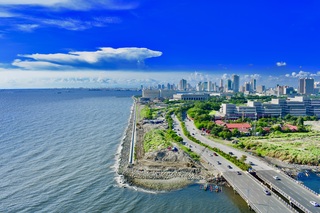
MANILA, the capital city of the Philippines, was founded in, 1571 by Spanish conquistador Miguel López de Legazpi. It is one of the oldest cities in the country and was the seat of power for most of the colonial rules of the Philippines. It is situated on the eastern shore of Manila Bay and contains a multitude of landmarks, some of which date back to the 16th century. It is home to the baroque 16th-century San Agustin Church as well as Fort Santiago, a storied citadel and military prison. In the 19th century Manila became one of the most modern cities in Asia. Before the Spanish–American War, Manila saw the rise of the Philippine Revolution. Under the American rule following the Spanish-American War, the United States changed the official language from Spanish to English. Towards the end of World War II, during the Battle of Manila, most of the city was flattened by intensive aerial bombardment. Today, tourism is a vital industry in Manila. Major shopping malls and bazaars thrive around Manila.
Kaohsiung (Taiwan)
Kaohsiung is Taiwan’s second largest city, its biggest seaport, and the world’s fourth largest container port. It entered the 21st century as a newly emerging international metropolis. In the forefront of Taiwan’s expansion and modernisation efforts are the China Steel Corporation and China Shipbuilding. They are perfect examples of what Taiwan’s export-oriented economy is all about. The Love River, which has seen some recent landscaping, adds to the beauty of the city. Coffee shops along its banks offer good opportunities to view the river’s activities and enjoy a nice breeze. A 495-feet (150 metres)-long urban corridor of light, known as Urban Spotlight, was designed by local artists who wanted to make light and shadows the theme of the hall. The result is an urban space in the Central Park area teeming with artistic vision. A very important event in Taiwan’s recent history occurred here in 1979, and is known as the Kaohsiung Incident. It was the day of the first major human rights celebration on the island. Until that time, the authorities had never allowed any expression of discontent. When the day came, however, the celebration ended in chaos when police encircled the peaceful crowd and started using teargas, and pro-government instigators incited violence. Kuomintang (KMT) authorities used this as an excuse to round up all well-known opposition leaders and imprison them. Although it was hardly noticed internationally, it is recognised locally as an important turning point in the island’s transition to democracy, and it galvanised the Taiwanese people into action.
Hong Kong (Hong Kong)
The Hong Kong Island skyline, with its ever-growing number of skyscrapers, speaks to ambition and money. Paris, London, even New York were centuries in the making, while Hong Kong's towers, bright lights, and glitzy shopping emporia weren't yet part of the urban scene when many of the young investment bankers who fuel one of the world's leading financial centers were born. Commerce is concentrated in the glittering high-rises of Central, tucked between Victoria Harbor and forested peaks on Hong Kong Island's north shore. While it's easy to think all the bright lights are the sum of today's Hong Kong, you need only walk or board a tram for the short jaunt west into Western to discover a side of Hong Kong that is more traditionally Chinese but no less high-energy. You'll discover the real Hong Kong to the east of Central, too, in Wan Chai, Causeway Bay, and beyond. Amid the residential towers are restaurants, shopping malls, bars, convention centers, a nice smattering of museums, and—depending on fate and the horse you wager on—one of Hong Kong's luckiest or unluckiest spots, the Happy Valley Racecourse. Kowloon sprawls across a generous swath of the Chinese mainland across Victoria Harbour from Central. Tsim Sha Tsui, at the tip of Kowloon peninsula, is packed with glitzy shops, first-rate museums, and eye-popping views of the skyline across the water. Just to the north are the teeming market streets of Mong Kok and in the dense residential neighborhoods beyond, two of Hong Kong's most enchanting spiritual sights, Wong Tai Sin Temple and Chi Lin Nunnery. As you navigate this huge metropolis (easy to do on the excellent transportation network), keep in mind that streets are usually numbered odd on one side, even on the other. There's no baseline for street numbers and no block-based numbering system, but street signs indicate building numbers for any given block.
Date & price
Departs
Tue 4 Jan 2028
from £3,529 pp
Enquire now Call 020 7590 0610Per person, based on two sharing, cruise only. Updated daily and confirmed when you book.