
Summary
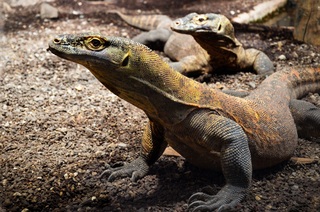
Discover paradise on an authentic expedition through Indonesia's remote and little known tropical islands. Swim with the Whale Sharks in Kwatisore Bay, visit Komodo National Park, home to the famed Komodo Dragon, discover Jacques Cousteau’s “underwater nirvana” Wakatobi National Park and explore the turquoise waters and rainbow corals of Raja Ampat as we traverse powdery white sand beaches and untamed jungles. During our voyage from Bali to Madang, including post cruise flight to Cairns, we have the opportunity to see Birds-of-paradise and many more endemic species, World War II relics and visit remote tribes and villages.
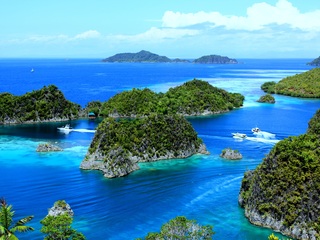
A true expedition voyage in every sense, our journey will explore Indonesia’s rarely visited and little known biodiverse-rich jungle-capped islands scattered across pristine pellucid waters well beyond traditional tourist routes. Join us and discover a true paradise where untouched dense jungles home to some of the rarest flora and fauna on the planet meet crystalline tropical waters teaming with exotic marine life and some of the world’s best coral reefs all wrapped in a land steeped in history and rich in culture and tradition.
Comprised of some 18,000 islands, this Southeast Asian archipelago’s fascinating human history dates back almost 2 million years. European arrival saw Portuguese spice traders chasing the fragrant bounty of nutmeg and cloves in the 16th Century, this was followed by Dutch colonisation then Japanese occupation during World War II before Indonesia regained its independence in 1949.
While still a heavy hitter on the spice trading scene, Indonesia is now attracting attention for having one of the richest concentrations of flora and fauna on the planet. One of the world’s 17 mega diverse countries, Indonesia is home to 2 of the planet’s 25 biodiversity hotspots, 18 of the World Wildlife Fund’s Global 200 ecoregions and 24 of BirdLife International’s Endemic Bird Areas. Its dense forests, jungles, oceans and waterways we will be exploring boast more than 25,000 species of flowering plants (40 per cent of which are endemic), 1,592 bird species (430 of which are endemic and 114 considered extremely threatened), 1,051 reptile and amphibian species, 515 species of mammal and half of the world’s fish species.
For botanists, birders and nature lovers alike, this expedition offers numerous opportunities to spot once-in-a-lifetime species and experience rare wildlife encounters on remote and unknown islands. This expedition includes the option to join a sea kayaking excursion with an expert guide. Kayakers are rewarded with tranquil, tropical settings and are a source of fascination to the locals who often paddle their canoes out to join them, and invite them back to their villages.
Itinerary & Map
Pink Beach earned its name for the way the beach can appear to have a rosy hue in certain lights. The color comes from small flecks of red coral mixed in with t...
Full description
The eastern half of the island of New Guinea - second largest in the world - was divided between Germany (north) and the United Kingdom (south) in 1885. The lat...
Full description
Pink Beach earned its name for the way the beach can appear to have a rosy hue in certain lights. The color comes from small flecks of red coral mixed in with t...
Full description
The eastern half of the island of New Guinea - second largest in the world - was divided between Germany (north) and the United Kingdom (south) in 1885. The lat...
Full descriptionKomodo Island
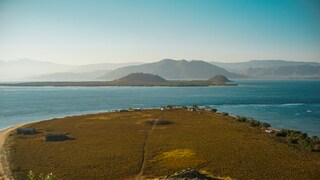
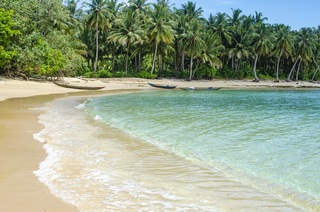
Pink Beach earned its name for the way the beach can appear to have a rosy hue in certain lights. The color comes from small flecks of red coral mixed in with the fine white reef sand. With a few trees along the beach for shade, this stretch of coast makes a fine place to relax or enjoy a snorkel or dive in the crystal clear waters. It is possible to spot a striped clown fish nestled among the protective tentacles of its sea anemone host, or to see a grouper lazily swimming by a flamboyant soft coral. The reef here is now protected by law and the maturing corals are a joy to behold.
Madang
The eastern half of the island of New Guinea - second largest in the world - was divided between Germany (north) and the United Kingdom (south) in 1885. The latter area was transferred to Australia in 1902, which occupied the northern portion during World War I and continued to administer the combined areas until independence in 1975. A nine-year secessionist revolt on the island of Bougainville ended in 1997 after claiming some 20,000 lives. On the north coast of the island, we find colourful Madang, called the “prettiest town in the South Pacific”. Its peninsula-setting is a showplace of parks, waterways, luxuriant shade trees and sparkling tropical islands. Although small, the town has modern urban facilities, including hotels, department stores, markets and art shops. The people of Madang can be broken into four distinct groups - islanders, coastal people, river people and mountain people. These groups are similar in appearance except for the smaller Simbai mountain tribesmen from the foothills. The traditional dress consists mainly of traditional dyed multi-coloured grass skirts made out of either pandanas leaves or sago palm. The women from the mountain areas wear skirts that are colourless, narrow and stringy. Unlike the women, men wear meshy net aprons in front and a clutter of target leaves astern.
Date & price
Select guest
Departs
Thu 7 Oct 2027
from £13,350 pp
Enquire now Call 020 7590 0610Per person, based on two sharing, cruise only. Updated daily and confirmed when you book.