
Summary
Embark on an unforgettable Caribbean voyage exploring pristine beaches and coral reefs, island-hopping through diverse cultures, where the warmth of the locals will enhance your luxury yacht adventure.
Embark on this unforgettable 7-day Caribbean cruise on board our Emerald Cruises luxury yacht, setting sail from the historic city of San Juan, in Puerto Rico. Admire the UNESCO World Heritage Site, Nelson’s Dockyard in Falmouth Harbour, and take a refreshing dip in crystal-clear waters off the tranquil beaches of Virgin Gorda. Discover the brightly coloured wooden houses in Gustavia and sample delicious local cuisine fusing French and Creole influences and so much more. Your luxury Caribbean voyage concludes in the US Virgin Islands and Saint Thomas.
Itinerary & Map
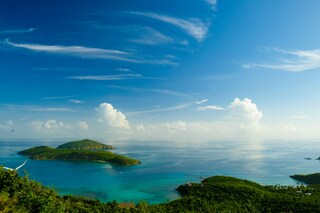
If you fly to the 32-square-mile (83-square-km) island of St. Thomas, you land at its western end; if you arrive by cruise ship, you come into one of the world'...
Full description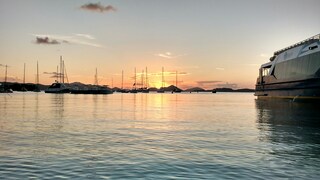
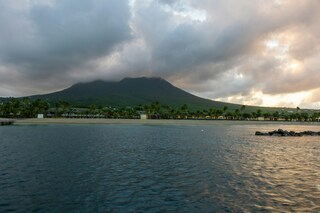
The written history of Nevis begins with the account recorded by Columbus when he sailed by Nevis in 1493. The name Nevis is derived from “Nuestra Senora de Las...
Full description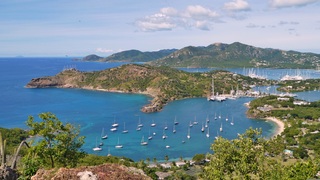
The British colonial influence is everywhere in pretty English Harbour. And yet, located on Antigua’s south coast, you are just minutes away from some of the lo...
Full description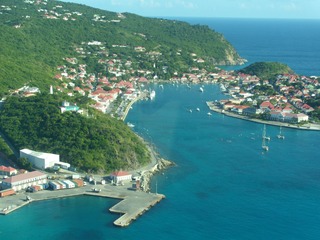
You can easily explore all of Gustavia during a two-hour stroll. Some shops close from noon to 3 or 4, so plan lunch accordingly, but stores stay open past 7 in...
Full description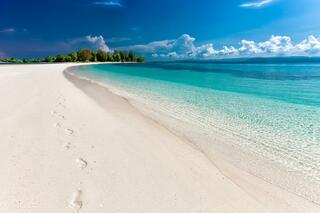
If you associate Puerto Rico's capital with the colonial streets of Old San Juan, then you know only part of the picture. San Juan is a major metropolis, radiat...
Full description
If you fly to the 32-square-mile (83-square-km) island of St. Thomas, you land at its western end; if you arrive by cruise ship, you come into one of the world'...
Full description
The written history of Nevis begins with the account recorded by Columbus when he sailed by Nevis in 1493. The name Nevis is derived from “Nuestra Senora de Las...
Full description
The British colonial influence is everywhere in pretty English Harbour. And yet, located on Antigua’s south coast, you are just minutes away from some of the lo...
Full description
You can easily explore all of Gustavia during a two-hour stroll. Some shops close from noon to 3 or 4, so plan lunch accordingly, but stores stay open past 7 in...
Full description
If you associate Puerto Rico's capital with the colonial streets of Old San Juan, then you know only part of the picture. San Juan is a major metropolis, radiat...
Full descriptionSaint Thomas, US Virgin Island
If you fly to the 32-square-mile (83-square-km) island of St. Thomas, you land at its western end; if you arrive by cruise ship, you come into one of the world's most beautiful harbors. Either way, one of your first sights is the town of Charlotte Amalie. From the harbor you see an idyllic-looking village that spreads into the lower hills. If you were expecting a quiet hamlet with its inhabitants hanging out under palm trees, you've missed that era by about 300 years. Although other islands in the USVI developed plantation economies, St. Thomas cultivated its harbor, and it became a thriving seaport soon after it was settled by the Danish in the 1600s. The success of the naturally perfect harbor was enhanced by the fact that the Danes—who ruled St. Thomas with only a couple of short interruptions from 1666 to 1917—avoided involvement in some 100 years' worth of European wars. Denmark was the only European country with colonies in the Caribbean to stay neutral during the War of the Spanish Succession in the early 1700s. Thus, products of the Dutch, English, and French islands—sugar, cotton, and indigo—were traded through Charlotte Amalie, along with the regular shipments of slaves. When the Spanish wars ended, trade fell off, but by the end of the 1700s Europe was at war again, Denmark again remained neutral, and St. Thomas continued to prosper. Even into the 1800s, while the economies of St. Croix and St. John foundered with the market for sugarcane, St. Thomas's economy remained vigorous. This prosperity led to the development of shipyards, a well-organized banking system, and a large merchant class. In 1845 Charlotte Amalie had 101 large importing houses owned by the English, French, Germans, Haitians, Spaniards, Americans, Sephardim, and Danes. Charlotte Amalie is still one of the world's most active cruise-ship ports. On almost any day at least one and sometimes as many as eight cruise ships are tied to the docks or anchored outside the harbor. Gently rocking in the shadows of these giant floating hotels are just about every other kind of vessel imaginable: sleek sailing catamarans that will take you on a sunset cruise complete with rum punch and a Jimmy Buffett soundtrack, private megayachts for billionaires, and barnacle-bottom sloops—with laundry draped over the lifelines—that are home to world-cruising gypsies. Huge container ships pull up in Sub Base, west of the harbor, bringing in everything from breakfast cereals to tires. Anchored right along the waterfront are down-island barges that ply the waters between the Greater Antilles and the Leeward Islands, transporting goods such as refrigerators, VCRs, and disposable diapers. The waterfront road through Charlotte Amalie was once part of the harbor. Before it was filled in to build the highway, the beach came right up to the back door of the warehouses that now line the thoroughfare. Two hundred years ago those warehouses were filled with indigo, tobacco, and cotton. Today the stone buildings house silk, crystal, and diamonds. Exotic fragrances are still traded, but by island beauty queens in air-conditioned perfume palaces instead of through open market stalls. The pirates of old used St. Thomas as a base from which to raid merchant ships of every nation, though they were particularly fond of the gold- and silver-laden treasure ships heading to Spain. Pirates are still around, but today's versions use St. Thomas as a drop-off for their contraband: illegal immigrants and drugs. To explore outside Charlotte Amalie, rent a car or hire a taxi. Your rental car should come with a good map; if not, pick up the pocket-size "St. Thomas–St. John Road Map" at a tourist information center. Roads are marked with route numbers, but they're confusing and seem to switch numbers suddenly. Roads are also identified by signs bearing the St. Thomas–St. John Hotel and Tourism Association's mascot, Tommy the Starfish. More than 100 of these color-coded signs line the island's main routes. Orange signs trace the route from the airport to Red Hook, green signs identify the road from town to Magens Bay, Tommy's face on a yellow background points from Mafolie to Crown Bay through the north side, red signs lead from Smith Bay to Four Corners via Skyline Drive, and blue signs mark the route from the cruise-ship dock at Havensight to Red Hook. These color-coded routes are not marked on most visitor maps, however. Allow yourself a day to explore, especially if you want to stop to take pictures or to enjoy a light bite or refreshing swim. Most gas stations are on the island's more populated eastern end, so fill up before heading to the north side. And remember to drive on the left!
Nevis, Saint Kitts and Nevis
The written history of Nevis begins with the account recorded by Columbus when he sailed by Nevis in 1493. The name Nevis is derived from “Nuestra Senora de Las Nieves” which means “Our Lady of the Snows”, because of the cloud capped mountain reminding Columbus of snow. Prior to the Columbus saga, Nevis was named Dulcina “Sweet Island” by the Arawaks and later Oualie “land of beautiful waters” by the Caribs. Later in the 18th century, Nevis became known as “Queen of the Caribees.” Evidence of pre-ceramic people abounds with finely crafted stone tools and intricately colored pottery found. Over the years Nevis has made a number of significant contributions to the Caribbean and the world. Two men who played part in international history were Alexander Hamilton and Lord Horatio Nelson. On September 19, 1983, Nevis became part of an independent nation and form part of the sovereign democratic state of St. Christopher and Nevis. It has the unique constitutional arrangement of being part of the Federal Parliament while having a separate parliament of its own Nevis Island Administration headed by a Premier. The island is covered with ruins of the sugar plantation era, which declined in the late 1800s after slavery was abolished and the sugar beet created competition for sugar cane. Nevis is a paradise for nature lovers. There is excellent snorkeling just offshore and scuba diving around wrecks and natural reefs. There are rainforests, reefs and ruins, a fascinating destination for people who enjoy the natural side of the tropics.
Falmouth Harbour, Antigua and Barbuda
The British colonial influence is everywhere in pretty English Harbour. And yet, located on Antigua’s south coast, you are just minutes away from some of the loveliest beaches in the Caribbean. With its long ribbons of white sandy shores including the superbly named Rendez-Vous Bay Beach, the cold English drizzle and chimes of big ben have never been farther away! English Harbour is how the Caribbean is meant to be. Beautifully restored, the area still retains much in the way of its rich historic past. Nelson’s dockyard is absolutely not to be missed; a working dockyard that dates from the 18th century, this is part of a larger UNESCO World Heritage Site (Nelson’s Dockyard and National Park) which also contains Clarence House and Shirley Heights. Perhaps one of the best examples of British colonial development, the dockyard is named after the famous Admiral who lived on the island in the 1780’s. The fascinating naval history is palpable in all the buildings of this historic site and just a little further along you find beautifully restored warehouses that are now home to enchanting restaurants, art galleries, boutiques and hotels, all proudly stating their historic credentials on prominent, easy to read signs. Venturing beyond the “town” and you’ll find nature trails for all levels of fitness. Famous for having 365 different beaches, it is unsurprising then that a lot of Antiguan life takes place on its sandy shores. Beaches here offer all things to everyone so whether you want to rekindle the romance, indulge in some adrenaline fueled water sports, swim, snorkel or sail your way around the island, you’re sure to find you’re your own personal paradise here.
Gustavia, Saint Barthélemy
You can easily explore all of Gustavia during a two-hour stroll. Some shops close from noon to 3 or 4, so plan lunch accordingly, but stores stay open past 7 in the evening. Parking in Gustavia is a challenge, especially during vacation times. A good spot to park is rue de la République, alongside the catamarans, yachts, and sailboats.
San Juan, Puerto Rico
If you associate Puerto Rico's capital with the colonial streets of Old San Juan, then you know only part of the picture. San Juan is a major metropolis, radiating out from the bay on the Atlantic Ocean that was discovered by Juan Ponce de León. More than a third of the island's nearly 4 million citizens proudly call themselves sanjuaneros. The city may be rooted in the past, but it has its eye on the future. Locals go about their business surrounded by colonial architecture and towering modern structures.By 1508 the explorer Juan Ponce de León had established a colony in an area now known as Caparra, southeast of present-day San Juan. He later moved the settlement north to a more hospitable peninsular location. In 1521, after he became the first colonial governor, Ponce de León switched the name of the island—which was then called San Juan Bautista in honor of St. John the Baptist—with that of the settlement of Puerto Rico ("rich port").Defended by the imposing Castillo San Felipe del Morro (El Morro) and Castillo San Cristóbal, Puerto Rico's administrative and population center remained firmly in Spain's hands until 1898, when it came under U.S. control after the Spanish-American War. Centuries of Spanish rule left an indelible imprint on the city, particularly in the walled area now known as Old San Juan. The area is filled with cobblestone streets and brightly painted, colonial-era structures, and its fortifications have been designated a UNESCO World Heritage Site.Old San Juan is a monument to the past, but most of the rest of the city is planted firmly in the 21st century and draws migrants island-wide and from farther afield to jobs in its businesses and industries. The city captivates residents and visitors alike with its vibrant lifestyle as well as its balmy beaches, pulsing nightclubs, globe-spanning restaurants, and world-class museums. Once you set foot in this city, you may never want to leave.
Dates & prices
Select guest
Flights included
Departs
Mon 7 Dec 2026
from £4,993 pp
Enquire now Call 020 7590 0610Per person, based on two sharing, flights included. Updated daily and confirmed when you book. Flights from UK airports only.