
Content
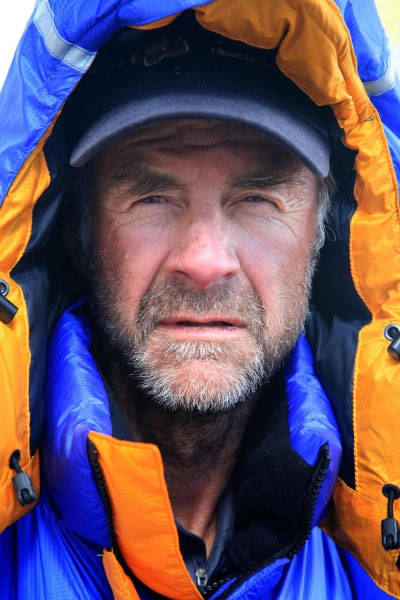
Sir Ranulph Fiennes was dubbed by The Guinness Book of Records ‘the world's greatest living explorer', for such feats as the Transglobe Expedtion – the world's first surface journey around the polar axis – and the North Polar Unsupported Expedition, the furthest north unsupported record.
Ranulph Twisleton-Wykeham-Fiennes, 3rd baronet, can trace his family back a thousand years to Charlemagne. Though he never met his father – a commanding office of the Royal Scots Greys, killed at Monte Casino – he had hoped to follow in his footsteps and joined the same regiment. Becoming commander was never likely though, as he didn't have the most distinguished academic history, and he was seconded into the SAS. He became the youngest captain in the British Army but was later expelled following an incident in which he used flares and plastic explosive to blow up part of the Dr Doolittle set – an ugly concrete dam had spoiled a trout stream in the Wiltshire village of Castle Combe.
After his expulsion he spent a short time in the army of the Sultan of Oman, and was decorated for bravery. It was around this time he was considered to replace Sean Connery as James Bond, but was turned down for having ‘a face like a farmer' (Cubby Broccoli). Instead he was auditioned for the real-life secret service by a lady handling her knitting on his doorstep. But nothing came of it, and inspired by Chris Bonnington he chose instead to make a living by finding someone to sponsor his expeditions and then talk and write about them afterwards. Only Fiennes would conquer the horizontal rather than vertical.
And so Fiennes has, over the past 40 or so years, led a hovercraft expedition up the White Nile; explored Colombia's Headless Valley; sailed and trekked around the polar axis, becoming the first man to reach both poles by land; travelled the furthest distance north unsupported; discovered Ptolemy's Atlantis of the Sands in Oman – his proudest achievement; completed the first unsupported crossing of Antarctica; run seven marathons in seven days on seven continents (with the help of Wexas) soon after a heart bypass; and scaled the Eiger by the treacherous North Face.
In May 2009, at his third attempt, Fiennes finally reached the summit of Everest, becoming the first man to reach both poles and the world's highest peak. He said, "This is the closest you can get to the moon by walking".
Along the way he has raised several million pounds for various charities, penned several books and collected an array of awards, including the Founder's Medal by the Royal Geographical Society, the Polar Medal with Bar from the Queen and an OBE.
It was not without its hardships, though; he lost, for example, the tops of his fingers and his thumb to frostbite, yet in true Fiennes style, he carried out the amputations himself, with a Black & Decker from his village shop.
Sir Ranulph Fiennes is the author of:
- A Talent for Trouble
- Ice Fall in Norway
- The Headless Valley
- Where Soldiers Fear to Tread
- Hell on Ice
- To the Ends of the Earth
- Bothie the Polar Dog (with Virginia Fiennes)
- Living Dangerously
- The Feather Men
- Atlantis of the Sands
- Mind Over Matter
- The Sett
- Fit for Life
- Beyond the Limits
- The Secret Hunters
- Captain Scott: The Biography (The Times best biography of 2003)
- Mad, Bad and Dangerous to Know
- Mad Dogs and Englishmen
- My Heroes